
Common names
Suriname Freshwater Stingray, Boeseman’s River Stingray, Emperor Ray (aquarium trade name).
Binomial
Potamotrygon boesemani.
Synonyms
None.
Identification
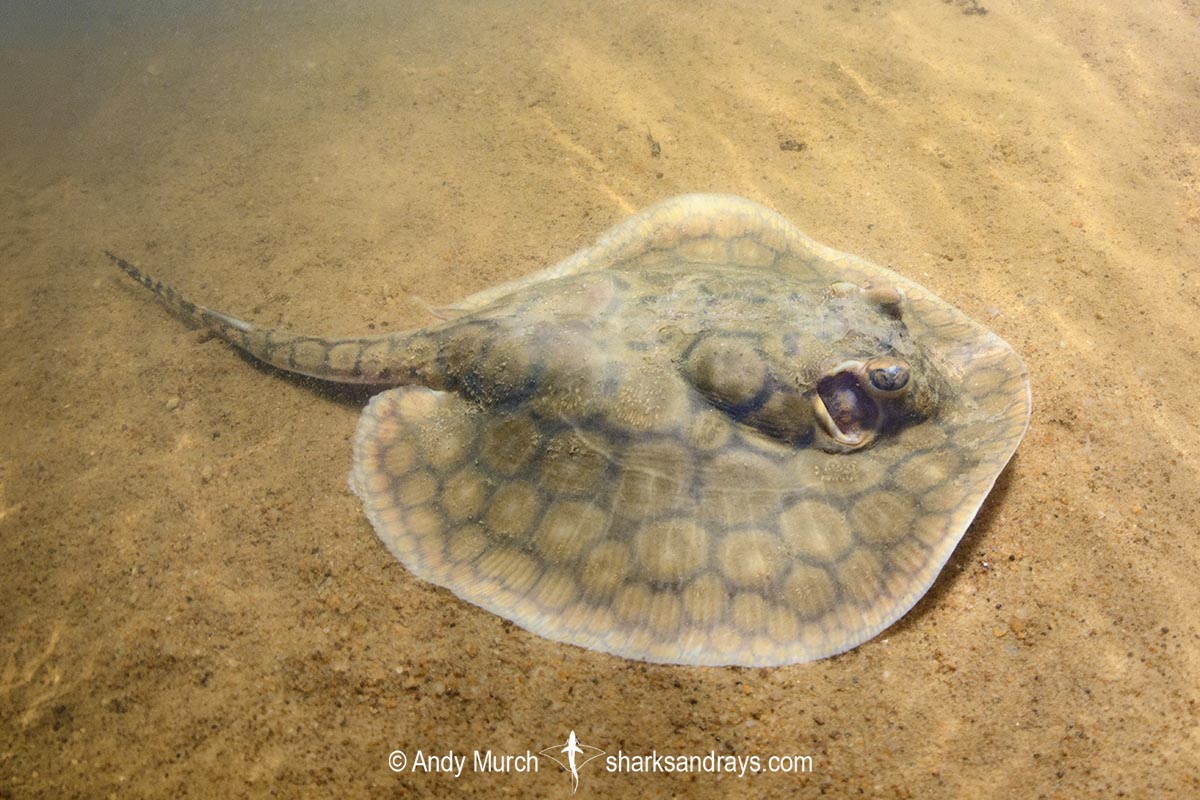
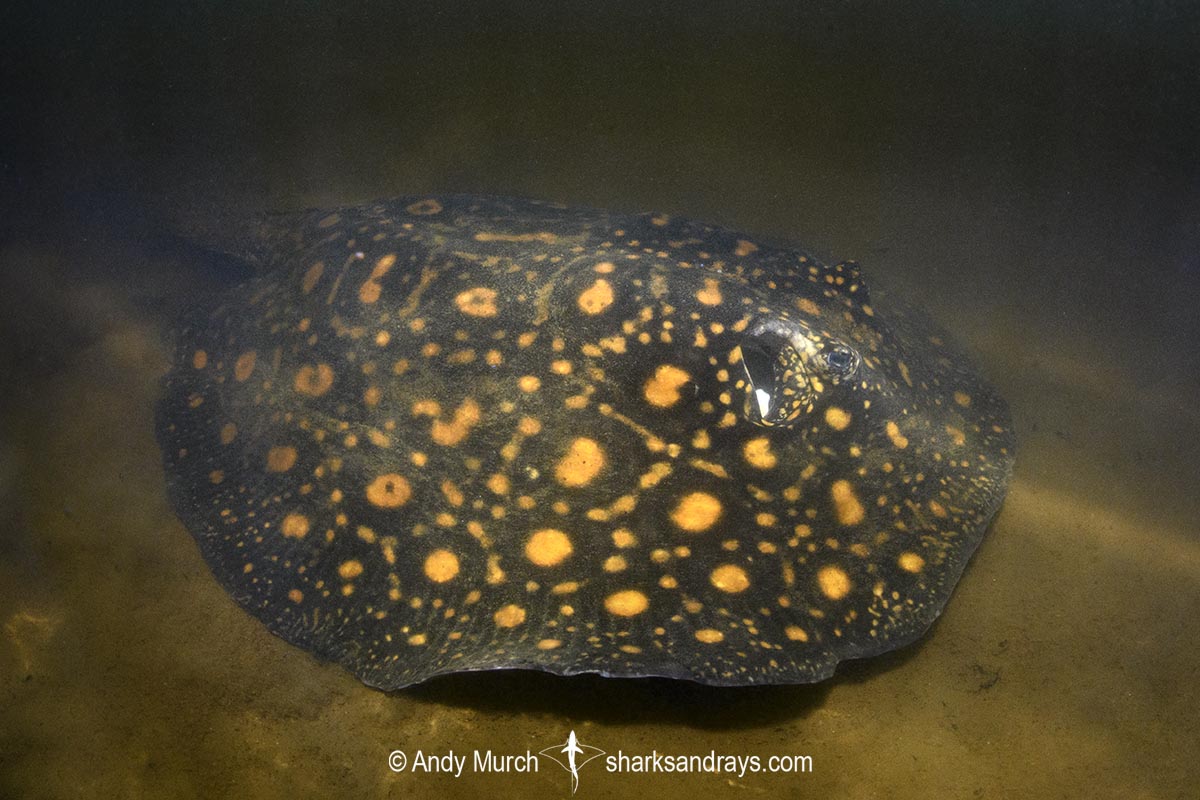
A medium-sized stingray with an oval disc that is slightly longer than wide. Snout broadly rounded with a small central lobe. Eyes fairly large and protruding. Spiracle large and trapezoid, length approximately 2x orbit diameter; lacking prominent spiracular papillae. Nostrils thin. Mouth with 5 oral papillae. Small dermal denticles on disc, more concentrated anteriorly and along midline. Pelvic fin posterior margins mostly covered by pectoral disc. Tail broad based, shorter than the disc width in adults. One irregular row of large acutely pointed thorns on dorsal midline from disc to caudal sting. Many sharp small thorns laterally on tail. Well developed caudal stings positioned distally on tail.
Colour
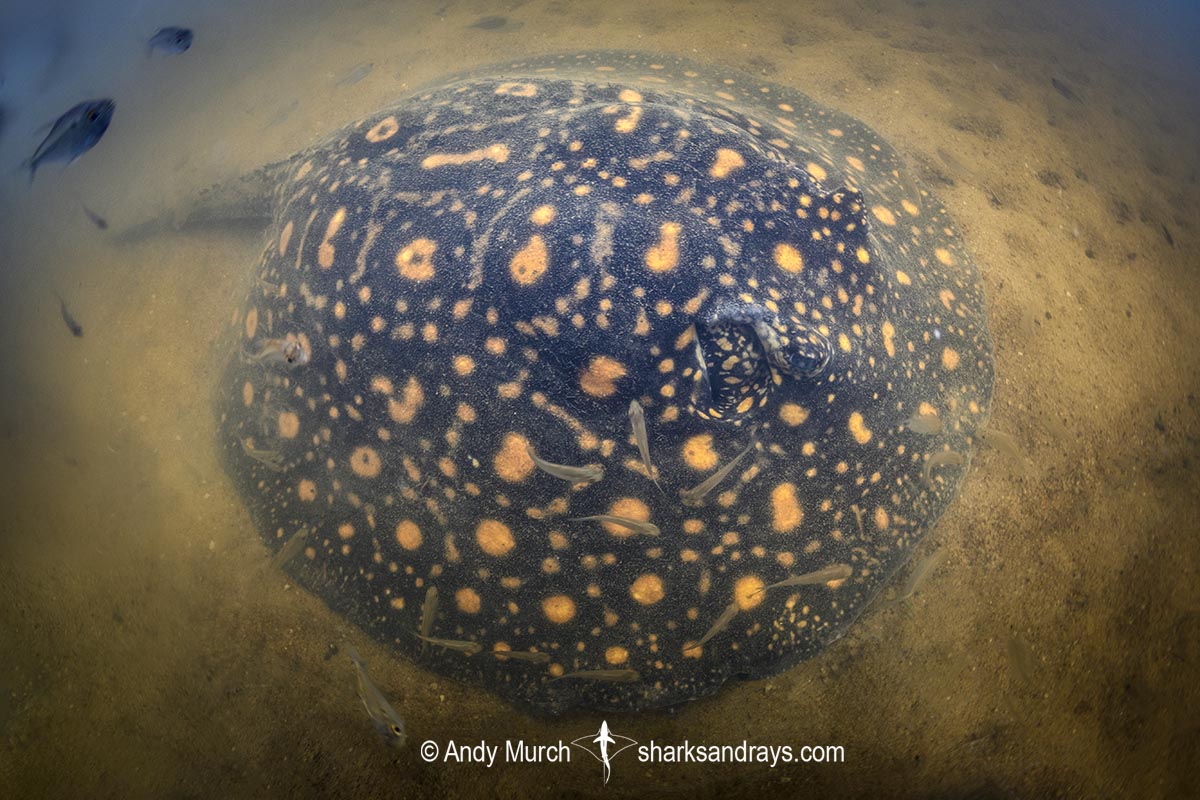
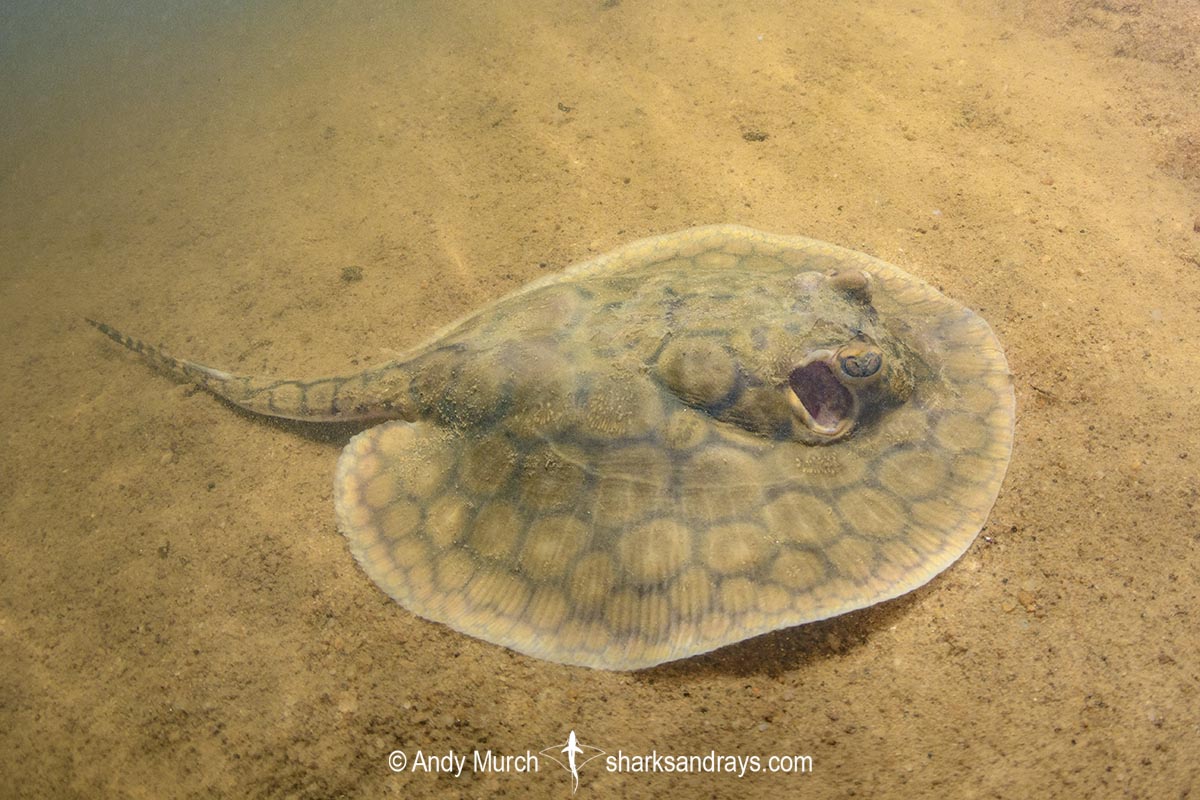
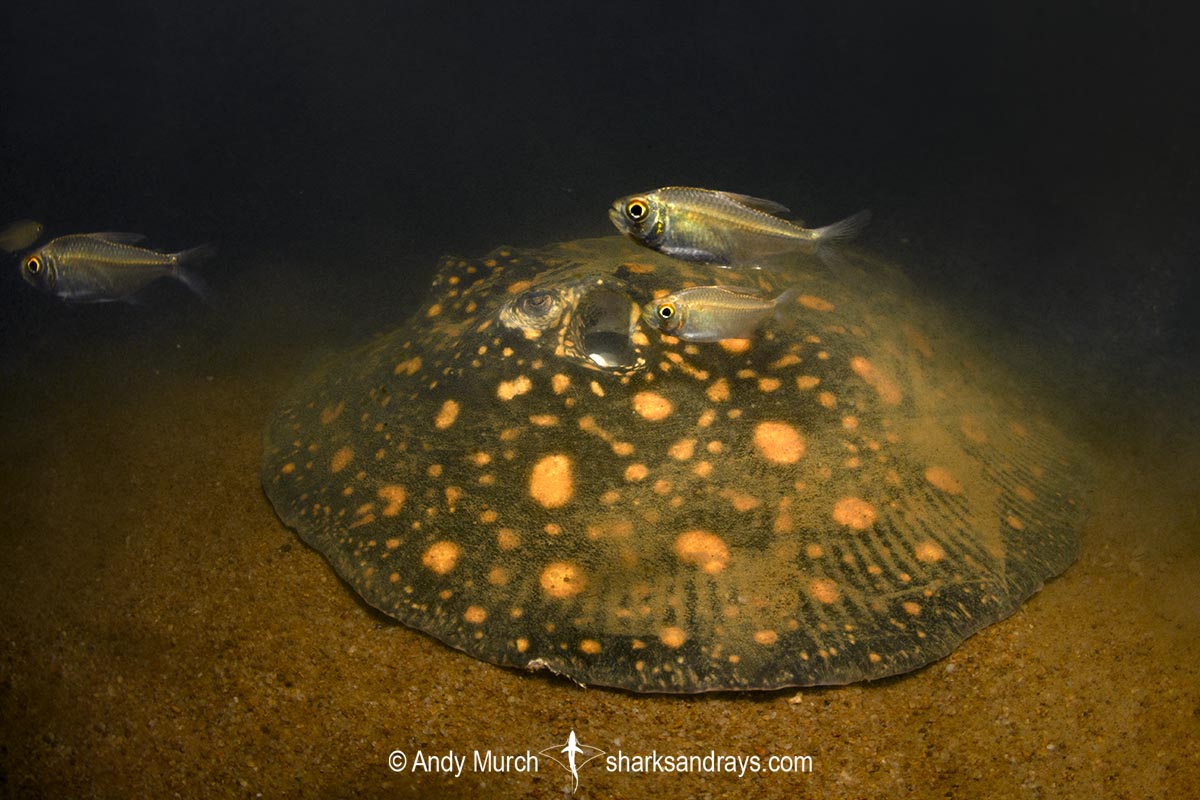
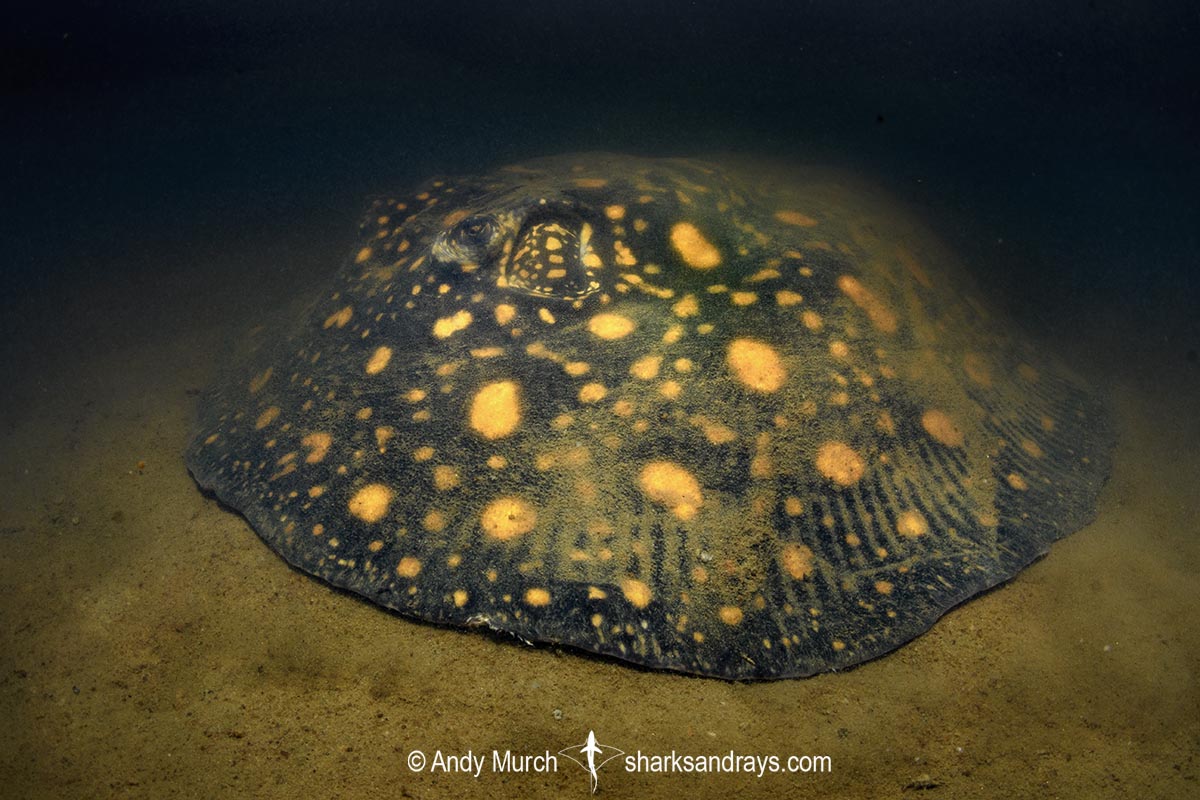
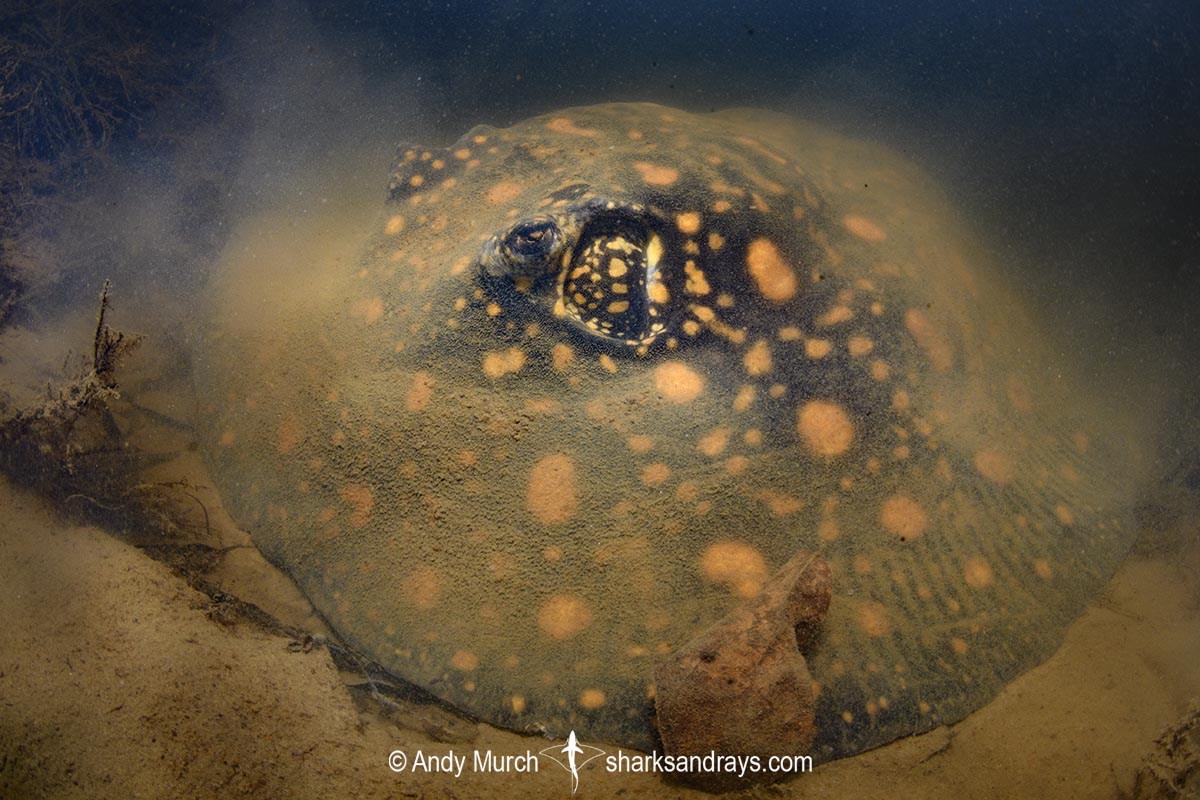
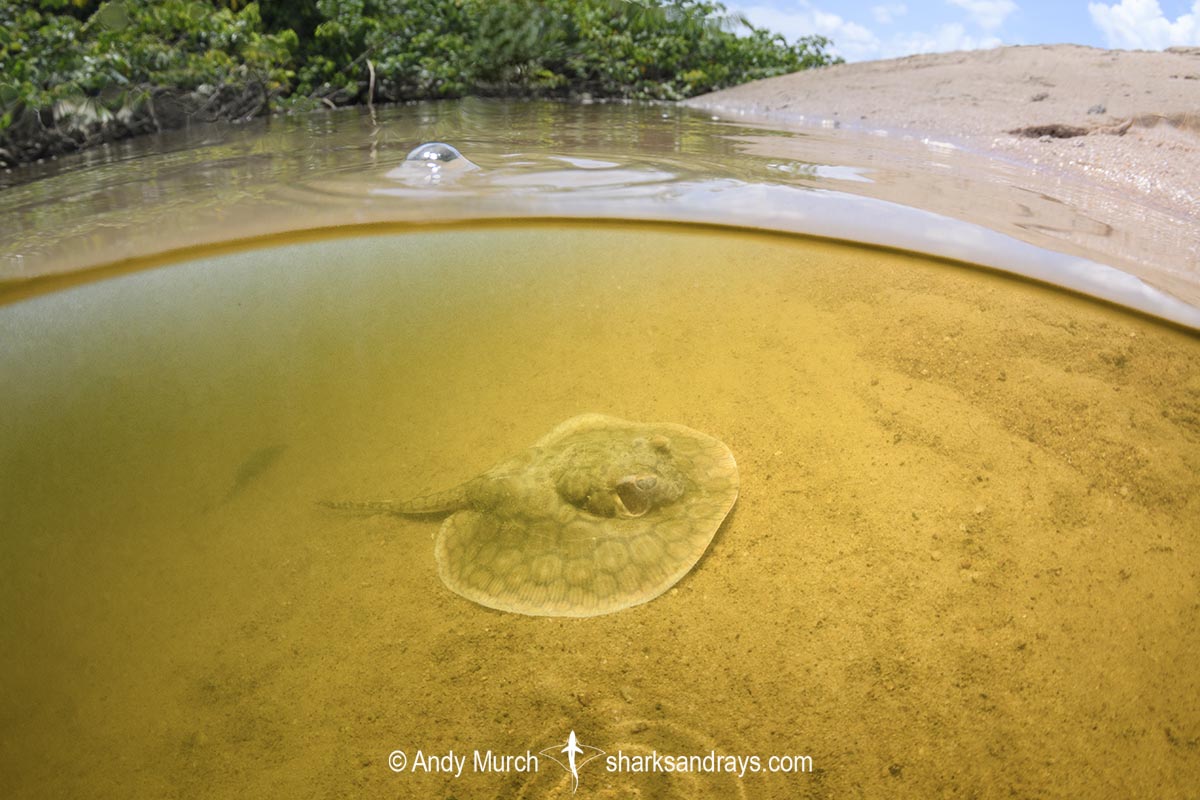
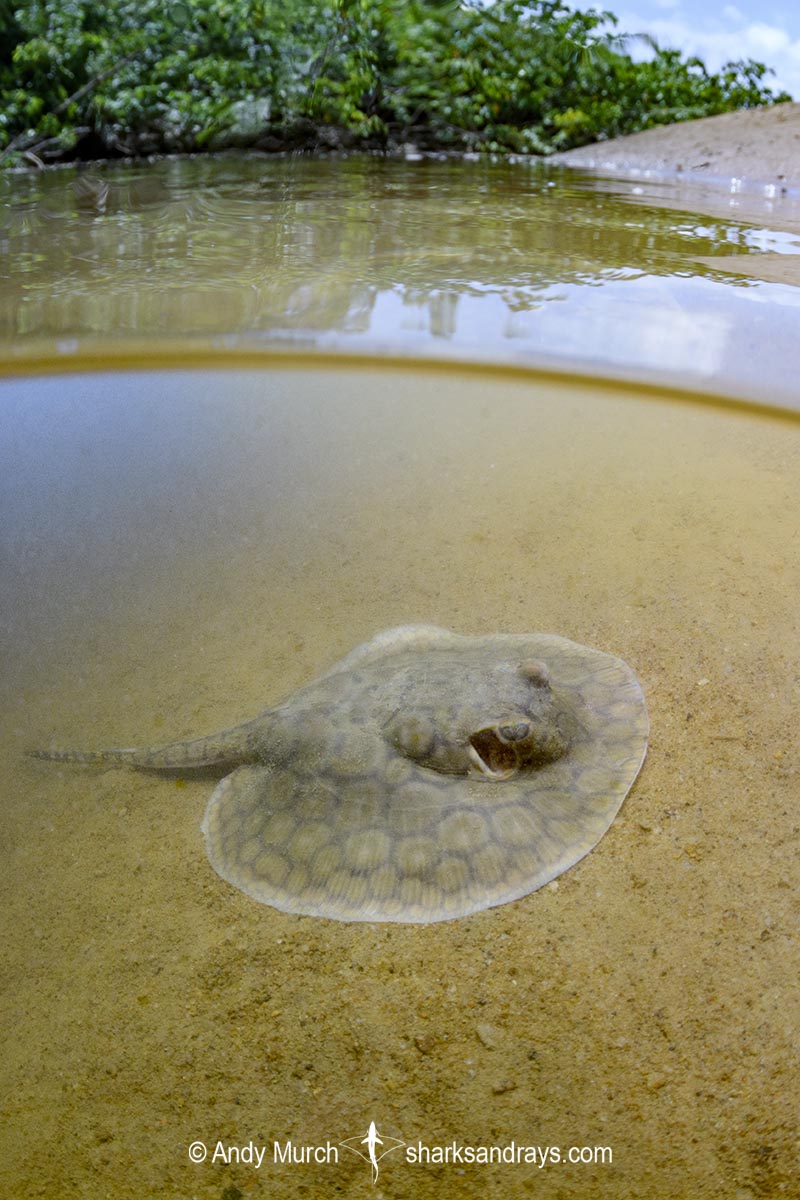
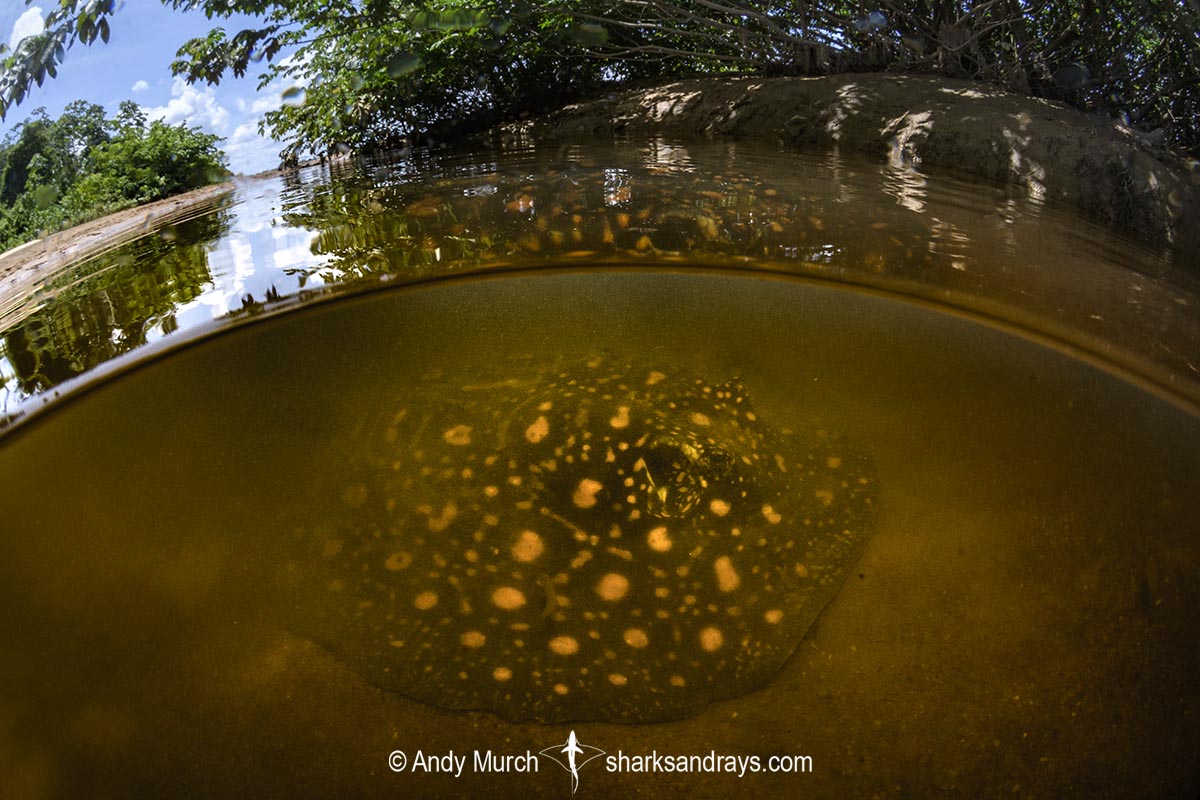
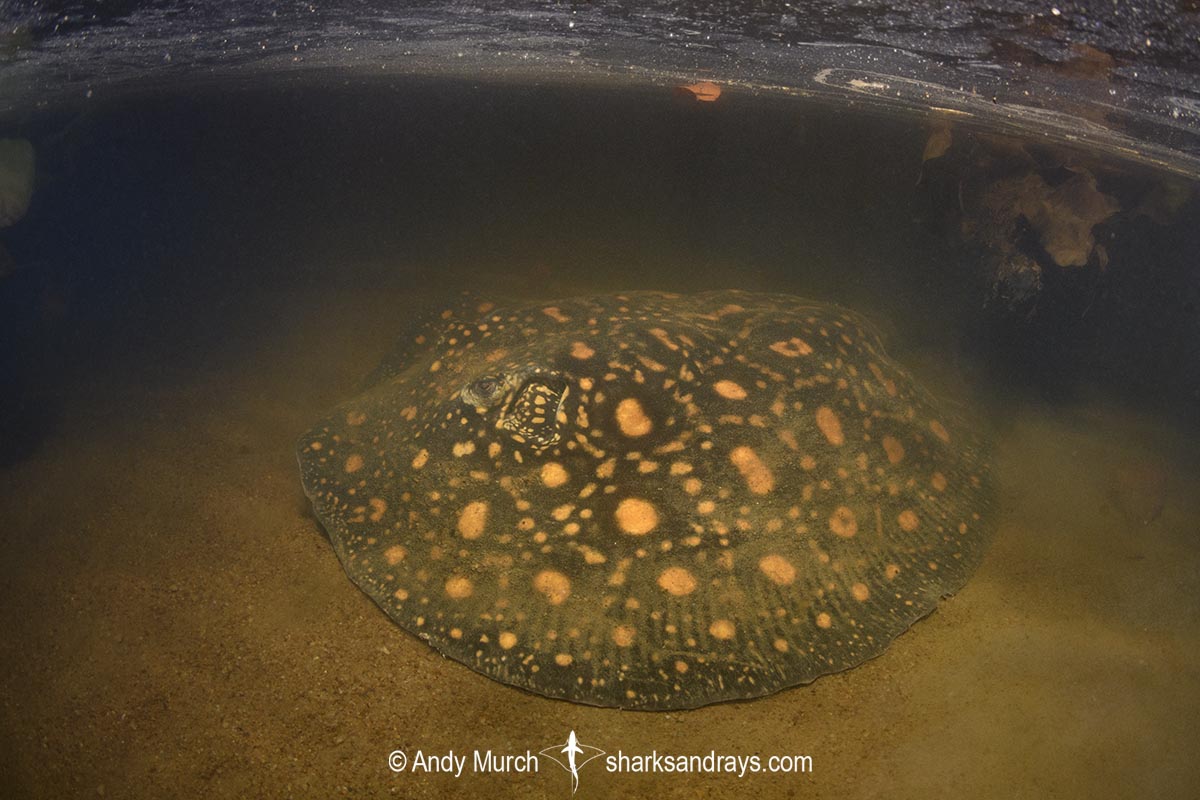
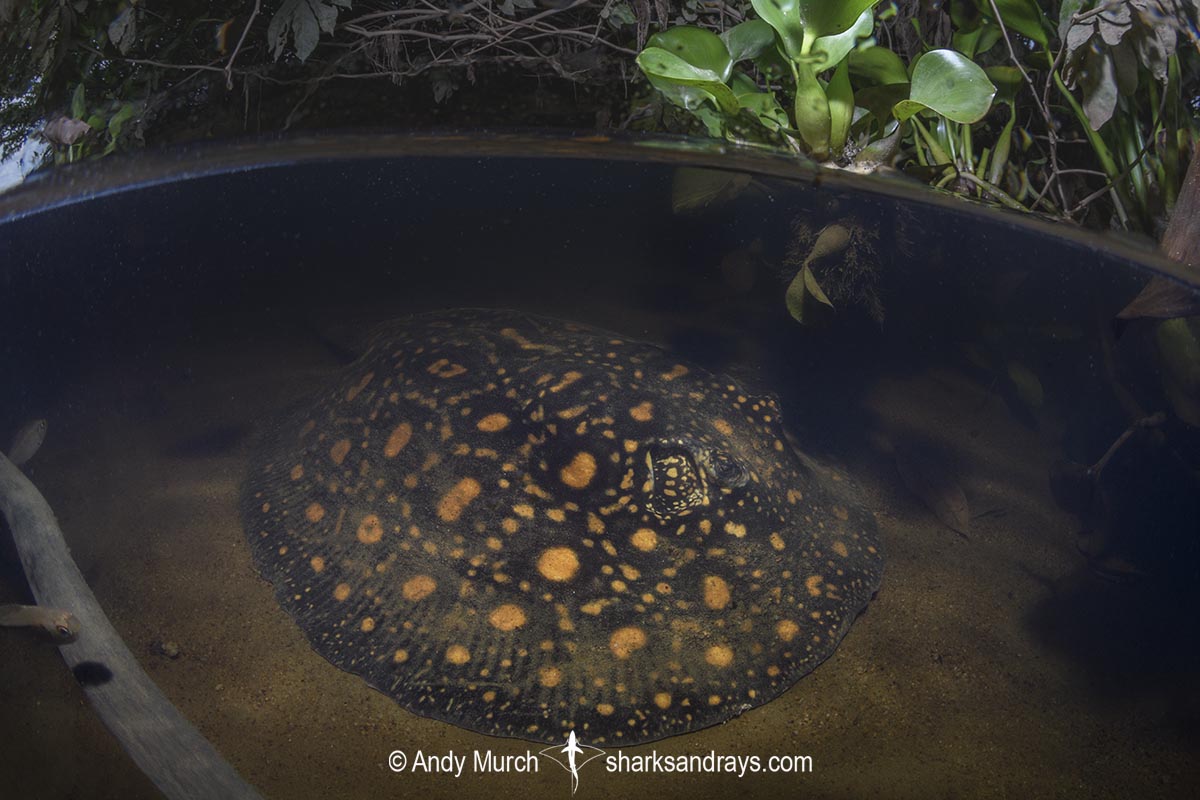
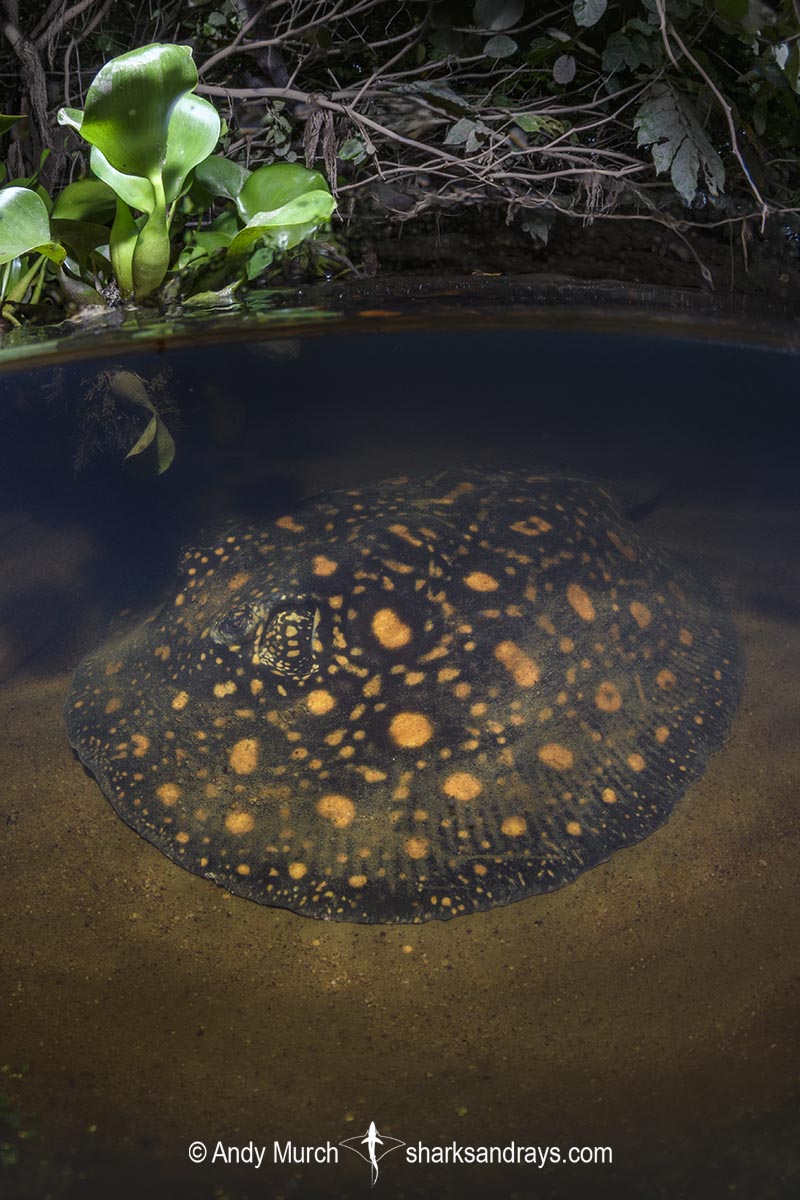
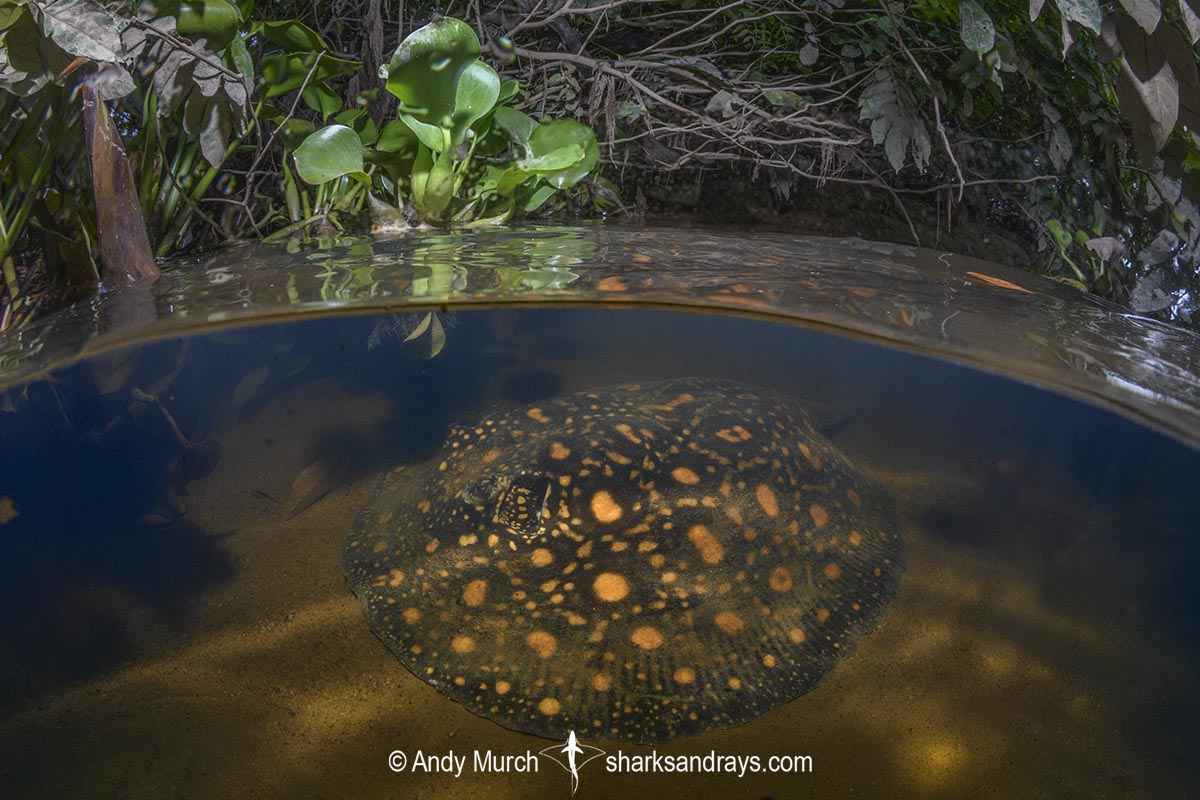
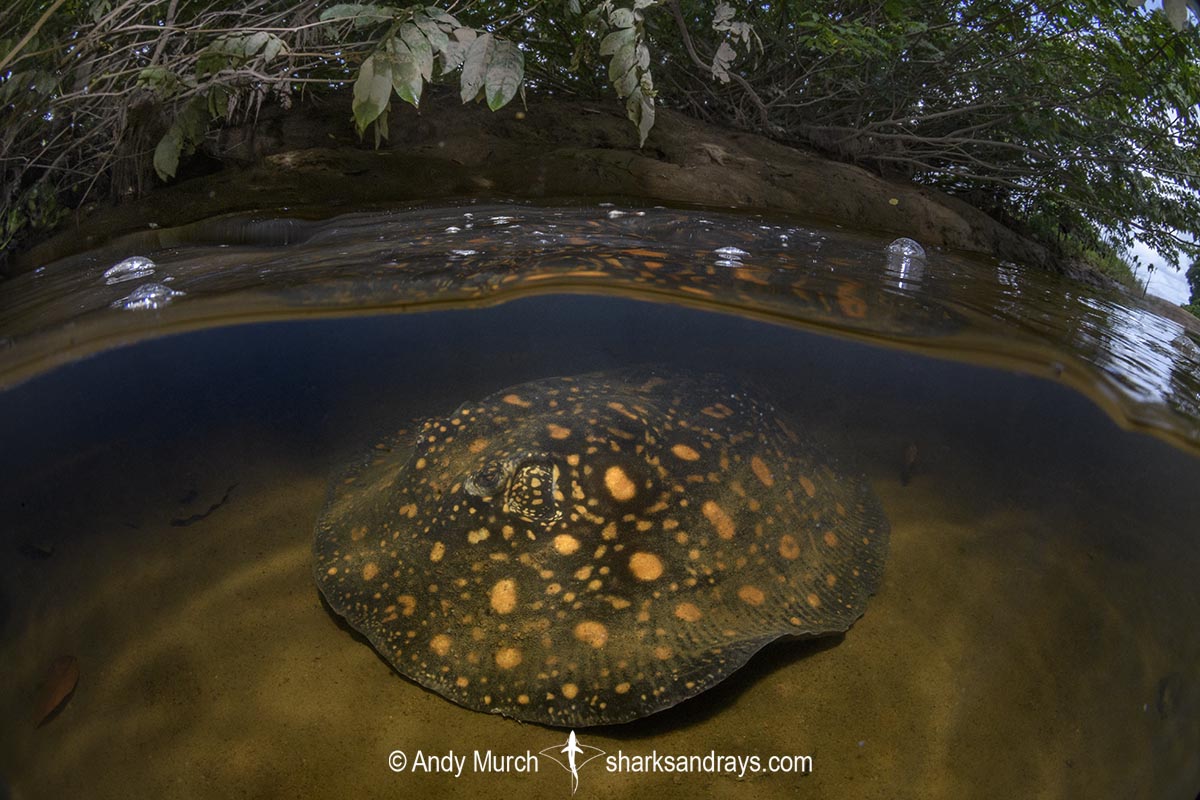
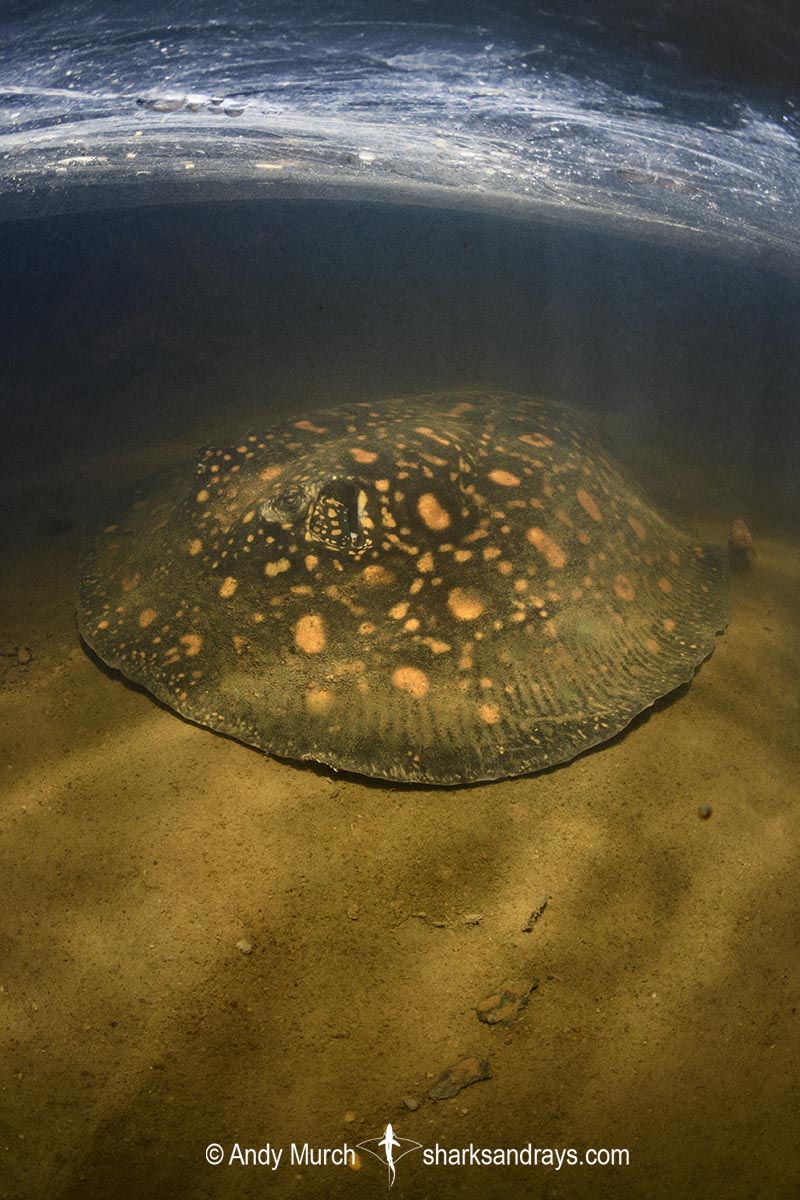
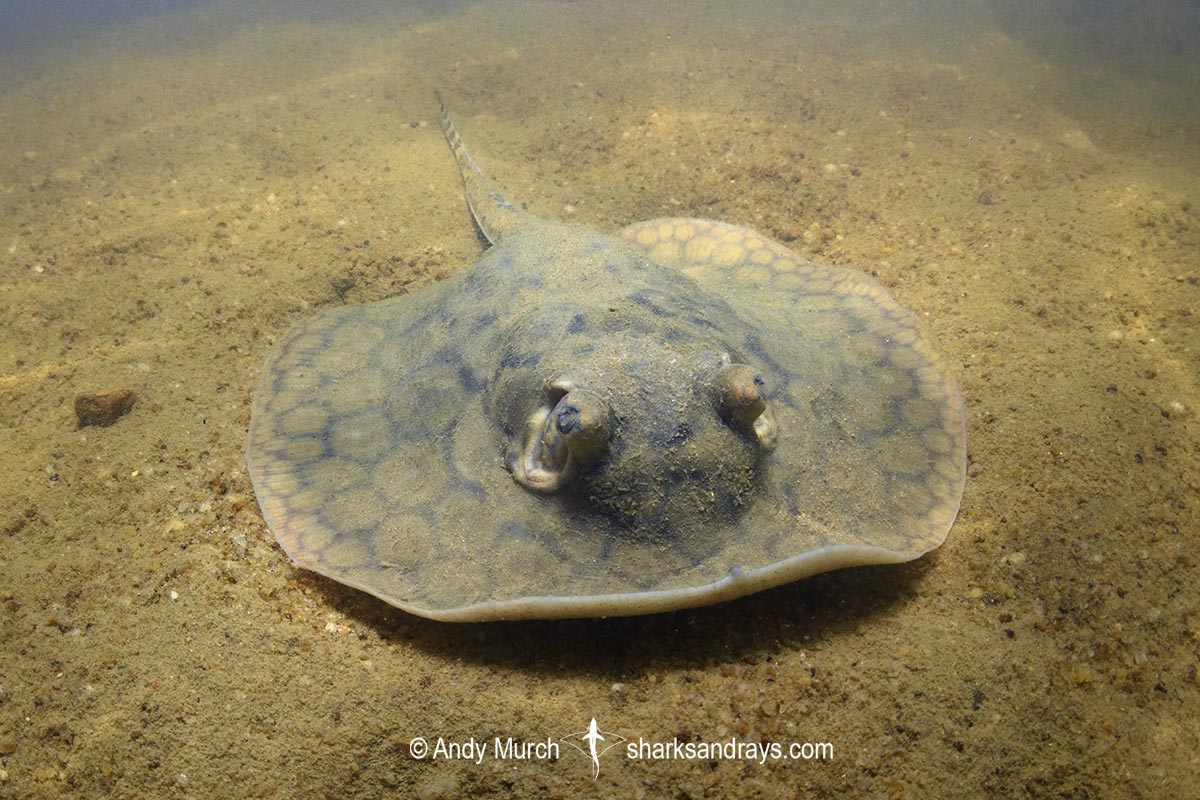
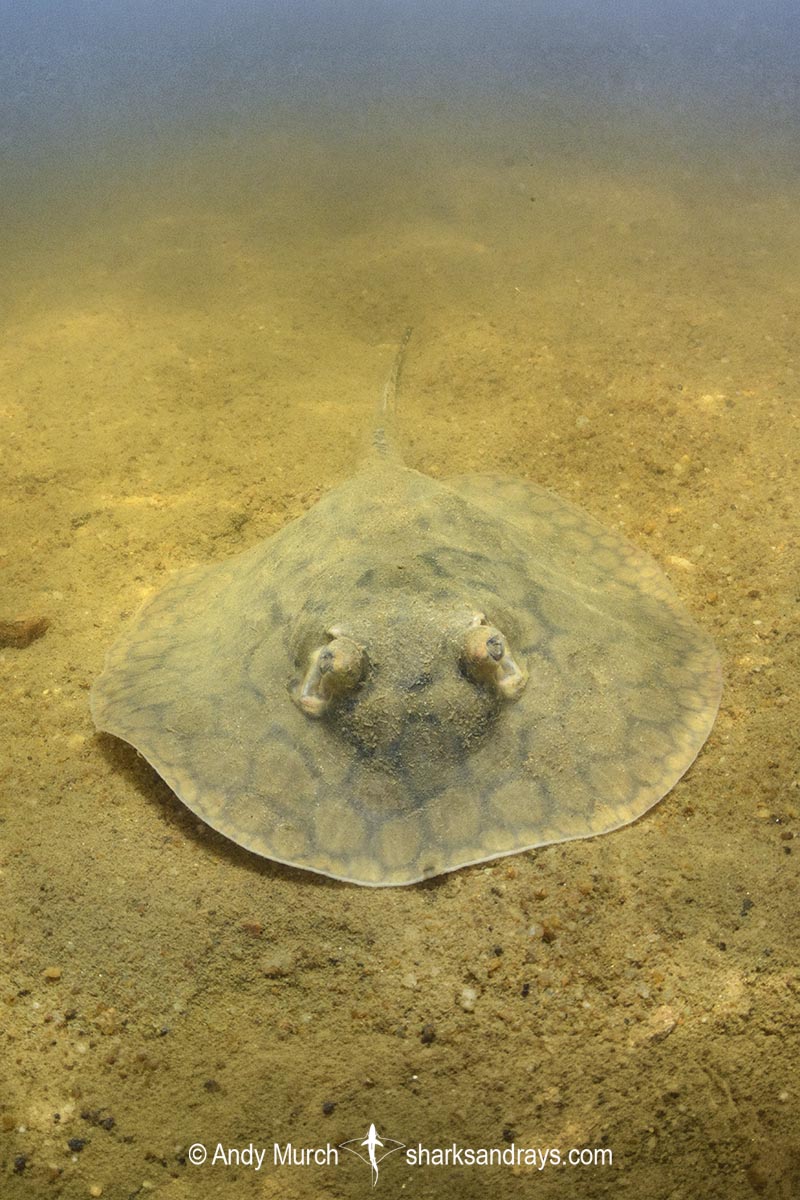
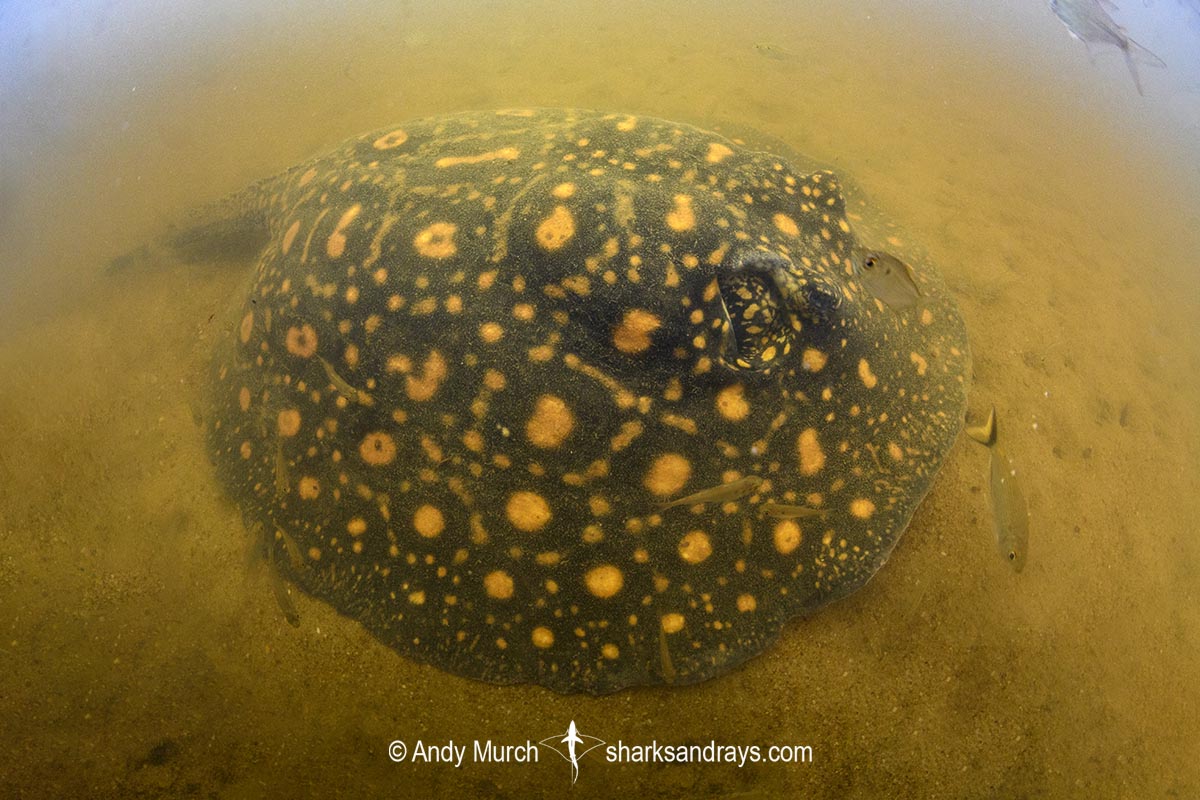
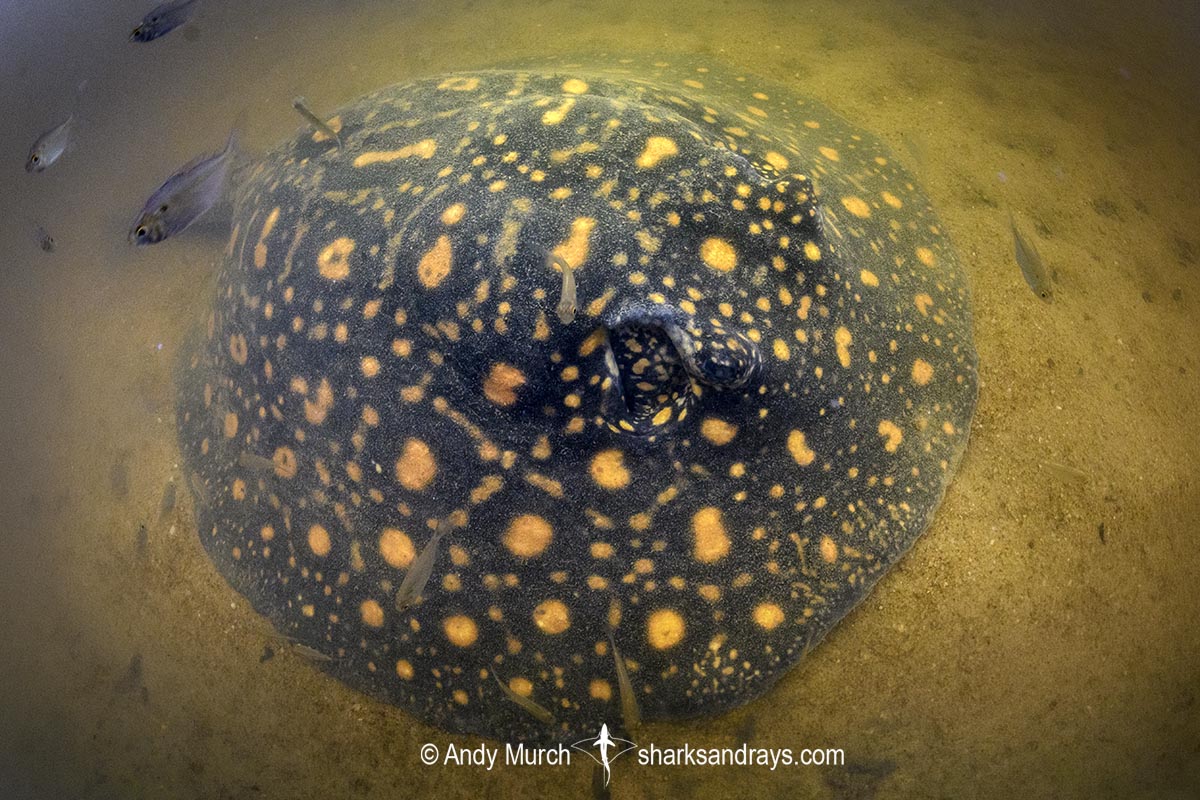
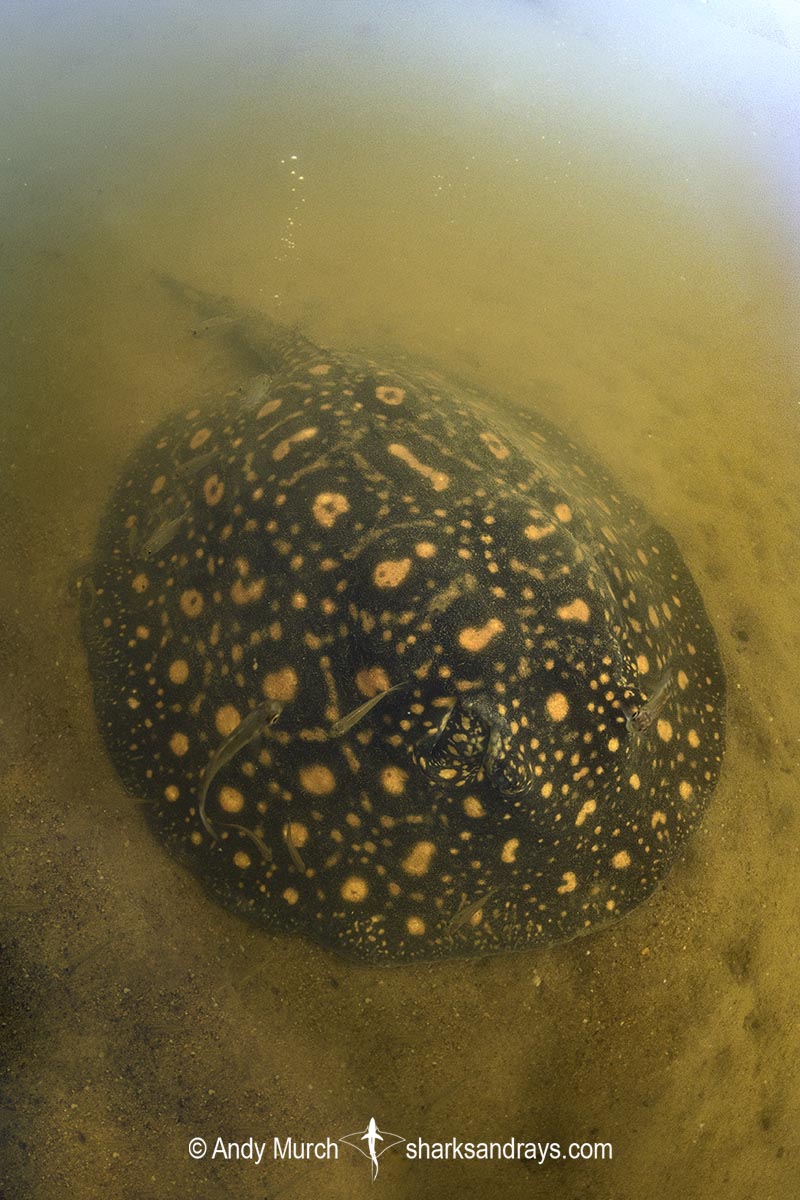
Highly changable throughout life stages. In adults, dorsum dark brown to reddish brown, with large (orbit to spiracle sized) orange spots in very thick dark rings, interspersed by irregular lines of much smaller orange spots. Juveniles light greyish brown with a network of dark lines that form a large honeycomb pattern. Ventrum off-white with dark areas laterally.
Size
Maximum disc width at least 43cm.
Conservation Status
VULNERABLE
The Suriname Freshwater Stingray (Potamotrygon boesemani) is restricted to the Courantyne River. This species is targeted for human consumption as it is considered a local delicacy. It is also highly sought after for the aquarium trade because of its attractive coloration. Habitat degradation from mining operations is also a major concern. Little is known about it’s population stability, but it is listed as vulnerable and is estimated to have undergone significant declines.
Fishermen that accompanied me to photograph this ray in the wild, mentioned that they have noticed declines.
Habitat
Demersal in tropical muddy river tributaries and main channel
Distribution
South America. Endemic to the Río Courantyne on the border of Suriname and Guyana.
Reproduction
Viviparous. Biology poorly understood.
Diet
The Boeseman’s river stingray probably consumes a combination of benthic crustaceans, mollusks, and small fishes.
Behavior
In tidally affected portions of the Courantyne River, Suriname freshwater stingrays forage in small shallow tributaries at high tide. Larger animals return to the main channel as the tide recedes to avoid entrapment and rising temperatures. Smaller animals hide in deeper sections of the creeks until the tide returns.
Reaction to divers
Shy and difficult to approach. Moves away once discovered.
Diving logistics
This ray is still quite common in small tributaries of the Courantyne River. By traveling with knowledgeable local guides and exploring tributaries during high tide, you should be able to see this ray from the banks or in small canoes.
Photographing a Suriname Freshwater Stingray underwater is a different matter! The main channel has very limited visibility at all times. The creeks where they hunt at high time have better water clarity, but they are shallow and have a base of soft deep mud. As soon as you enter the water, the mud puffs up in all directions, bringing the visibility to zero.
The only way I was able to photograph this ray underwater, was by herding a ray (with the help of four fishermen and guides) towards a shallow sand bank at the edge of the main channel. In this spot the ray settled and I was able to close the gap without the river turning into a cloud of silt. To get a better understanding of the conditions, watch this YouTube video:
Suriname Freshwater Stingray Expedition
What’s new
View our full list of updates
Similar species

Ocellate River Stingray – Potamotrygon motoro Distinguished by smaller orange/yellow spots with black margins and more southerly and westerly range.
Marajo Freshwater Stingray – Potamotrygon ocellata Distinguished by large defined orange/red spots more narrowly ringed in black. Species validity uncertain.
