
Common names
Short-tailed River Stingray, Giant Freshwater Stingray.
Binomial
Potamotrygon brachyura.
Synonyms
Potamotrygon brumi, Trygon brachyurus.
Identification
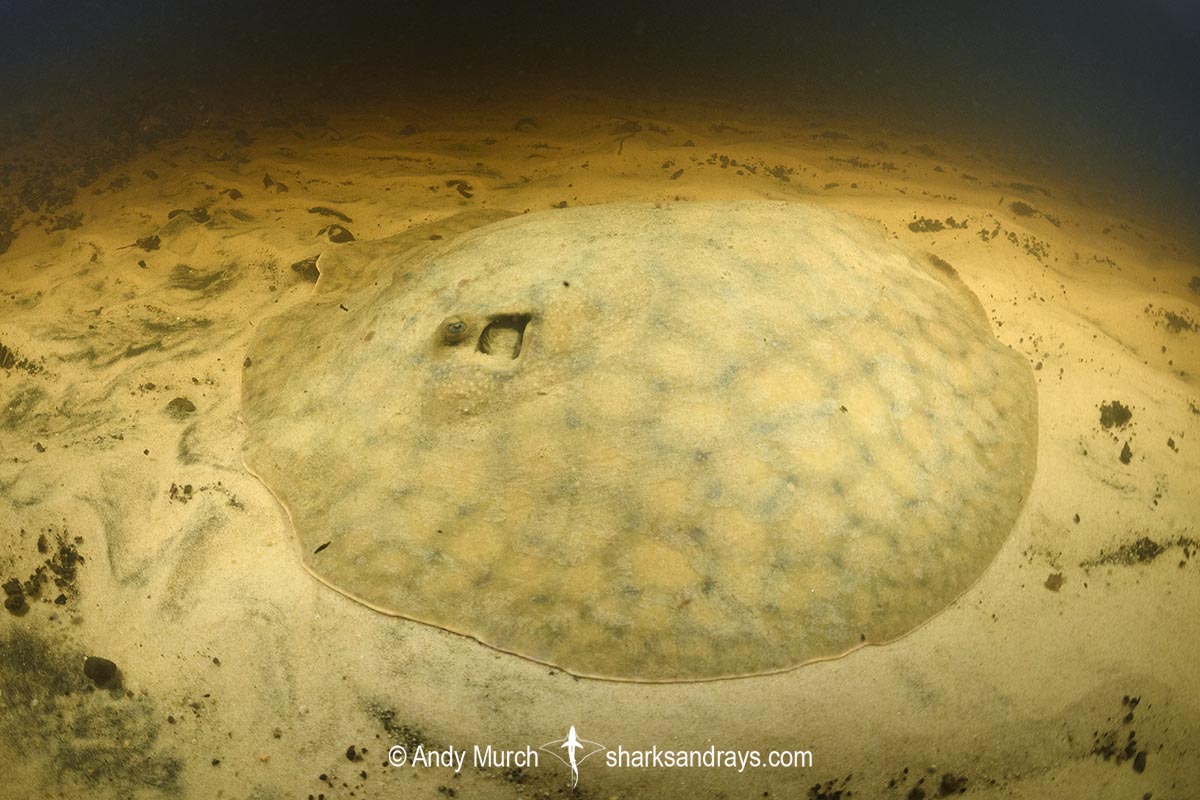
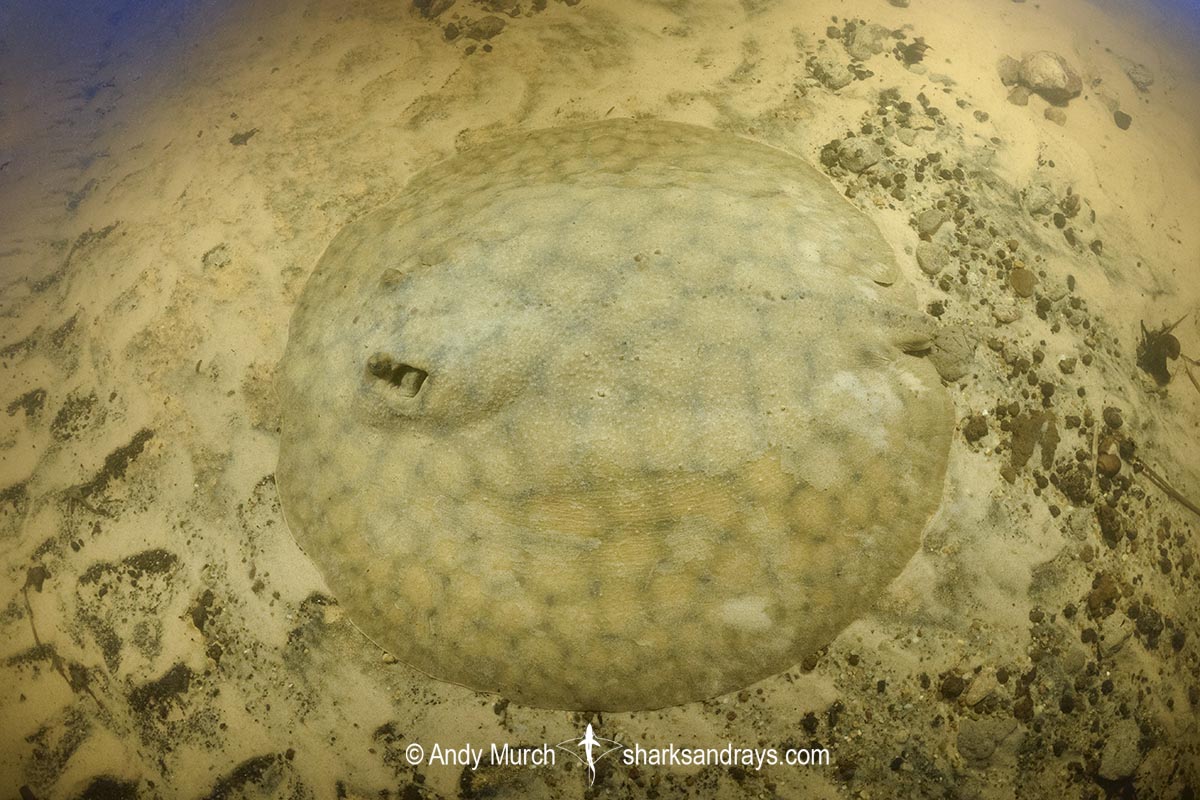
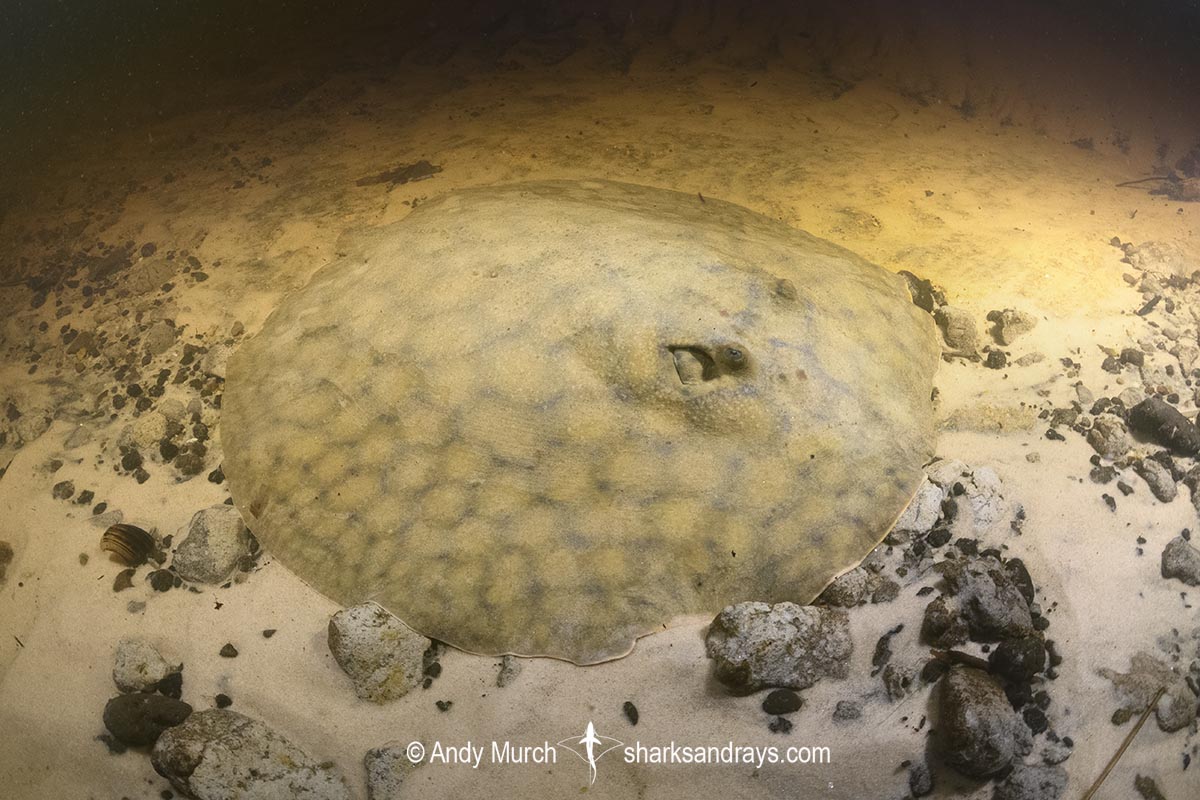
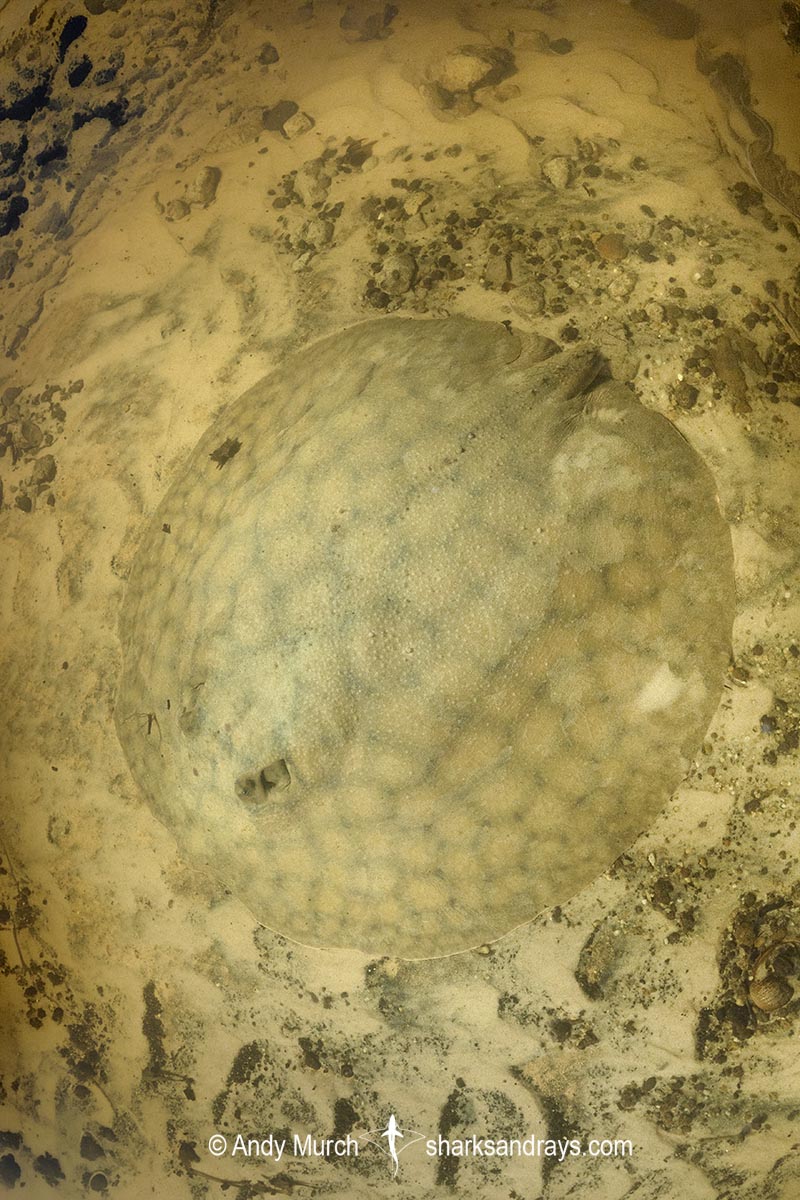
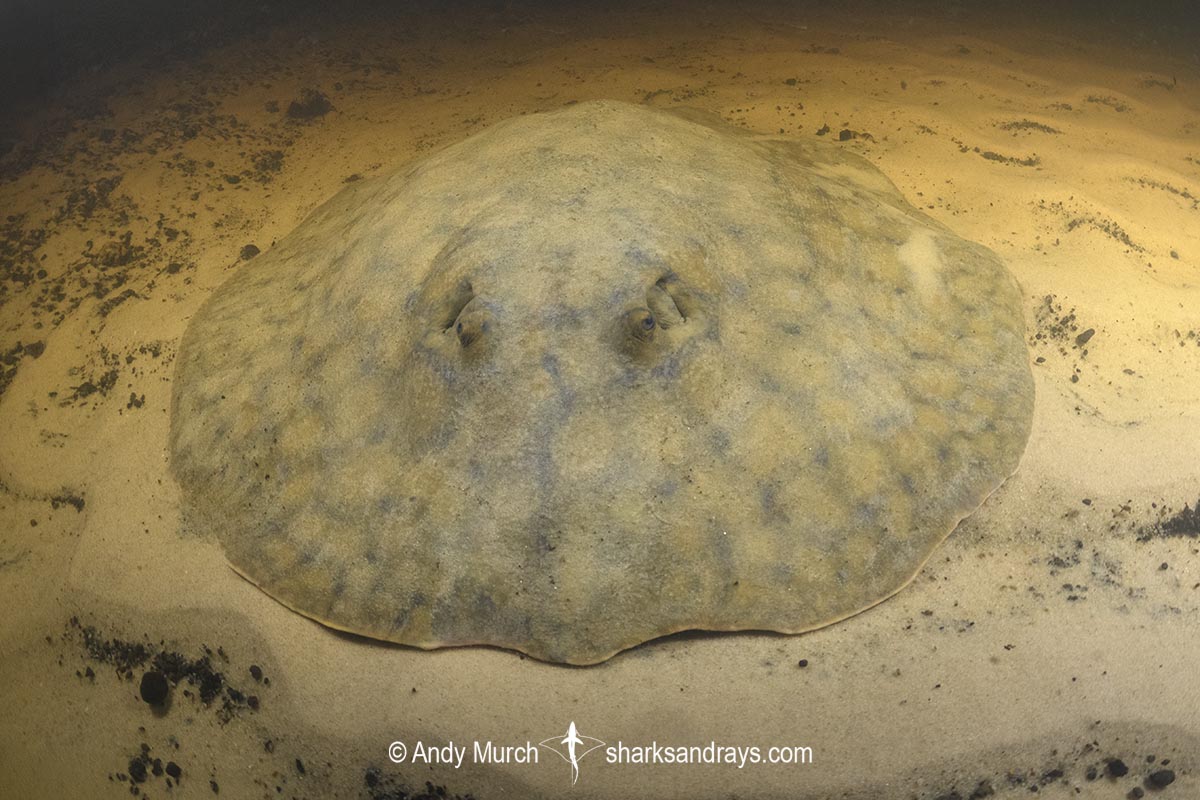
A massive freshwater stingray with a thick, robust, subcircular disc that is roughly equal in length and width. Snout broadly rounded without a prominent central lobe. Eyes remarkably small relative to body size. Spiracle trapezoid, large, with length approximately 2x to 4x eye length; lacking prominent spiracular papillae. Nostrils small and thin. Nasal curtain broad. Mouth large with 5 oral papillae. Central disc heavily covered in small, coarse dermal denticles. Pelvic fins broad, posterior margins mostly covered by the pectoral disc. Tail broad based, noticeably shorter than the disc width. Tail features 1–3 irregular rows of short thorns along the dorsal midline running to the caudal sting. Caudal stings positioned distally on tail.
Colour
Dorsum light brown to olive brown with a pattern of diffuse dark lines that form large polygonal shapes in an overall honeycomb pattern. Ventrum mostly white with a grey margin.
Size
The largest obligate freshwater elasmobranch. Maximum disc width 176cm. Disc width at birth approximately 14cm. Maximum weight 220kg.
Conservation Status
VULNERABLE
The Giant Freshwater Stingray (Potamotrygon brachyura) is targeted commercially for its meat and is heavily sought after by recreational trophy anglers. It is also captured for the international ornamental aquarium trade.
It is also impacted by habitat modification from hydro-electric dam construction and navigation channel infrastructure which limits water flow and floodplain connectivity.
Combined with late maturation, low population increase metrics, the short-tailed river stingray is highly susceptible to rapid overexploitation.
Habitat
Demersal in temperate and subtropical freshwater river systems. Prefers large, slow-moving lowland river channels, open main river environments, and extensive sandy or muddy riverbanks.
Distribution
South America. Endemic to the Río de la Plata drainage basin. Recorded throughout the Paraná-Paraguay river system, the Cuiabá River basin in Brazil, and the lower Uruguay River.
Reproduction
Matrotrophic viviparity. Embryos supplement yolk reserves by absorbing nutrient-rich uterine milk via specialized filaments (trophonemata). Up to 19 pups per litter reported.
Diet
Juvenile short-tailed river stingrays consume insects, molluscs, crustaceans, switching to demersal fishes as they mature.
Behavior
Mostly nocturnal. Spends daylight hours half-buried in sand or mud substrates. Actively forages for demersal prey by excavating holes in the soft substrate.
Reaction to divers
Easy to approach with non-threatening movements. Will eventually move away but easily followed if traveling downstream.
Diving logistics
It is possible to find short-tailed river stingrays while diving in the Ibera Wetlands in northern Argentina. Specifically in the Corrientes River. I only found one animal in three days of diving. but my dive buddy found a different one, so there is a probably a fairly large population in that area. Other rays (P. amandae and P motoro) were more common.
Timing is important because visibility in the river is very low for most of the year. September offers the best water clarity, but pulses from further upstream can turn the river to mud at any time of year.
According to fishermen, there are more rays present in December (summer) but by then the underwater observation is impossible.
What’s new
View our full list of updates
Similar species
Dur to its large size and unique polygonal pattern, the Short-tailed River Stingray is easily distinguished from all other South American Potamotrygonid species.
