
Common names
Network Wobbegong, Reticulated Wobbegong.
Binomial
Orectolobus reticulatus.
Synonyms
None.
Identification
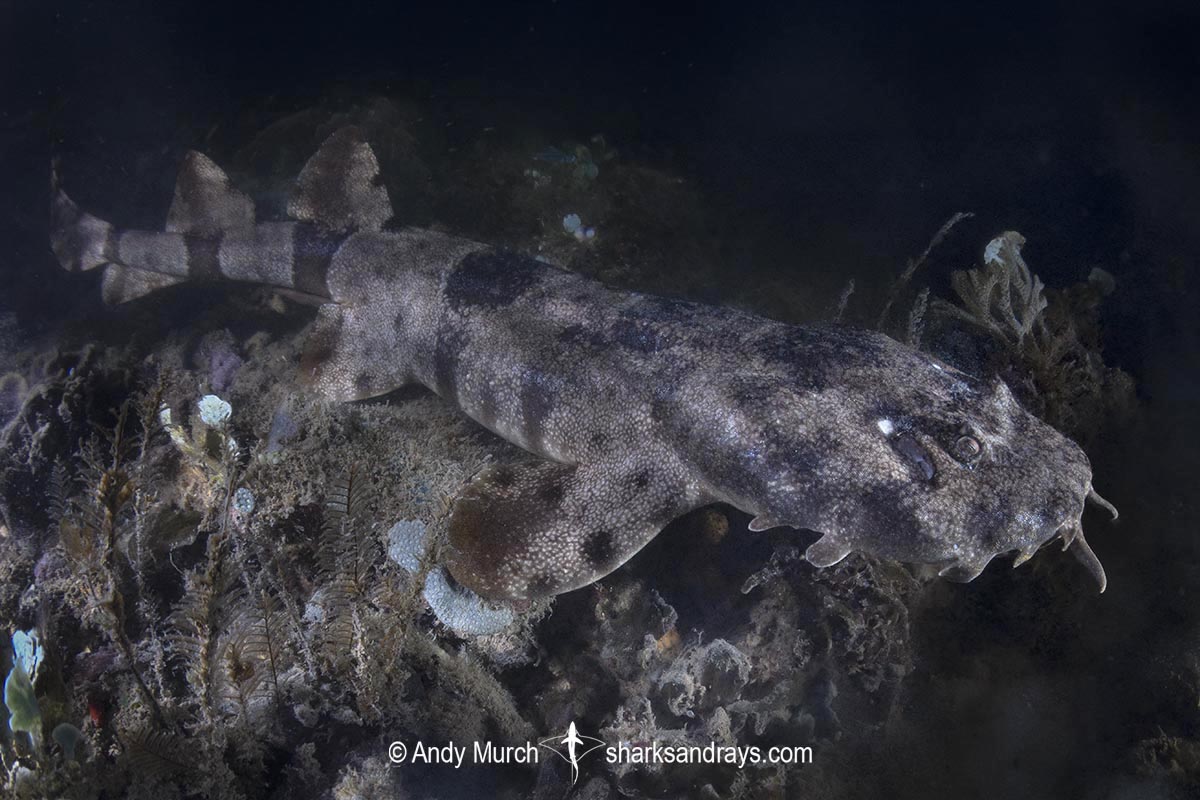
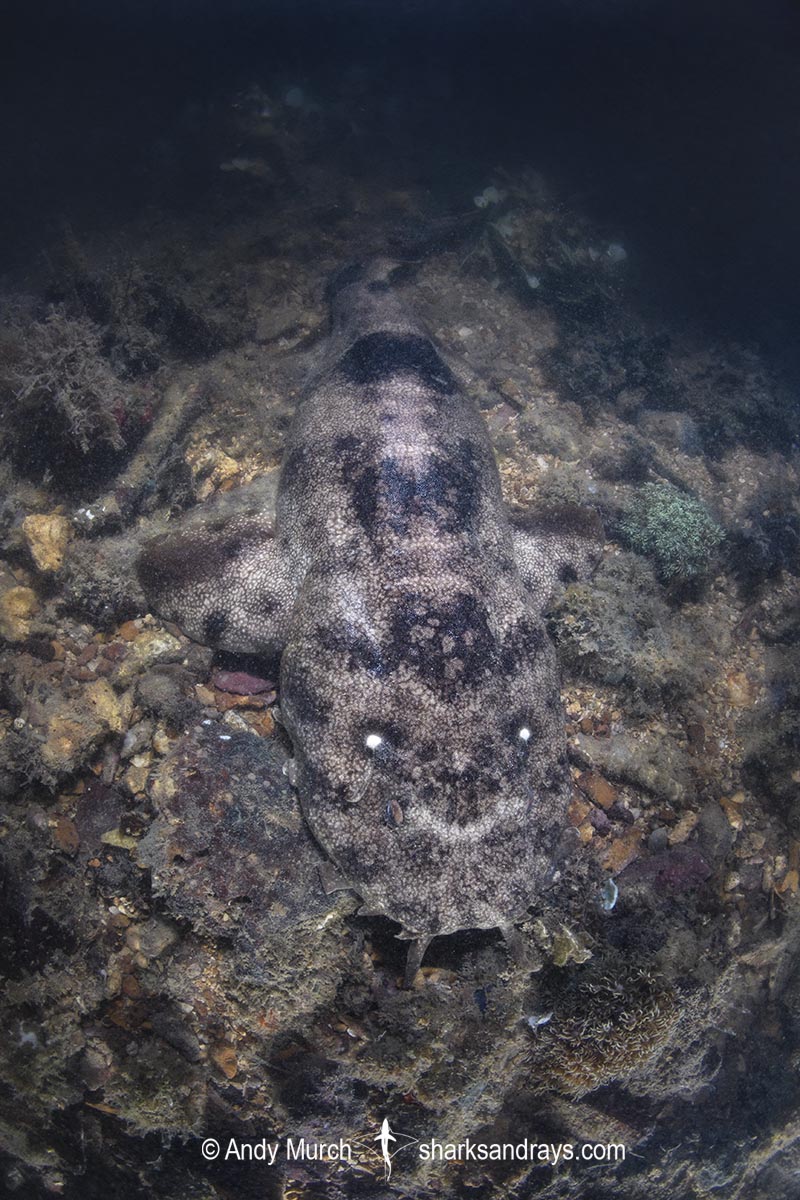
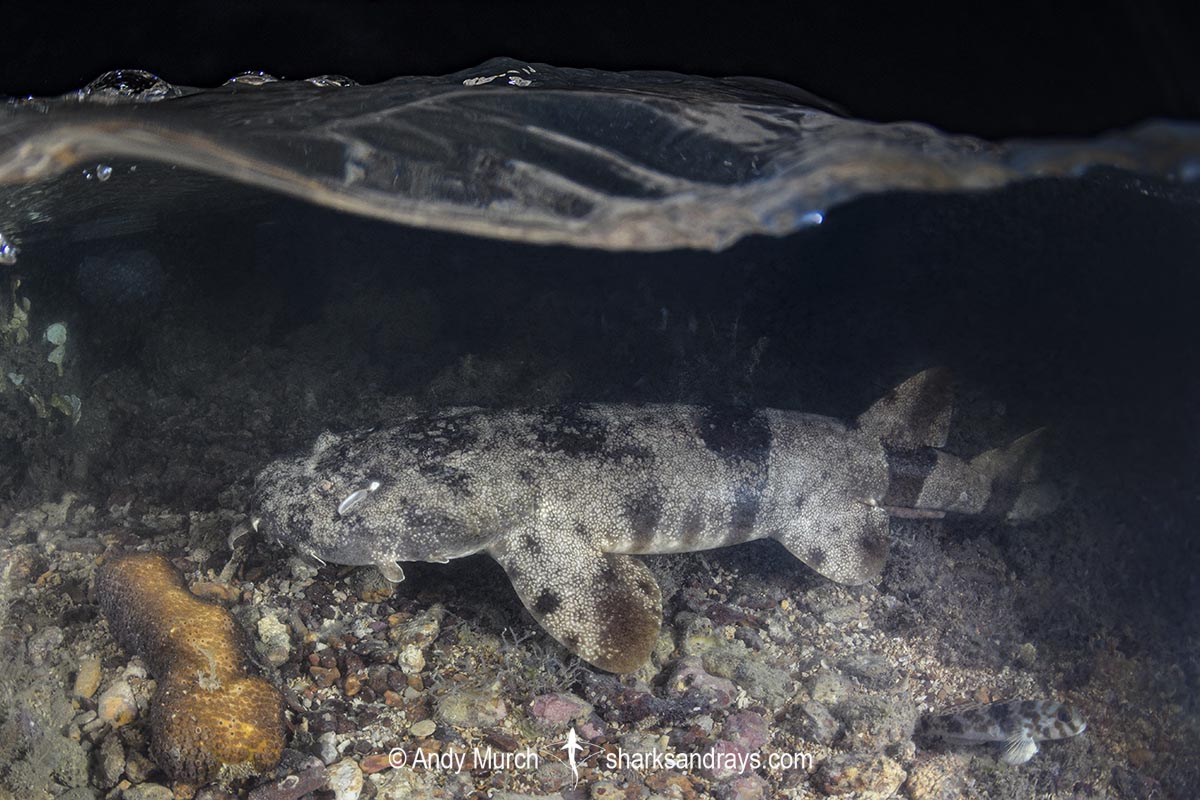
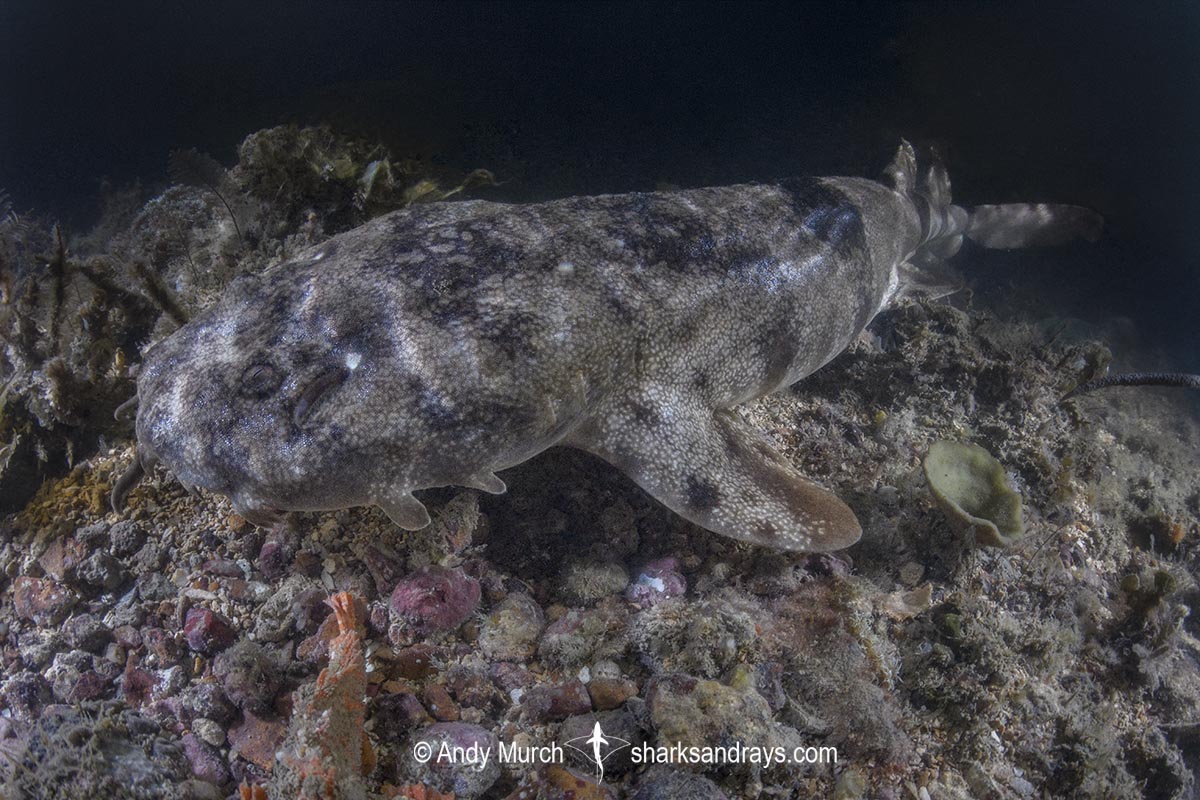
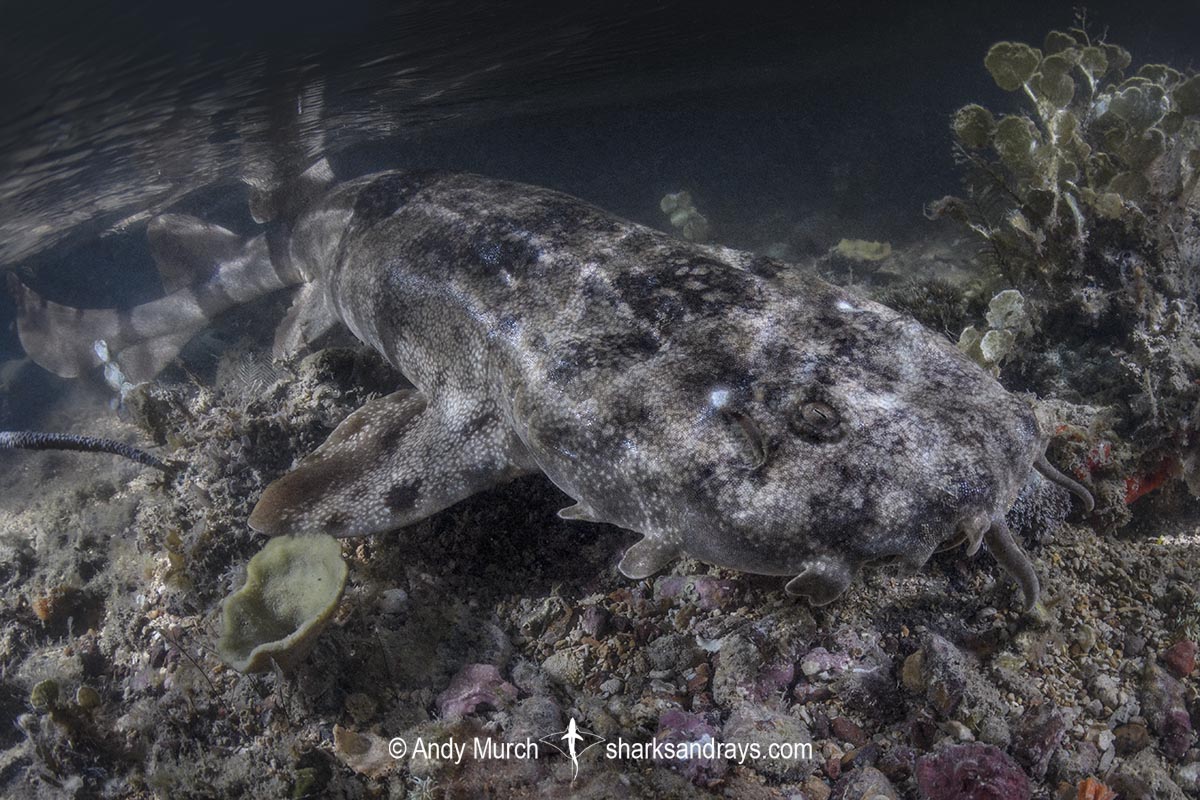
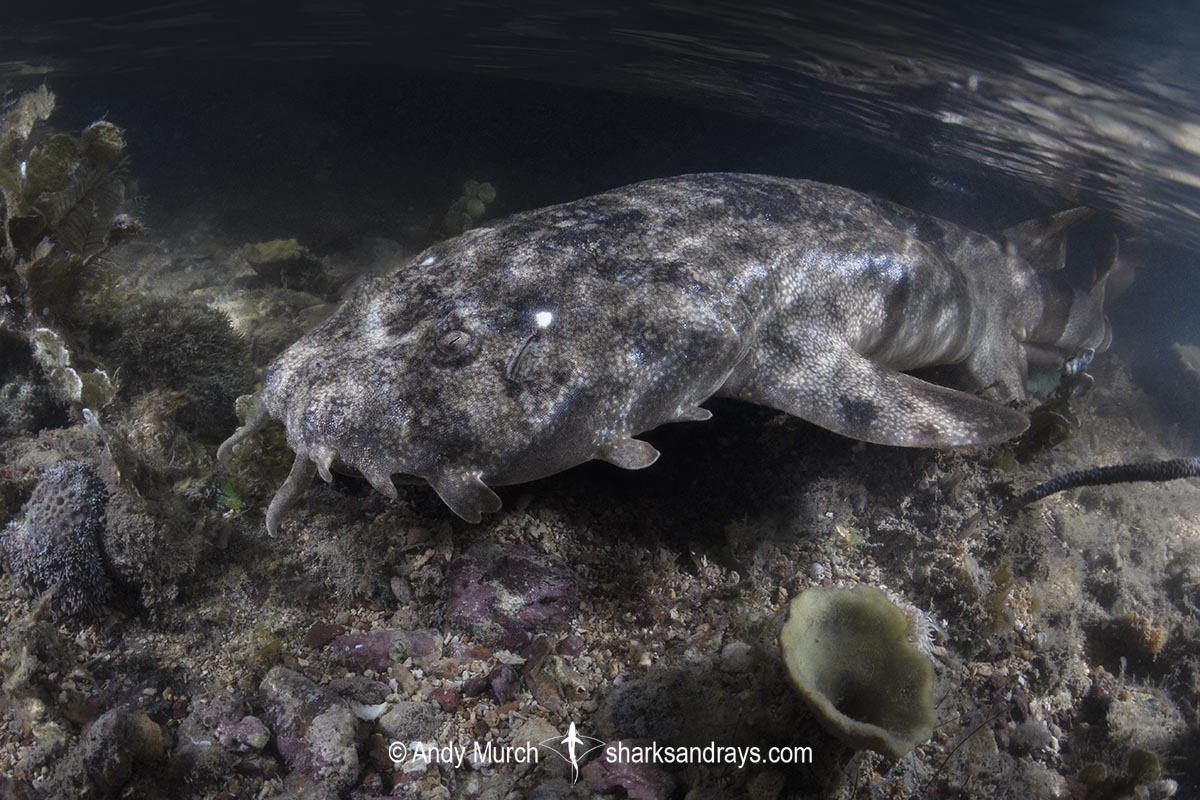
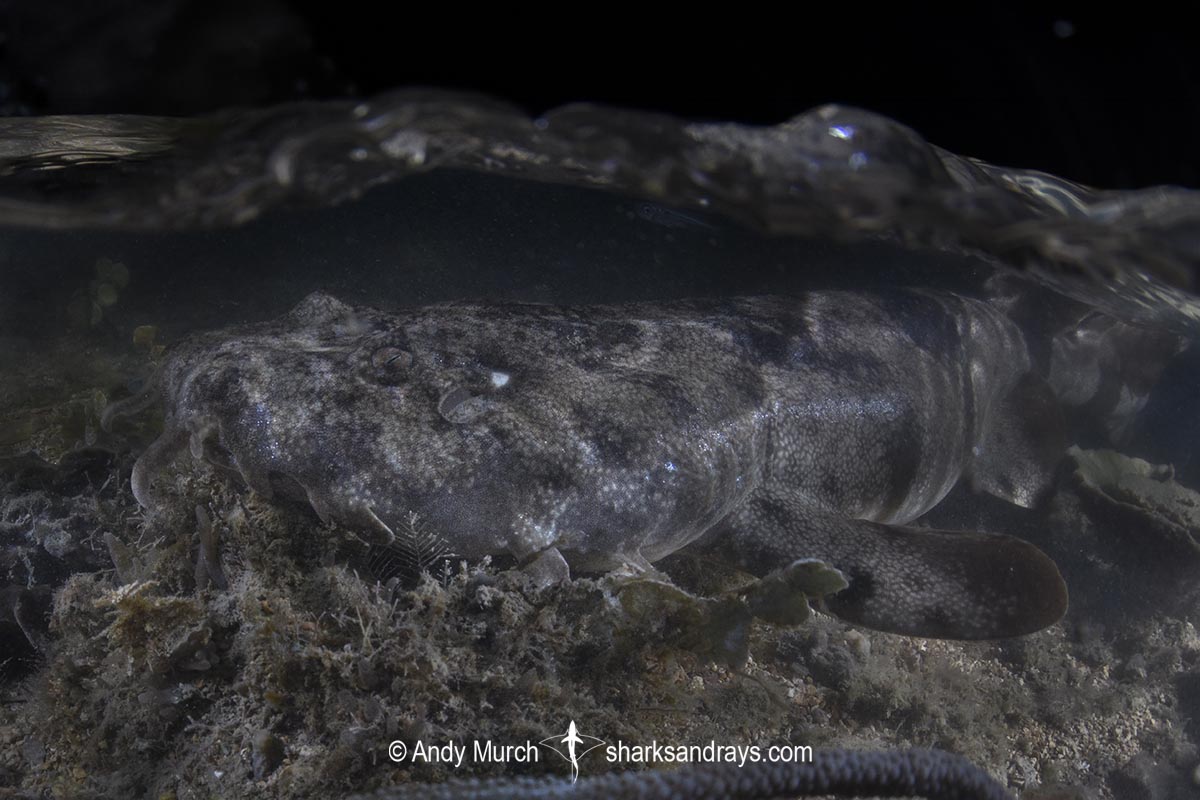
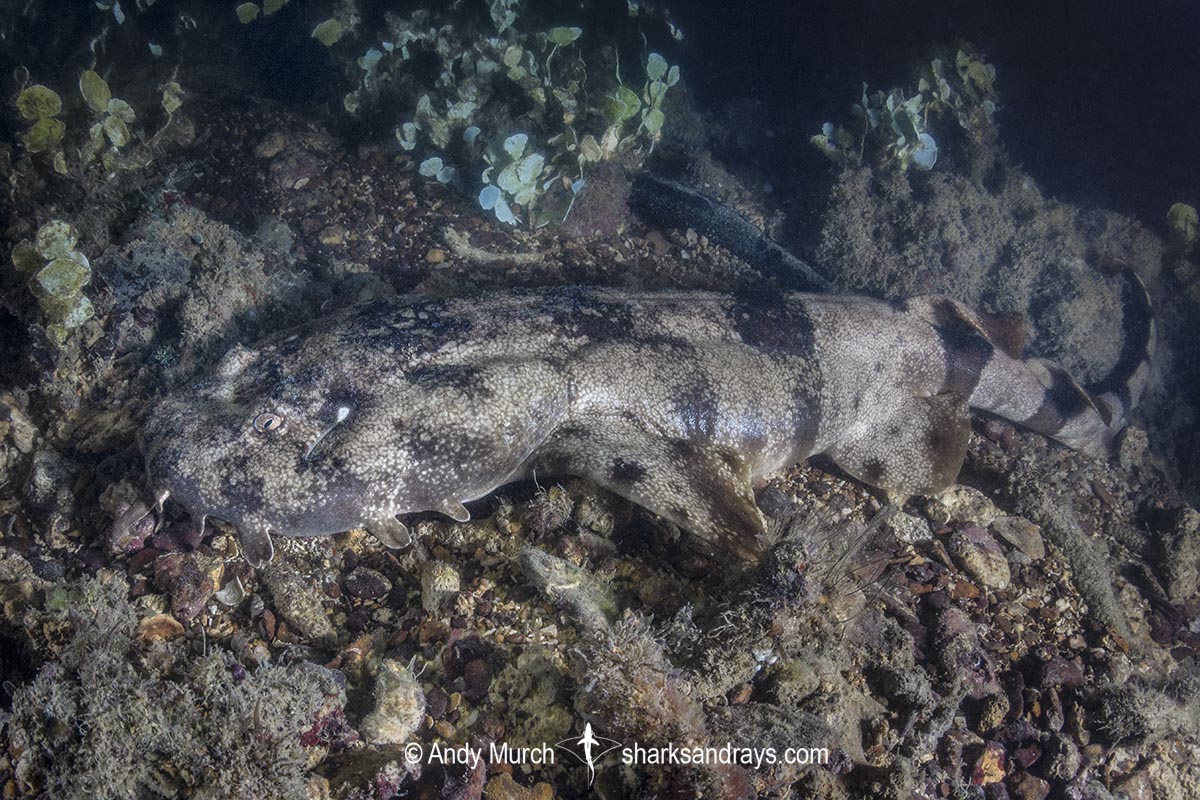
A small species of wobbegong. Nasal barbells unbranched. Two unbranched preorbital dermal lobes; first pair small and falcate, second pair very wide with central indentation. Two unbranched post-spiracular dermal lobes; the first pair wide and spatulate, second pair shorter and thinner.
Two large dorsal fins; first slightly klarger than second. First dorsal origin over pelvic fin insertion. No warty tubercles on head or body.
Dorsal colour pattern grey-brown with a fine network of small pale spots forming an overall pale reticulated pattern. A small white spot posterior to spiracle. Three large dark saddles from head to first dorsal; first and second saddles indistinct, the third bold and circular with a less distinct lateral dark band. A wide dark band below each dorsal fin, with narrower bands to tip of tail. Ventrum pale yellow.
Size
Maximum length at least 52cm. Size at birth unknown.
Conservation Status
LEAST CONCERN
The Network Wobbegong has an extremely limited range, but its preference for shallow inshore reefs protects it from commercial fisheries as they do not operate in those areas. It should be noted that this is a recently described species, few specimens have been recorded, and very little is known about its biology. Consequently, there is no baseline to assess whether it is naturally rare or already significantly depleted.
Habitat
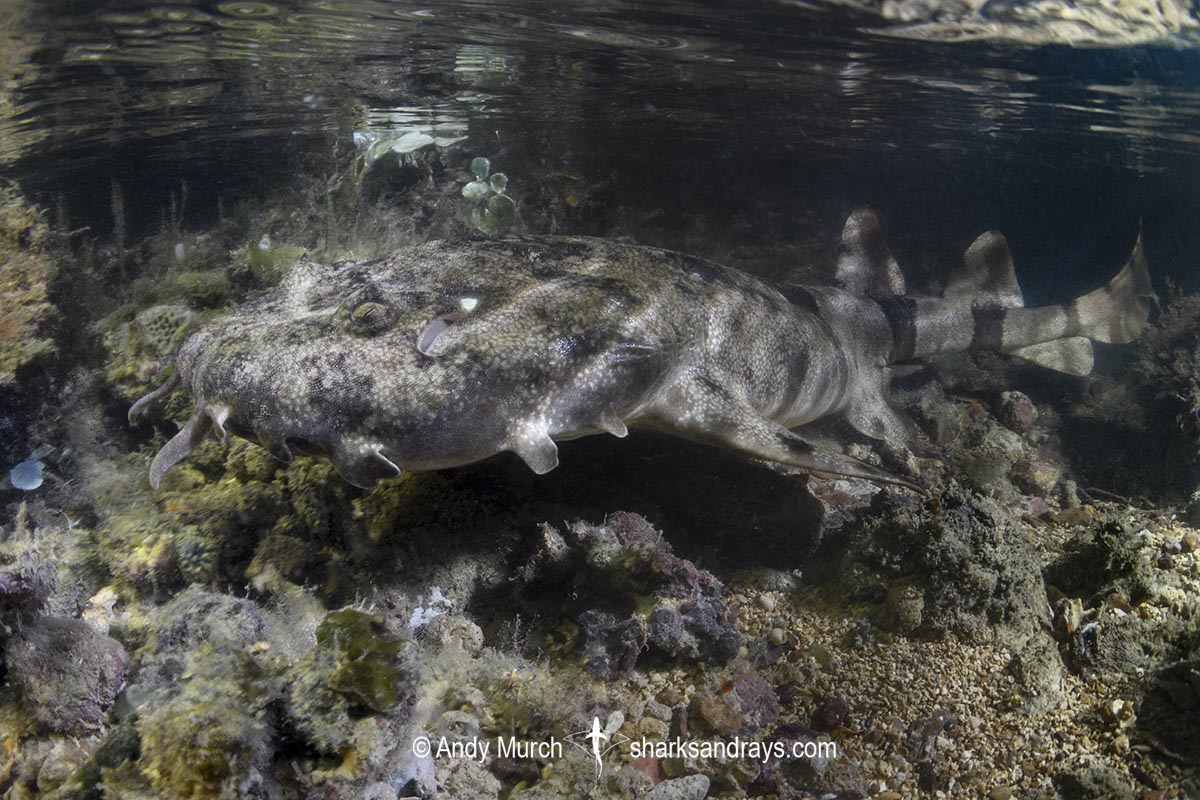
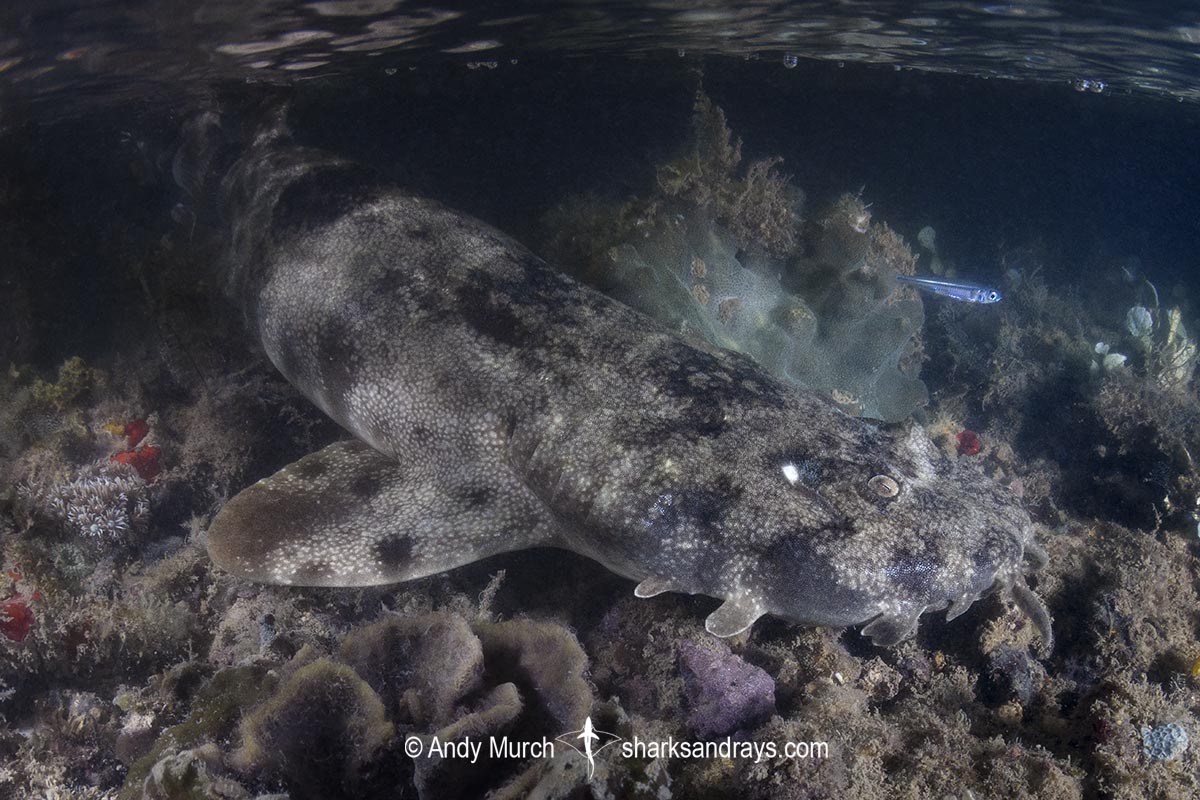
Tropical, shallow coral or rocky inshore reefs, usually in turbid water. From the intertidal zone to ~20m.
Distribution
The network woobegong is found exclusively on the northern coast of Australia from Louis Island in W.A. to Darwin Harbour in the Northern Territory.
Reproduction
Ovoviparous. Presumably lecithotrophic, (wherein the foetus is solely nourished by the yolk within the egg case) like other wobbegongs. Reproductive cycle poorly known.
Diet
Unknown, but based on dentition, it probably preys mostly on small fishes, cephalopods, and possibly crustaceans.
Behavior
Nocturnal. Rests by day under reef ledges, usually in turbid water. An ambush predator that rests on the reef, waiting for fishes to swim within striking distance of it’s jaws.
Reaction to divers
Easy to approach (once finally located). Remains at rest, relying on camouflage unless harassed.
CAUTION: Wobbegongs have been reported to have bitten divers that got too close to their mouths, even when not disturbed.
Diving logistics
The Network Wobbegong is rarely encountered by divers. Partly, because it inhabits turbid environments where divers are unlikely to go, and partly because that same environment is also inhabited by extremely dangerous saltwater crocodiles.
The only time that it is relatively safe to look for this shark is during extremely low spring tides, when the ocean recedes far from shore and inshore sharks are confined to small rock pools. Even then, the danger of crocodile encounters is not completely negated. Some of the beaches around Darwin are worth exploring if you are there at the right time of year, but it is important to have spotters with you and stay far away from the ocean’s edge where crocodiles are likely to be waiting for the incoming tide.
What’s new
View our full list of updates
Similar species
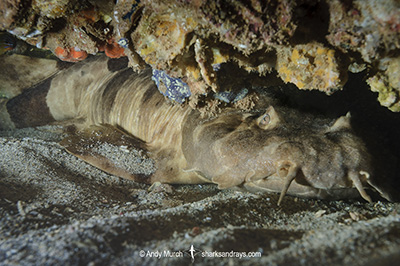
Northern Wobbegong – Orectolobus wardi Similar overall, but easily distinguished by simpler pattern of large spots and blotches without fine reticulations.
