Indo-Malaysian Ray Photography Expedition
April 2026
April 2026
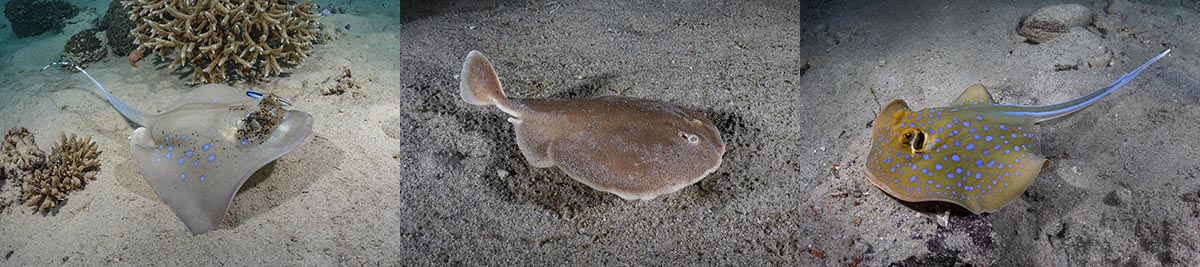
In April 2026, I flew to Kuala Lumpur to track down some of the many southeast Asian elasmobranch species that are not yet on sharksandrays.com. From KL I continued onward to Banda Aceh and caught a ferry to the small island of Pulau Weh on the northern tip of Sumatra, Indonesia. My quarry was Bob Ward’s Blue Spotted Maskray (Neotrygon bobwardi).
There was a time when all bluespotted maskrays were lumped together as Neotrygon kuhlii, but recent genetic analysis by Philippe Borsa (who I spoke to at length before the trip), resulted in the species complex being split into upwards of a dozen regional species. Some of these have immediately obvious differences, but others are so closely related that genetic analysis is the only way to separate them.
Bob Ward’s Maskray is one of the more subtle blue-spotted species, but it is the only one reportedly occurring in the north of Sumatra, so a quick trip to Pulau Weh (aka Sabang Island) was a safe bet.
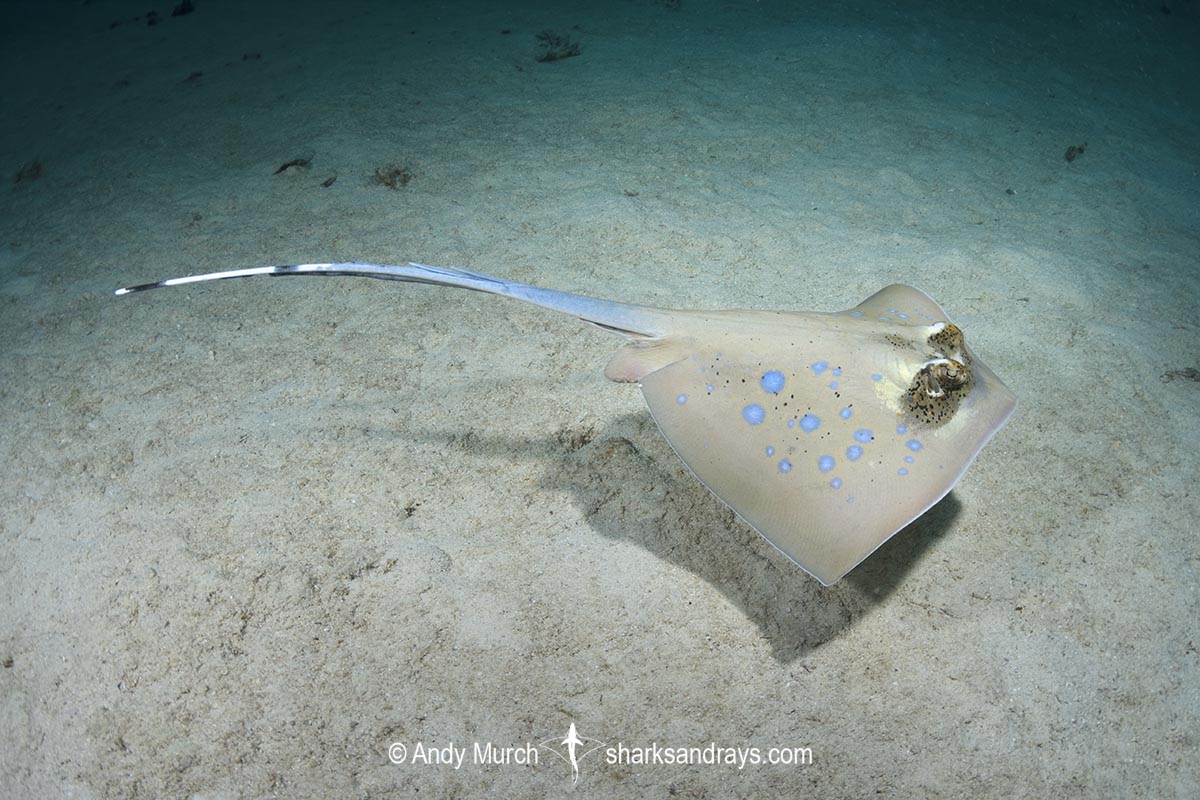
As soon as I submerged at the house reef, I could see maskrays milling around in the shallows. I ended up doing the same shore dive multiple times each day and encountered dozens of rays on each dive.
Unlike some of the complex and frustrating trips I have been on to find a rarely photographed species, this was simply a matter of identifying the correct area and the rest was easy. Check out this video from the trip:
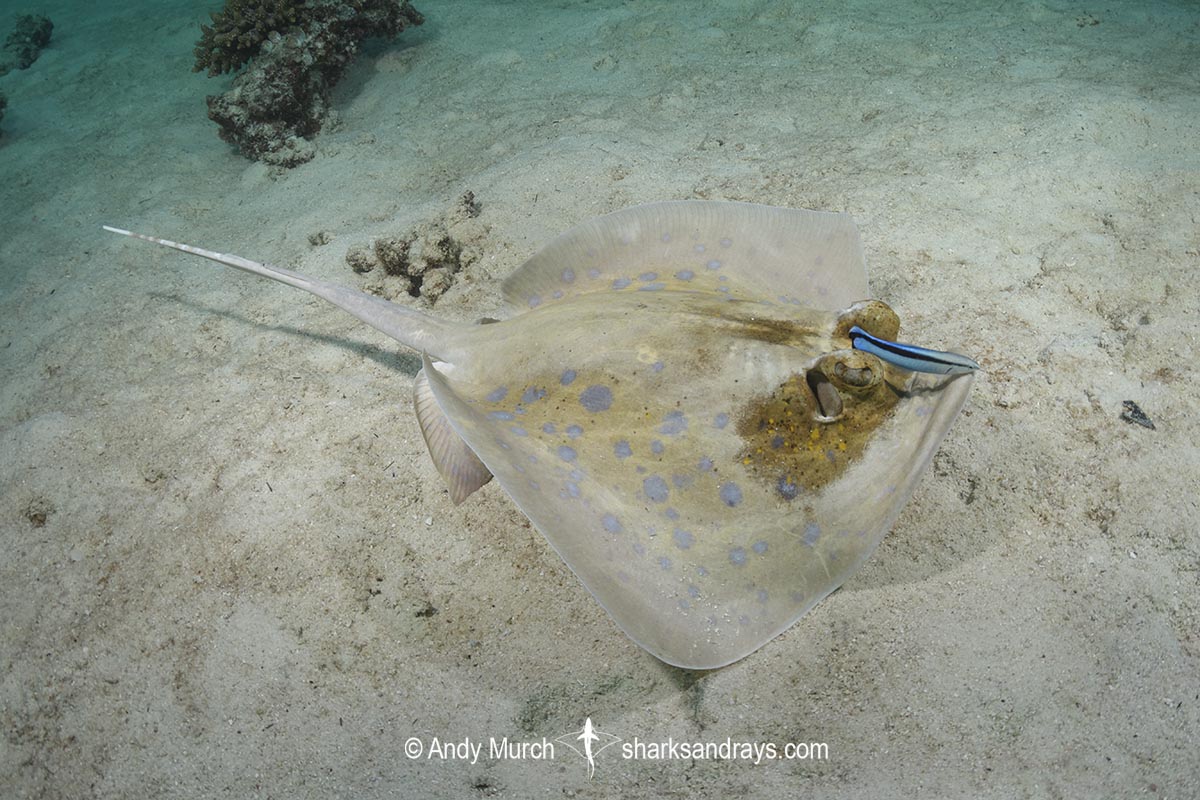
There was very little colour variation among individual rays. Some had more blue spots than others, but the spots were always clustered on the pelvic fins, with very few (if any) spots on the torso.
One ray had more spots than most of the others, but no black banding on it’s tail. This was the first example of partial lucism I have seen in maskrays.
After a few days documenting Bob Ward’s Maskrays, I flew back to Kuala Lumpur and headed to the east coast of Peninsula Malaysia. From there, I caught a ferry to Tioman Island to try to find a Finless Sleeper Ray (Temera hardwickii).
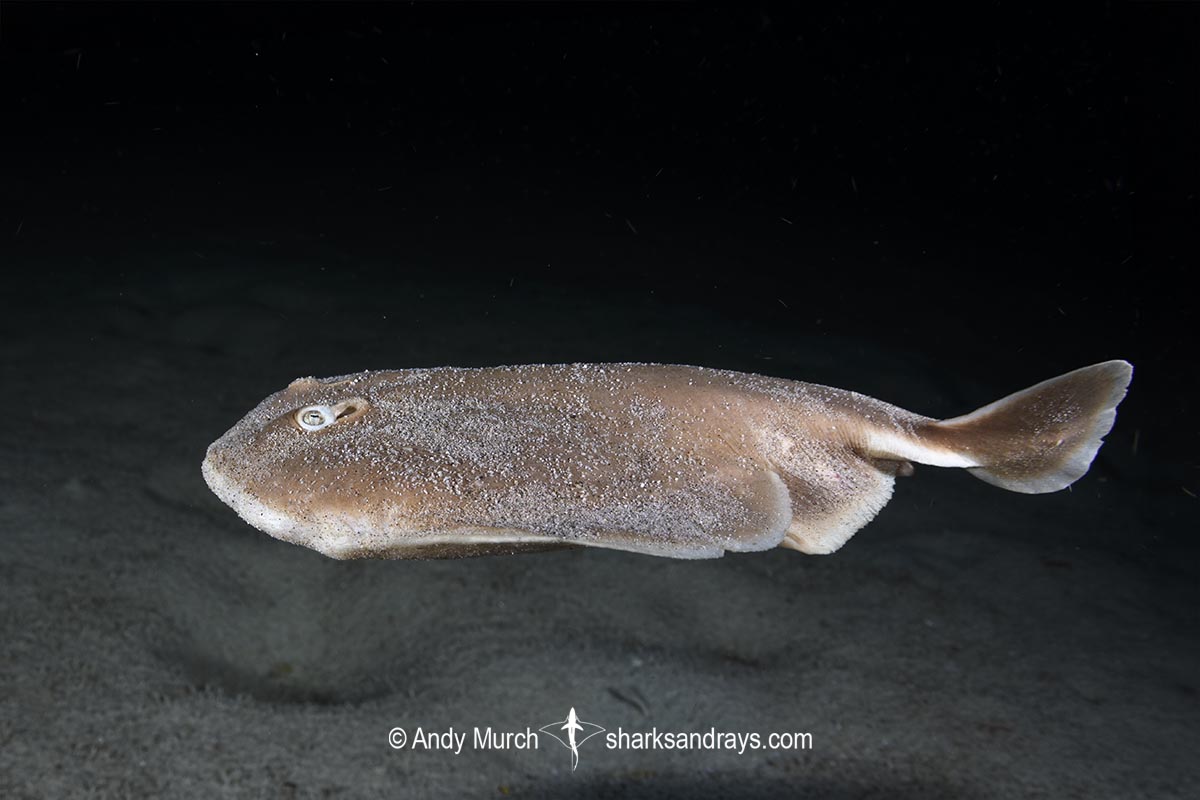
I have seen very few images of Finless Sleeper Rays in the wild, but after many hours of research, I stumbled upon a video clip of a sleeper ray seen on a night dive near Salang Jetty on the east end of Tioman. I figured it would be a challenging subject, partly because this is an uncommon species to start with, and partially because Temera hardwickii is the smallest ray in the world and it spends most of its time buried in the substrate. It is also nocturnal. So even if there was one in the area, the chances of me running into it were pretty slim.
After checking into a hotel near Salang Jetty, I conducted a solo shore dive in the afternoon to build a mental map of the area before darkness hid the details. Once it was dark, I returned to the beach and performed a thorough search pattern back and forth along the entire shallow portion of the bay.
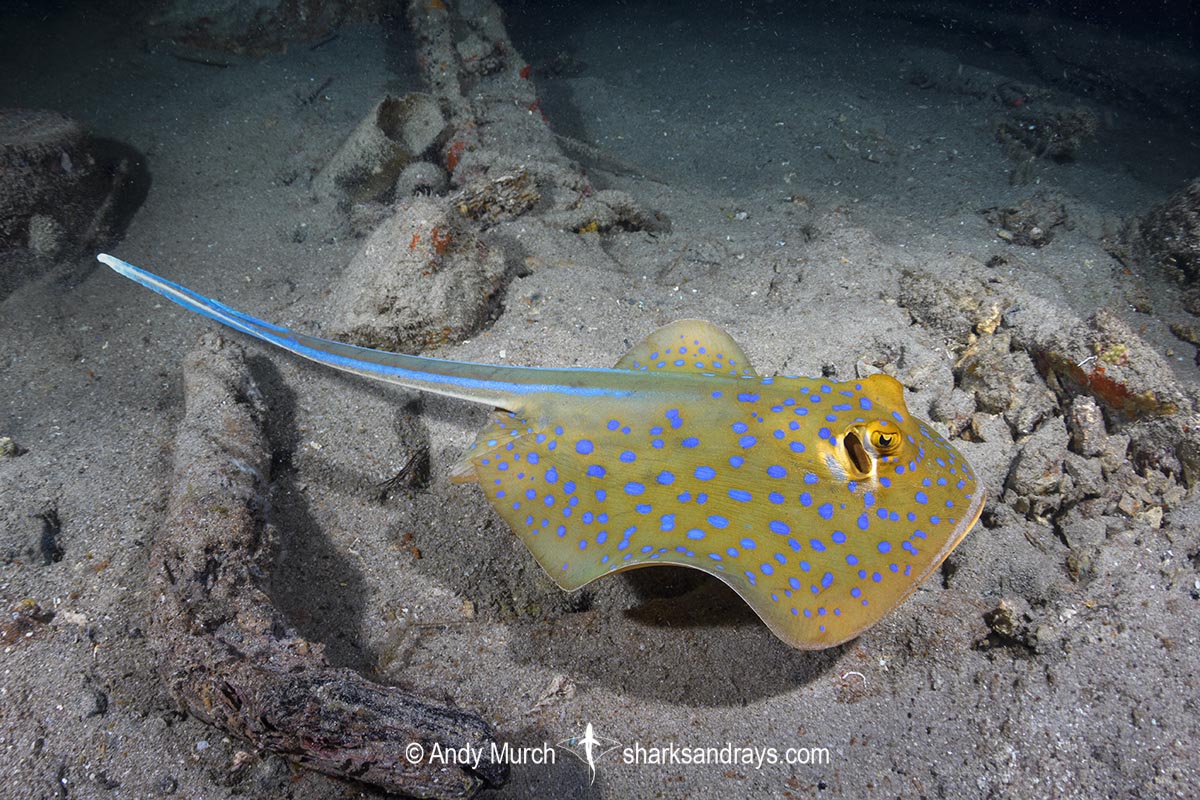
My flashlight picked out a few beautiful bluespotted ribbontail rays (Taeniura lymma), but there were no tiny sleeper rays to be found.
The next day I made another daylight dive to no avail, but in the evening while slowly kicking along near the jetty, I finally spotted a tiny teardrop shaped bottom dweller, digging for its supper; the elusive Finless Sleeper Ray!
I spent the next hour following it around, snapping the occasional shot while trying to observe its movements. The tiny batoid barely travelled three or four metres in that hour, so I assume that it has a very small home range. It was a fabulous first encounter with this species that I will never forget!
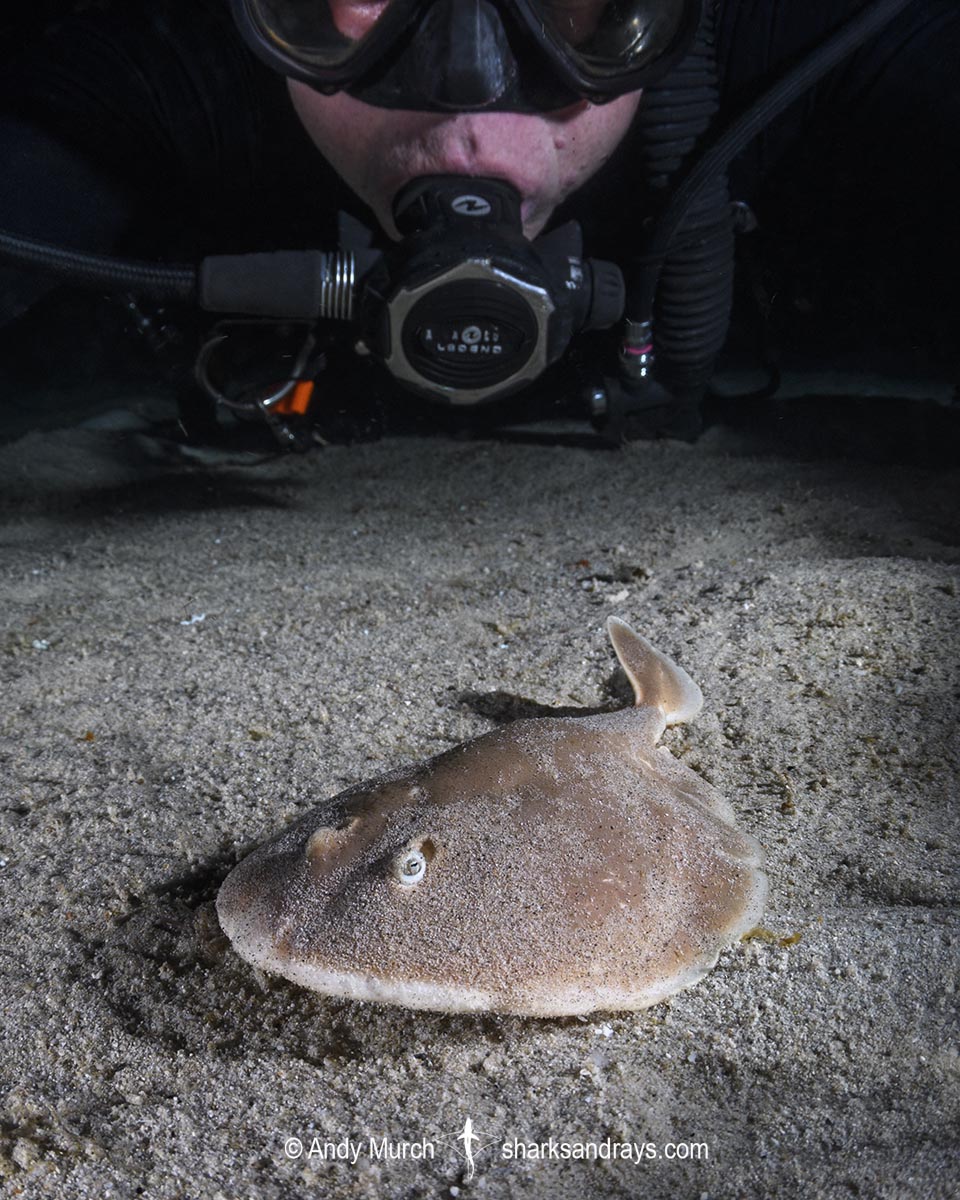
The next night I found it again, almost in the same spot. After spending a little while filming it, my eyes caught some movement nearby and went to investigate. Incredibly, it was another finless sleeper ray. This time a inconceivably small juvenile, barely larger than my thumb! The juvenile was rounder than the six inch long adult and looked like a tiny pancake resting on the silty substrate.
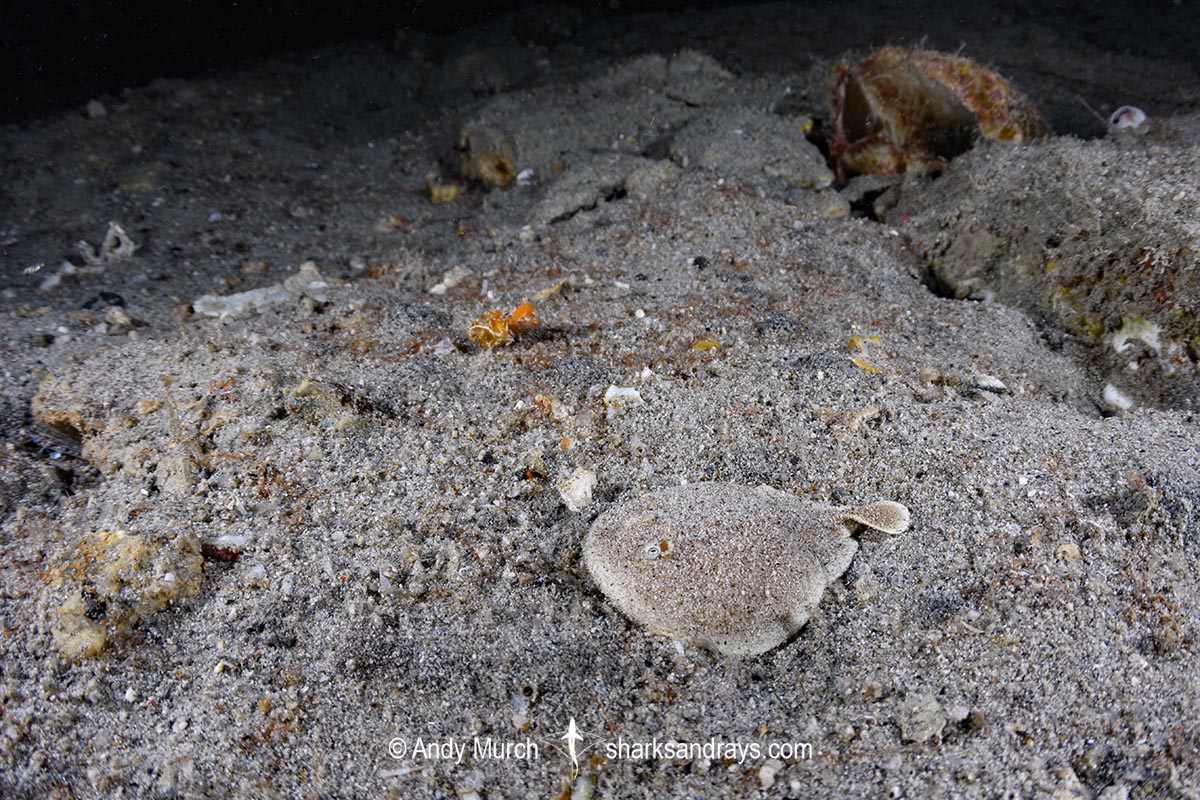
On subsequent night dives the adult finless sleeper ray was absent, but the juvenile was aways present; digging for invertebrates in a roughly one meter square patch of silty seabed.
I conducted numerous searches along the entire beach to no avail, but the images I took those first two nights provided enough reference material, so although I only photographed two new species, it was highly successful trip.
Filming such a tiny animal with my wide angle lens was a challenge because it was lost in my images, so I placed a finger next to it as a size reference. Watch this short video about my search for finless sleeper rays:

© 2026 Sharks and Rays. Big Fish Expeditions