Rio Jauaperi Freshwater Stingray Photography Expedition
September 2025
September 2025
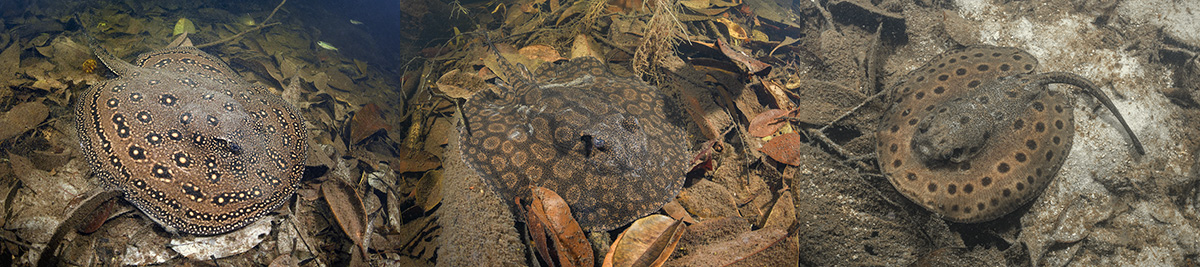
After chasing freshwater stingrays in the Rio Xingu in September 2025, I flew to Manaus to join an exploratory expedition to the Rio Jauaperi; a tributary of the Rio Negro. The other guests were mostly ichthyologists and aquarium enthusiasts hoping to see their favorite aquarium fishes in their natural habitat. The clearwater channels and surrounding flooded forest of the Rio Jauaperi are teeming with small tetras, cichlids, and other neotropical species so the expedition was a great success.
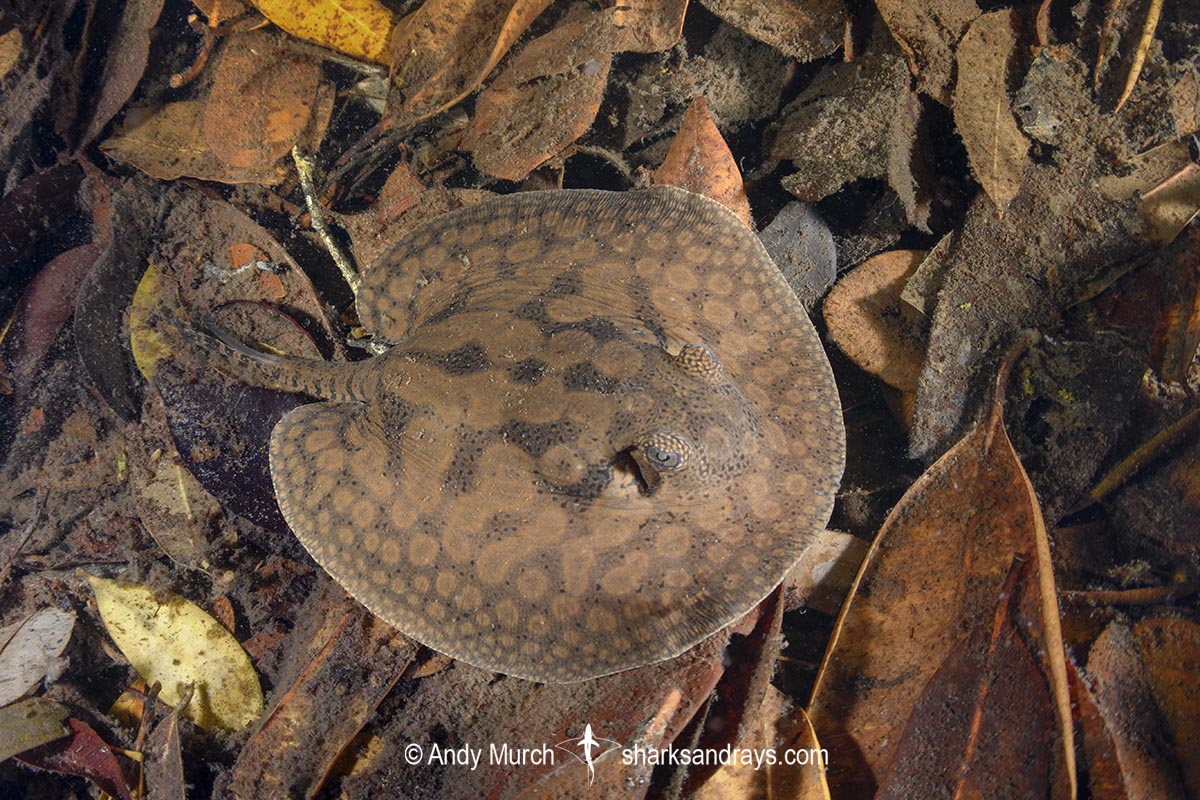
I joined the expedition to look for Cururu Rays (Potamotrygon wallacei); a small species of freshwater stingray that is only found in the upper Rio Negro and its tributaries.
Reaching the clearwater upper sections of the Rio Jauaperi involved quite a long journey up the Rio Negro from Manaus. After 24hrs on a liveaboard river boat, we finally entered the Jauaperi River where we anchored next to a small indigenous community. From there, we boarded small, shallow draft fishing boats and motored further upstream until the channels became too small and shallow for the motors to be effective. Then our local guides paddled for another hour, hacking off tree limbs that were blocking the way with practiced swings of their machetes.
Deep in the jungle, we finally reached crystal clear water with a slight amber hue and slipped off the boats to search for our respective quarries. While the fish fanciers explored the shallow, flooded banks, picking their way between dense foliage, I free-dived in the deeper central channels, looking for rays.
I found my first Cururu Ray within five minutes, followed by five more over the course of the day. Unlike many species of Potamotrygonids, these ones were extremely tolerant of my presence, especially when they were resting on the leaf litter where their bold markings serve as excellent camouflage.
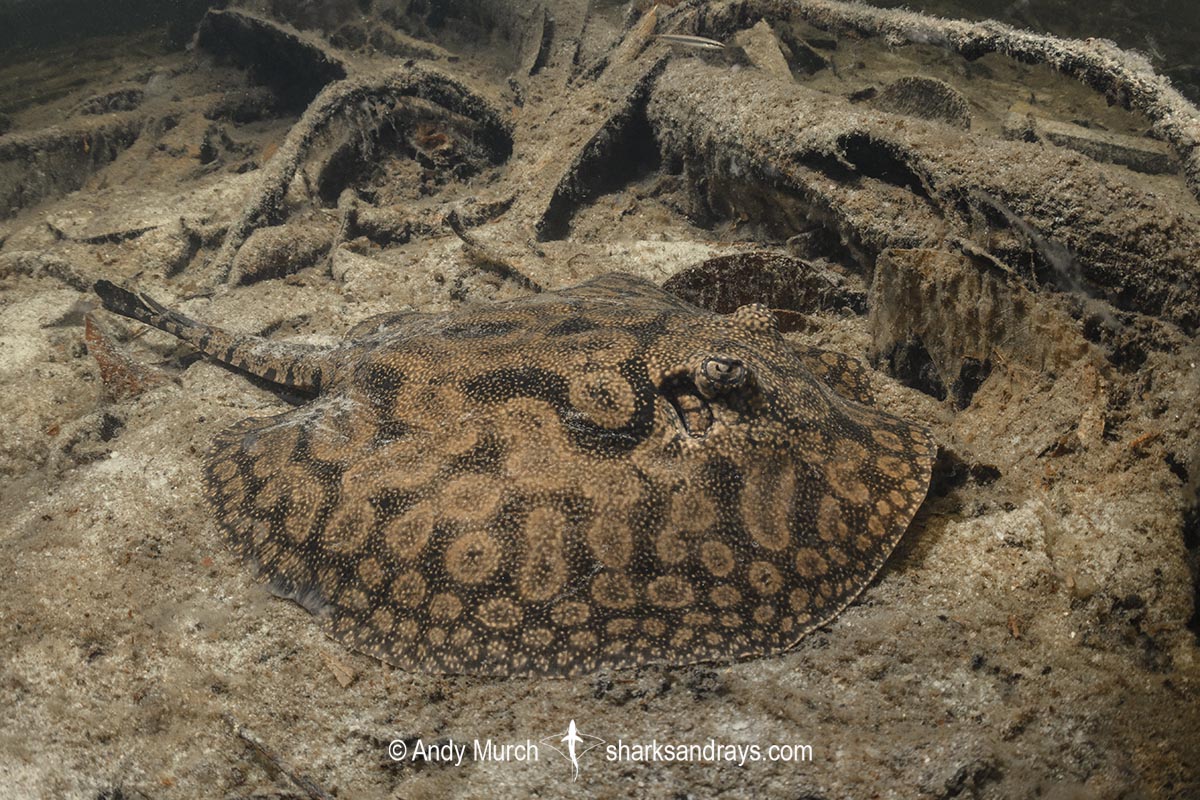
On our third day in the Rio Jauaperi, we paddled up a shallow channel that led to a small waterfall. Downstream from the waterfall, Cururu Rays were curiously absent, but I found around a dozen Peacock River Stingrays (Potamotrygon motoro).
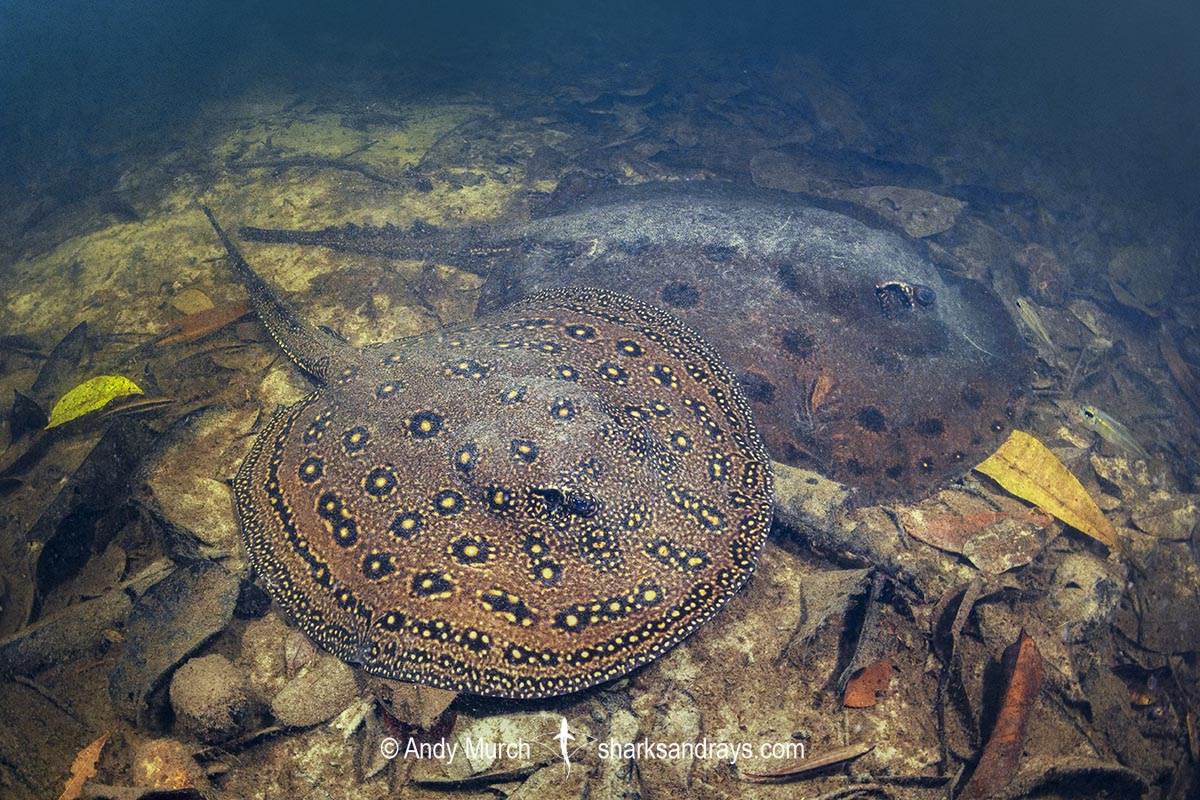
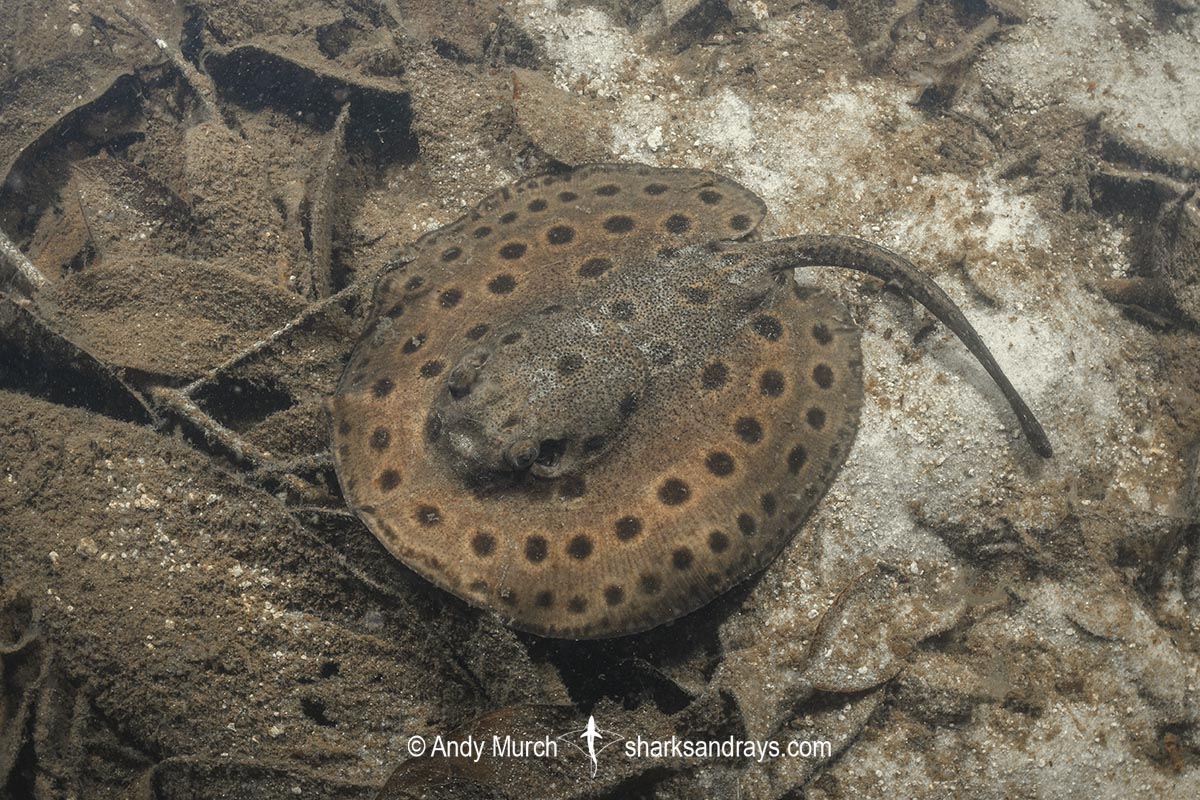
Many of the motoros had the classic vivid orange spots that make this species so popular in the aquarium trade, but others had no orange markings at all.
After the trip, I contacted Potamotrygonid expert Dr Thiago Loboda to ask if they were all P. motoros and he told me that plain black spots is a common trait of motoro rays from the Rio Branco region; not far from the Rio Jauaperi. He also said that it is easy to tell motoros apart from other species in the motoro complex by their large heads relative to disc width.
P. motoro is also the only member of the motoro complex present in the upper Rio Negro, at least for now, but the motoro rays much further west in Ecuador have such large irregular spots that I suspect they will eventually be described as a separate species.
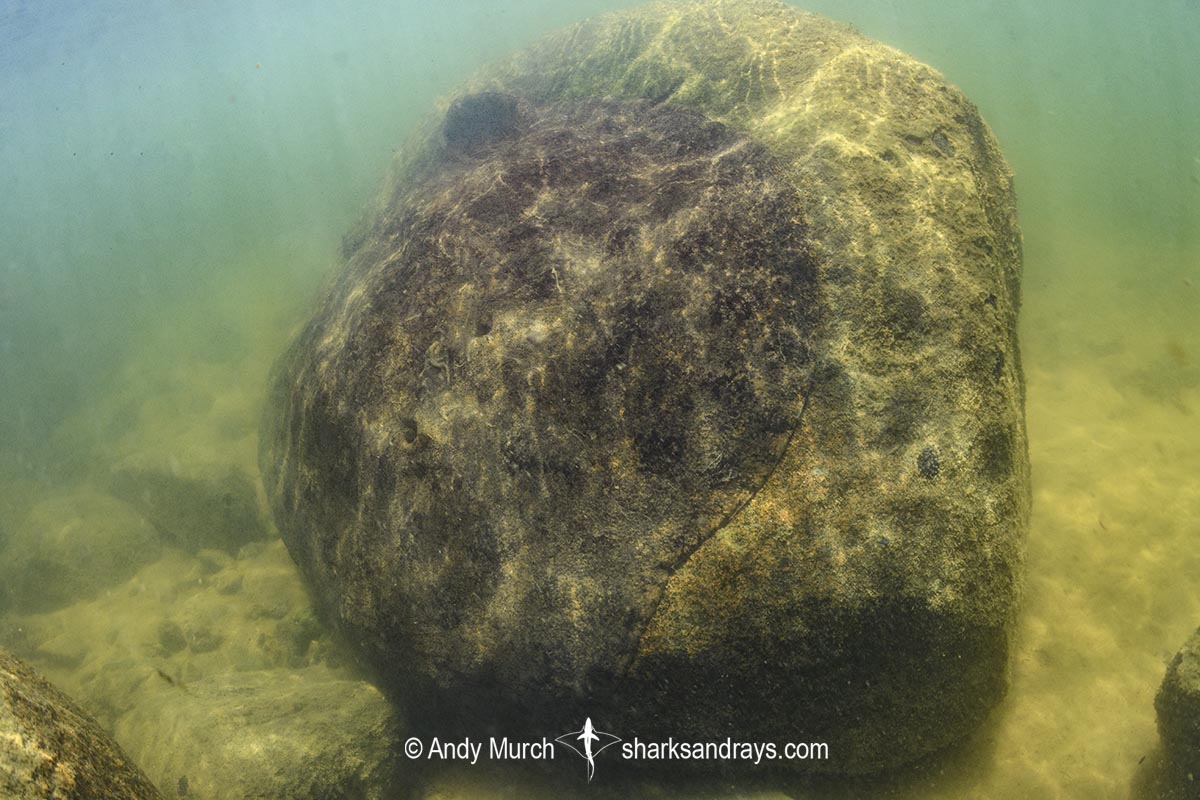
Apparently, on a previous expedition in Rio Jauaperi, observers also recorded Paratrygon aiereba, P. orbignyi and P. scobina. After four days of searching, I found no sign of any of these species, but the previous expedition had encountered clear water much further downriver in the main channel; a more likely habitat for those species.
This year due to a ‘La Nina’ event the river was especially high, resulting in the presence of tannin rich water that would normally drain into the Rio Negro. I may return in a couple of years in the hope that the main channel is clearer, exposing sandier habitats to look for rays.

© 2026 Sharks and Rays. Big Fish Expeditions