
Common names
Finless Sleeper Ray, Shortnose Sleeper Ray.
Binomial
Temera hardwickii.
Synonyms
Temera hardwicki.
Identification
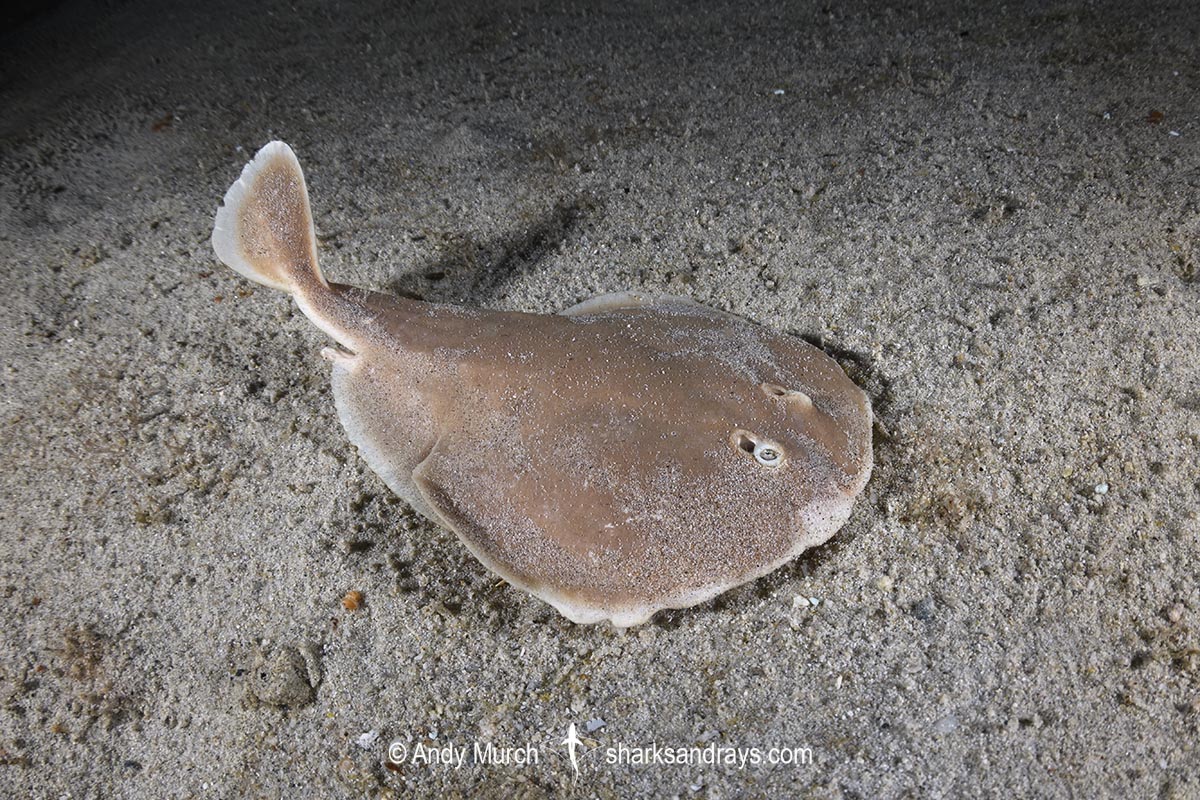
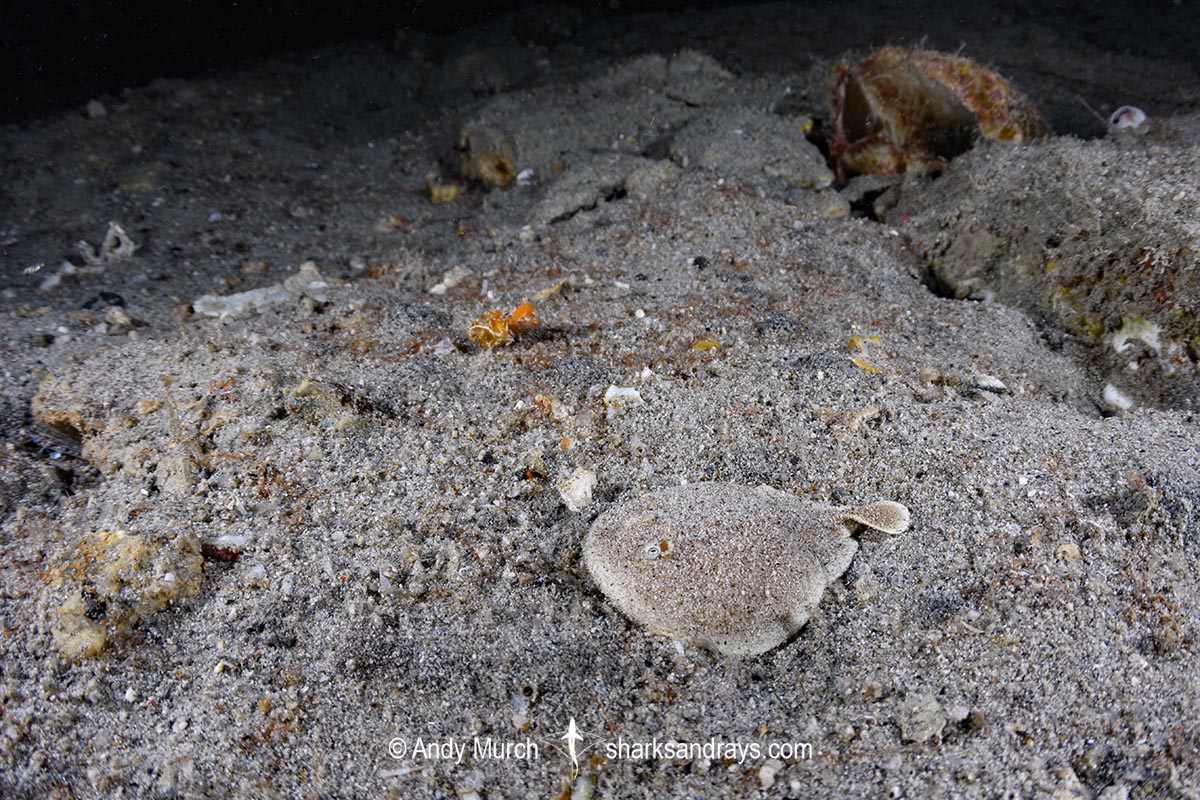
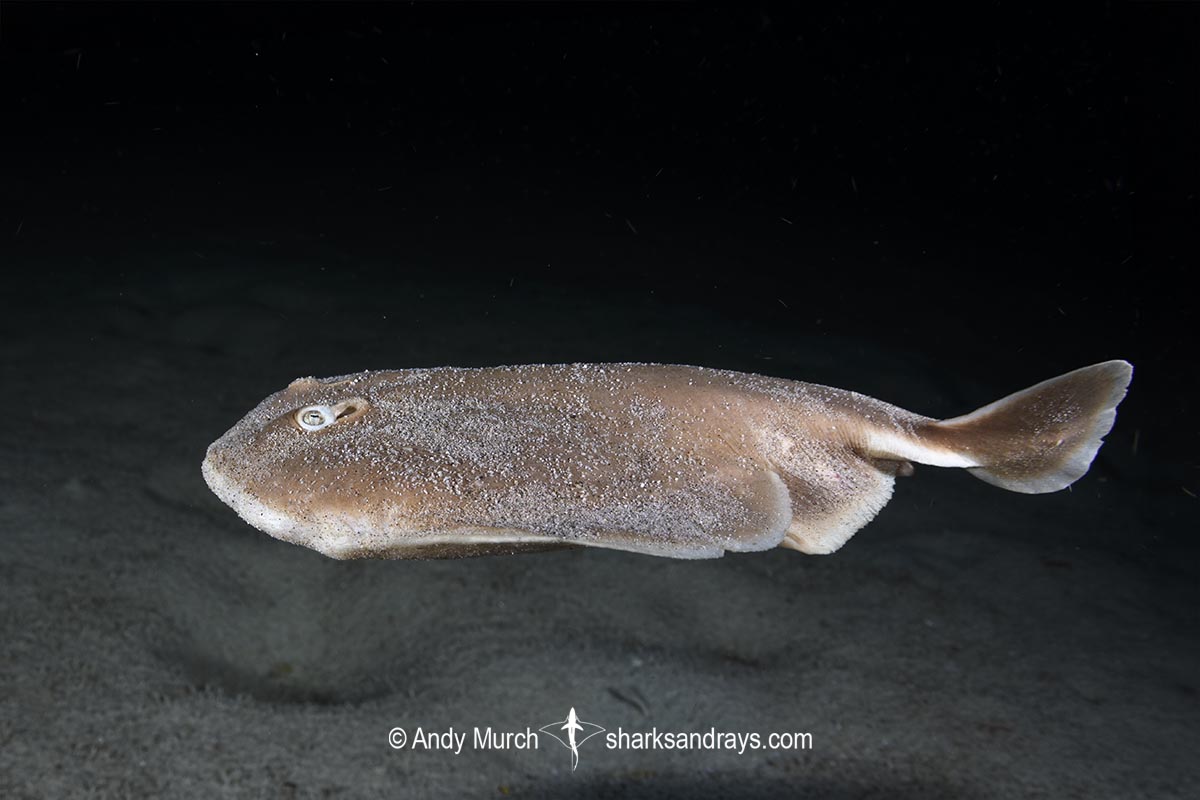
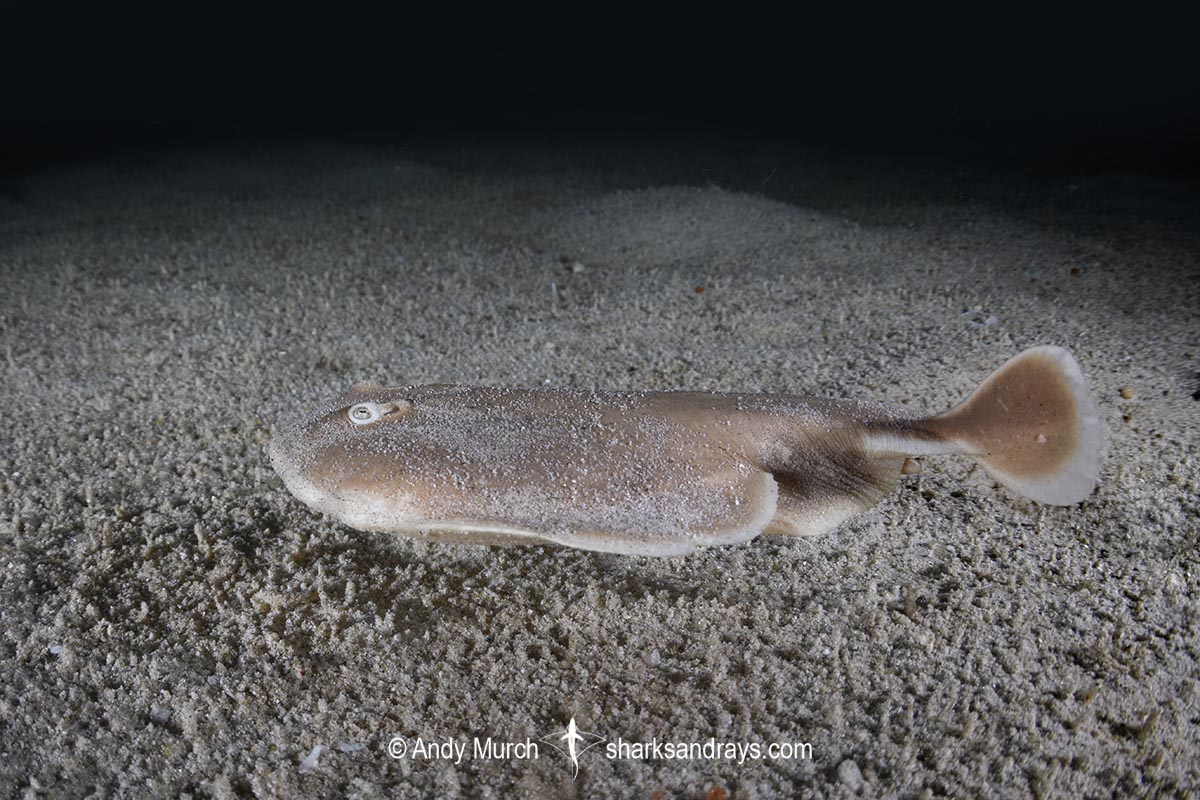
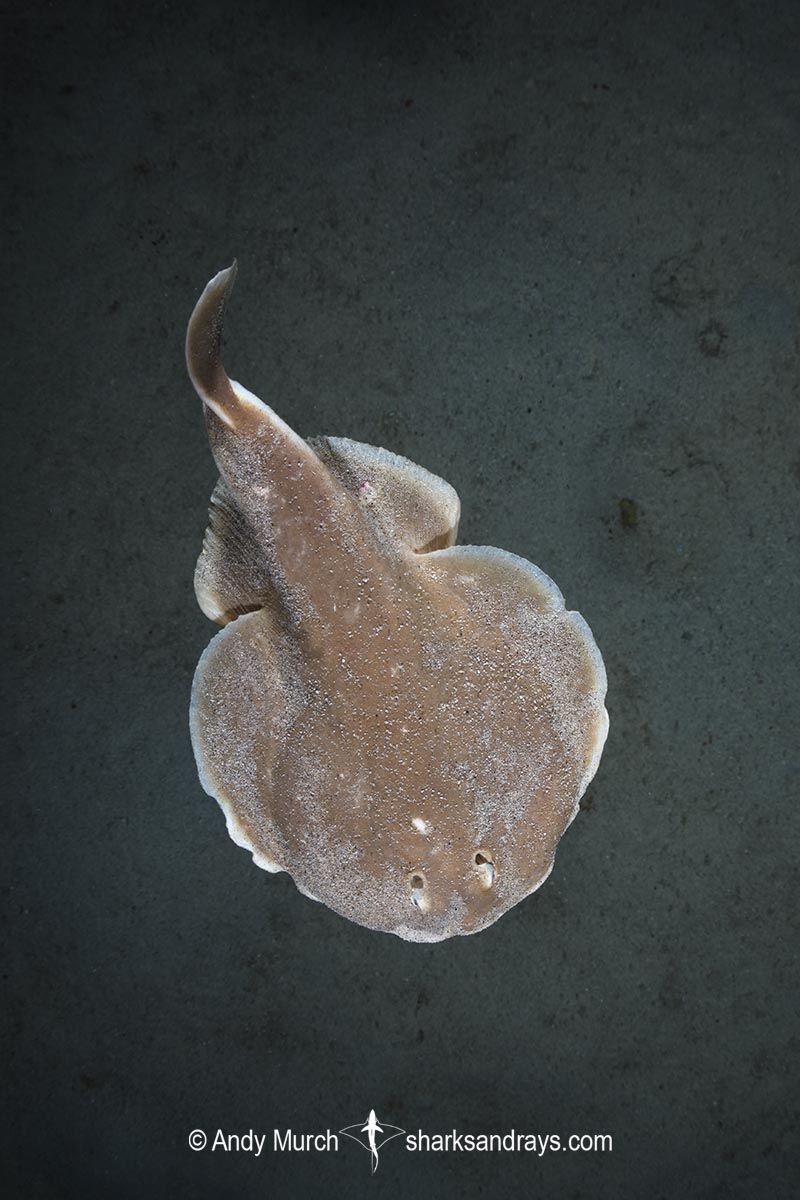
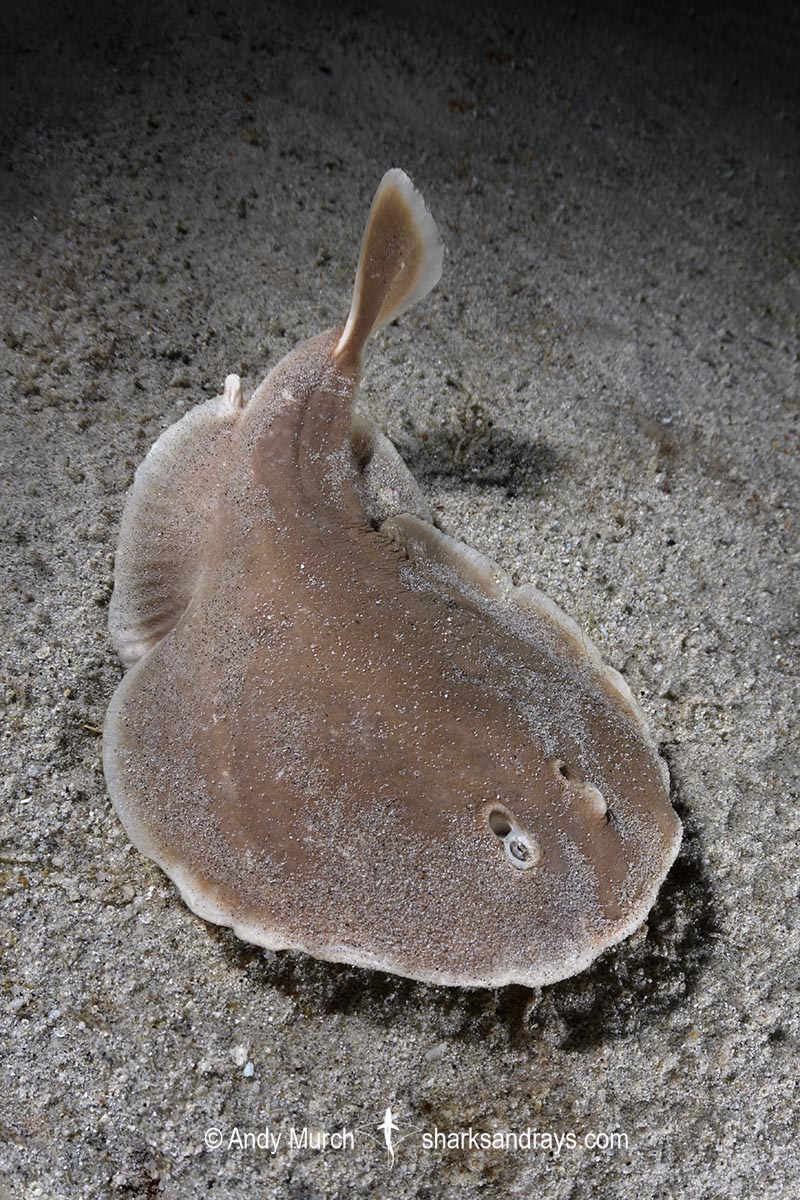
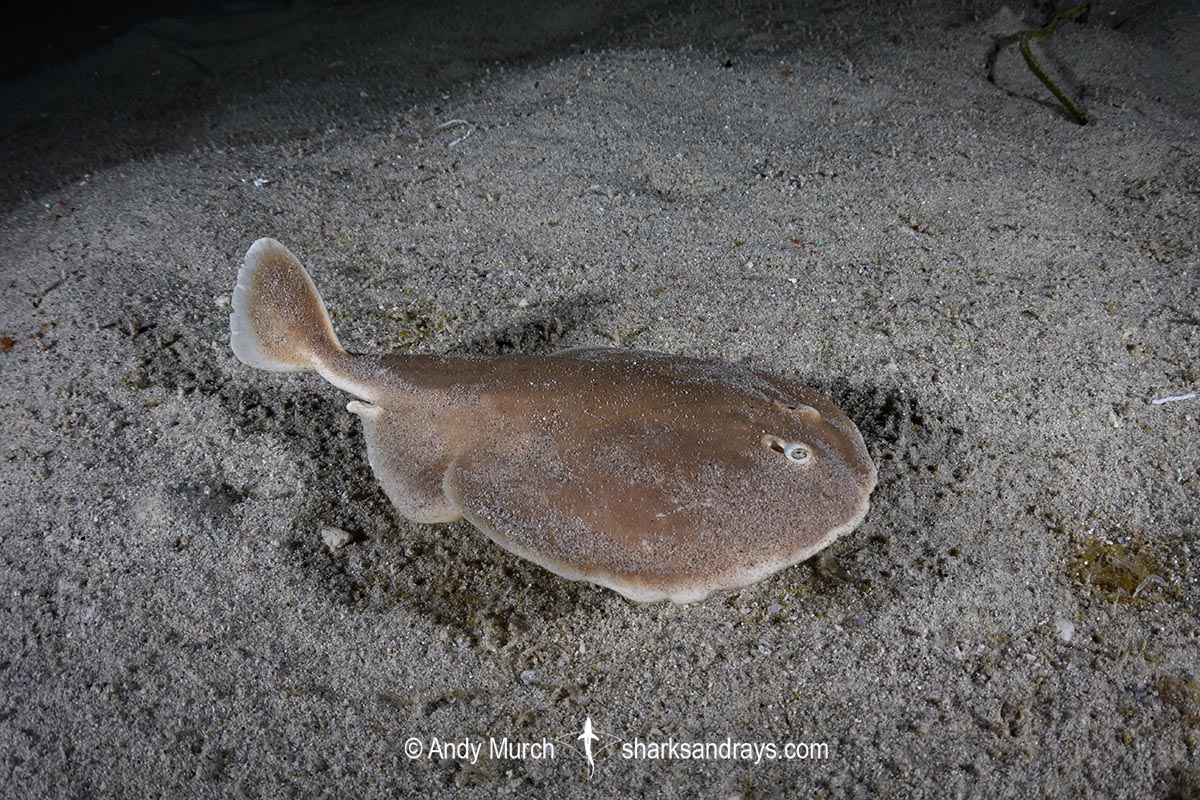
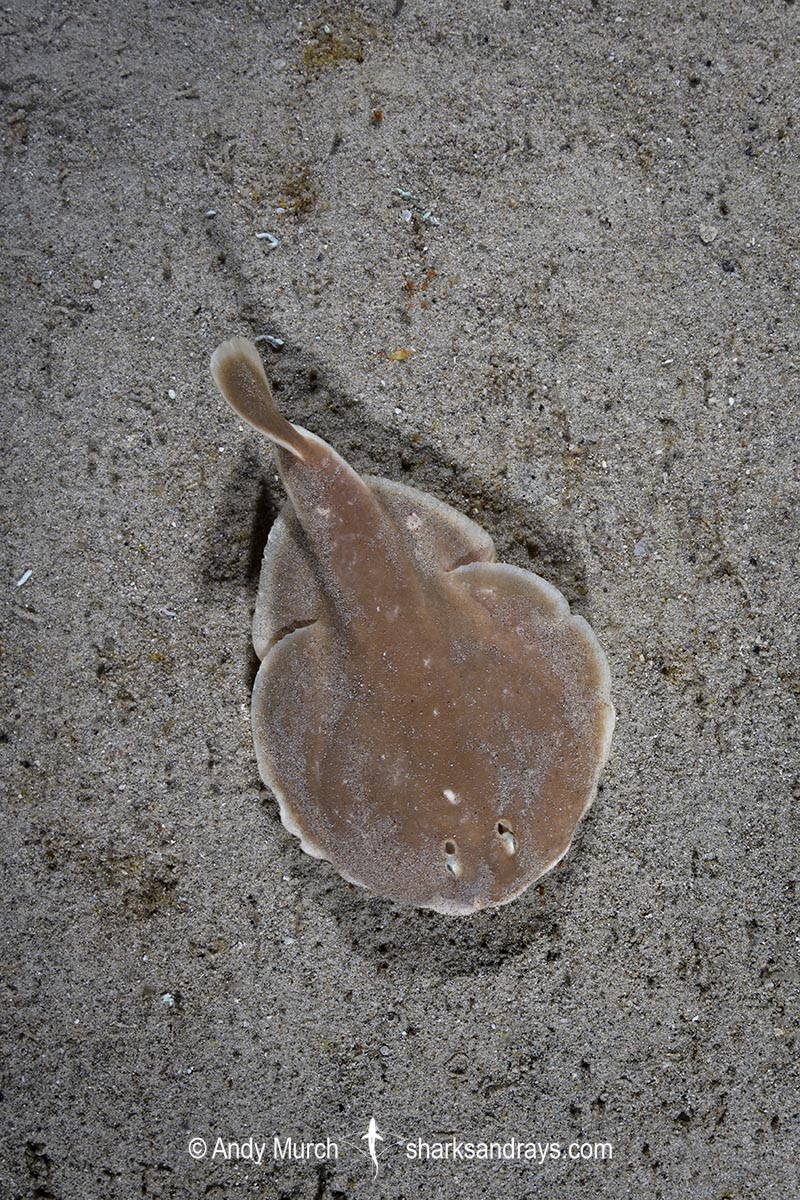
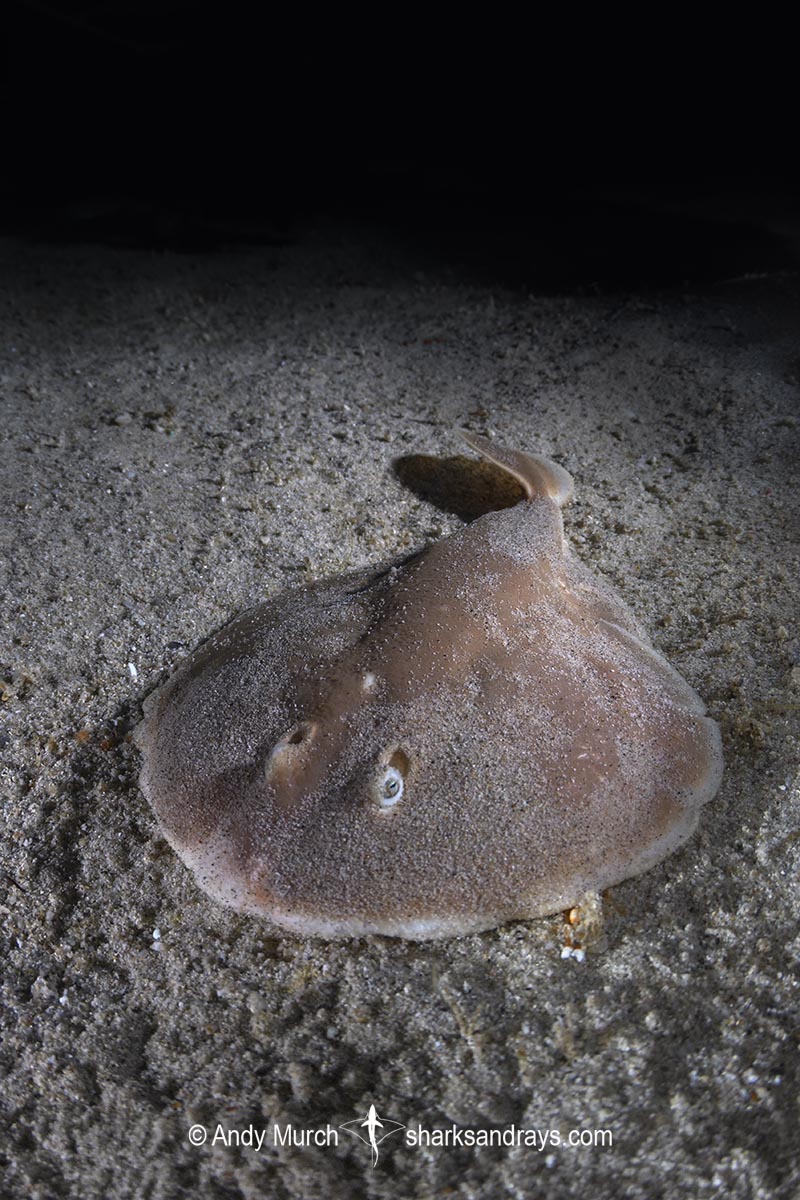
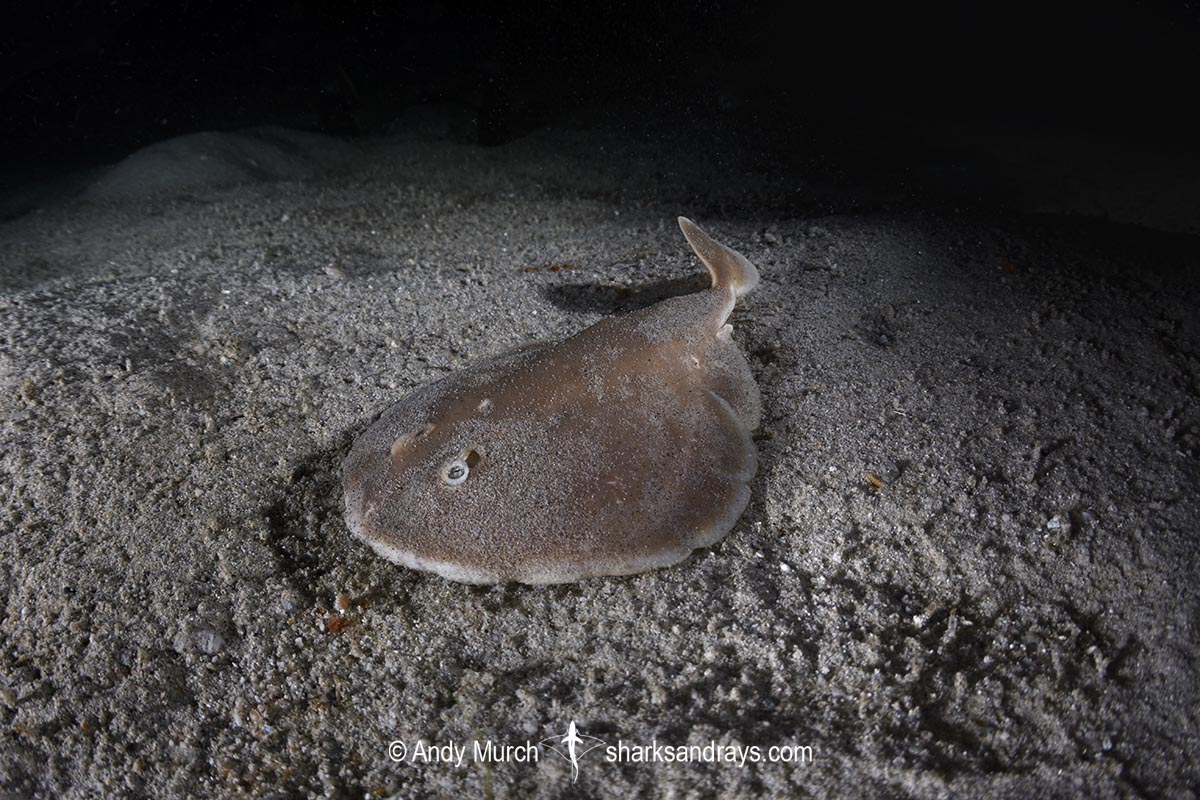
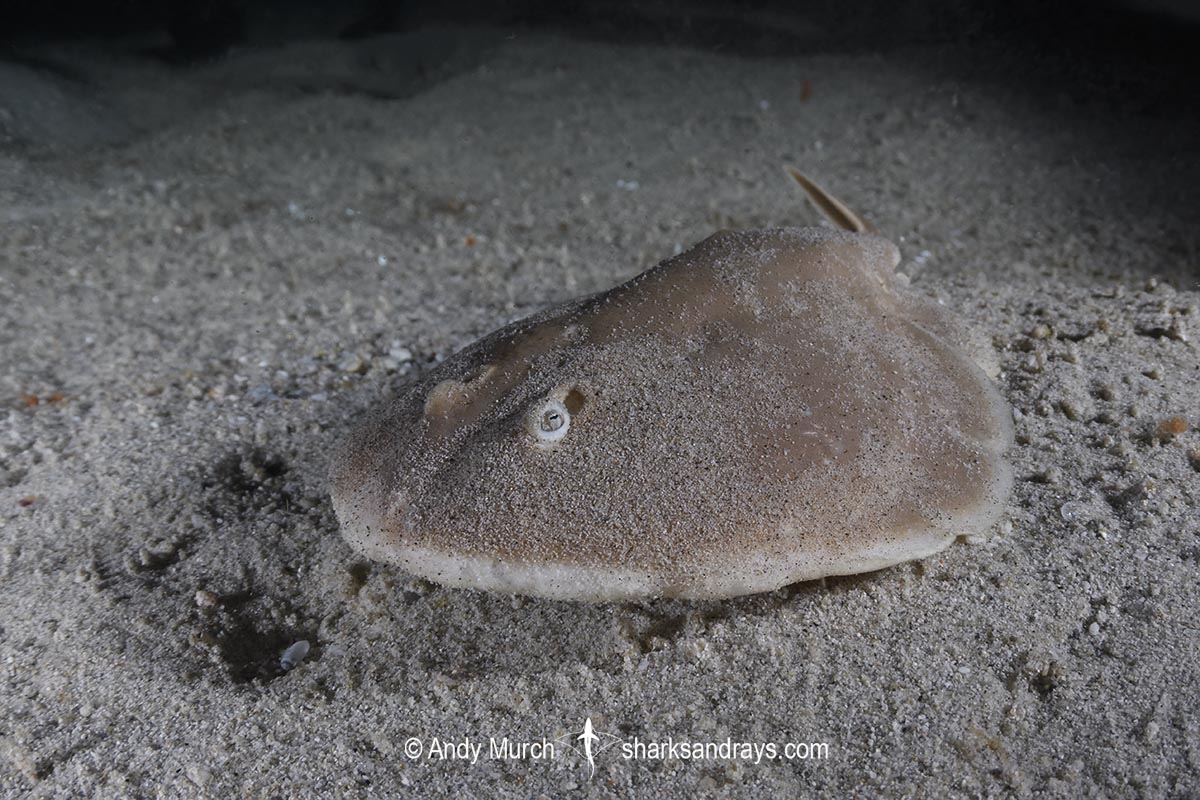
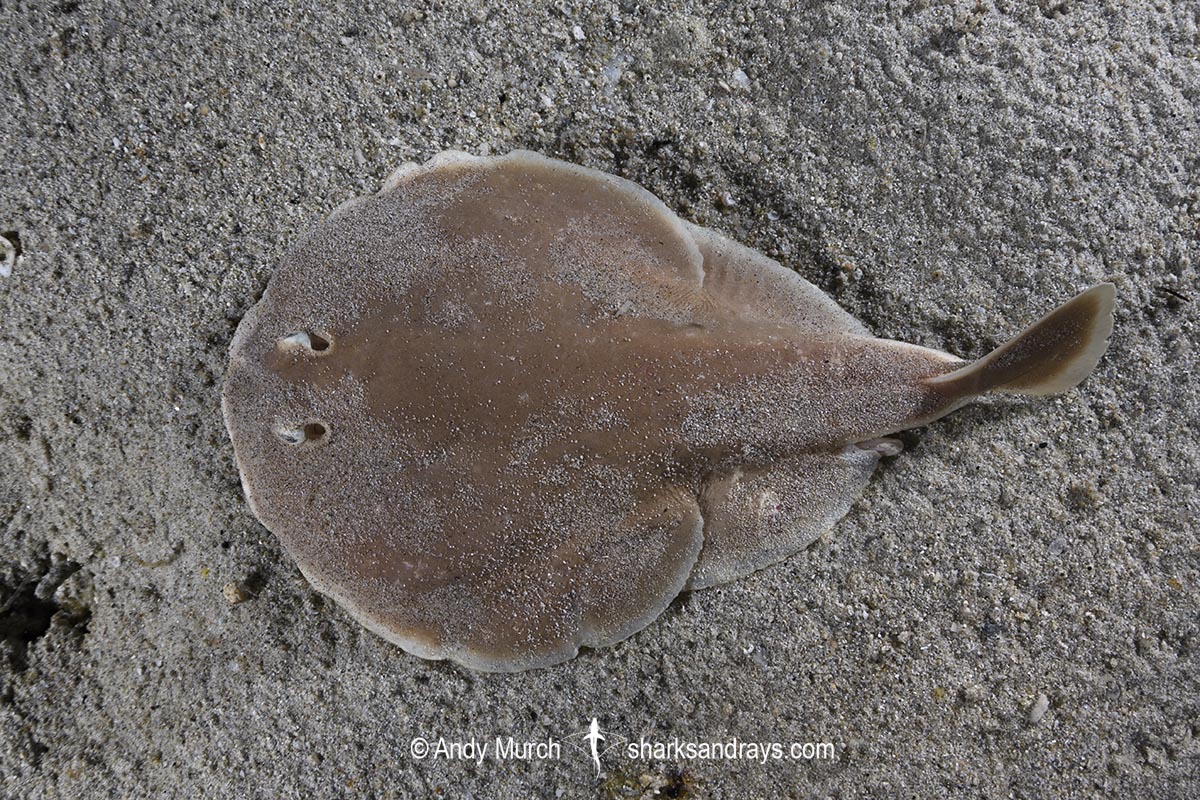
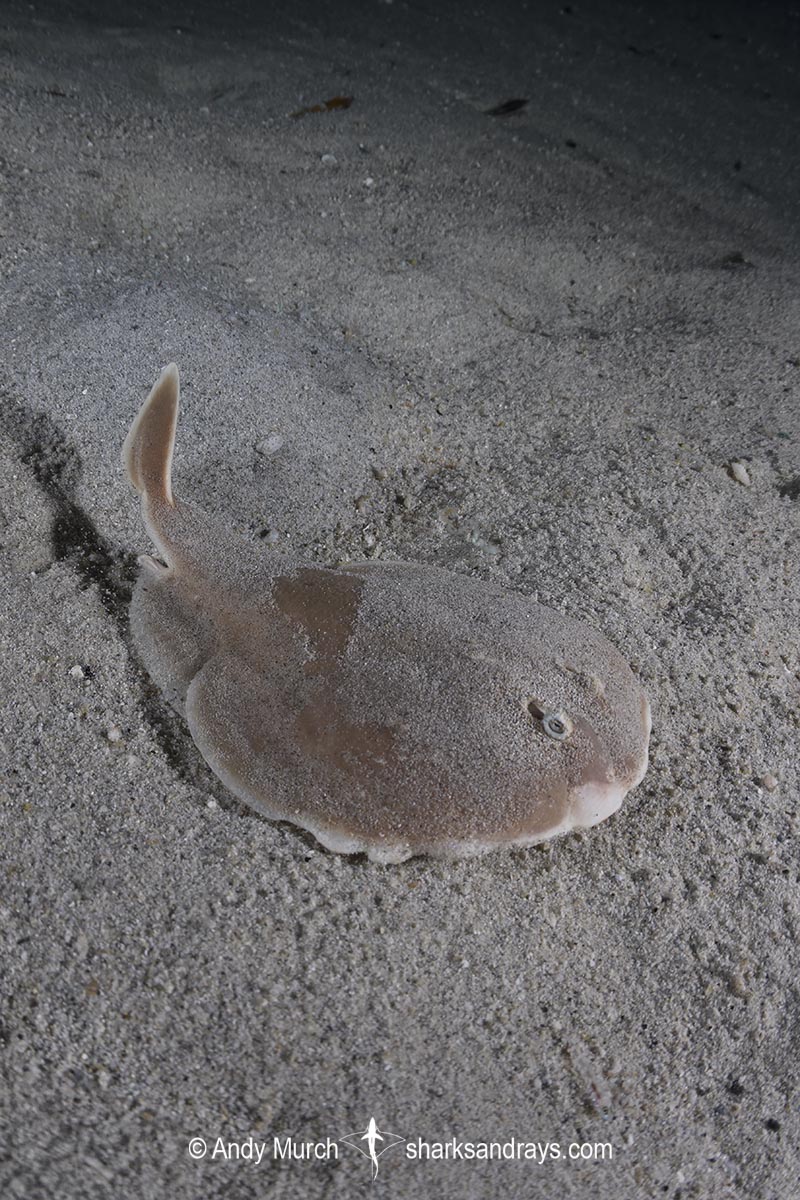
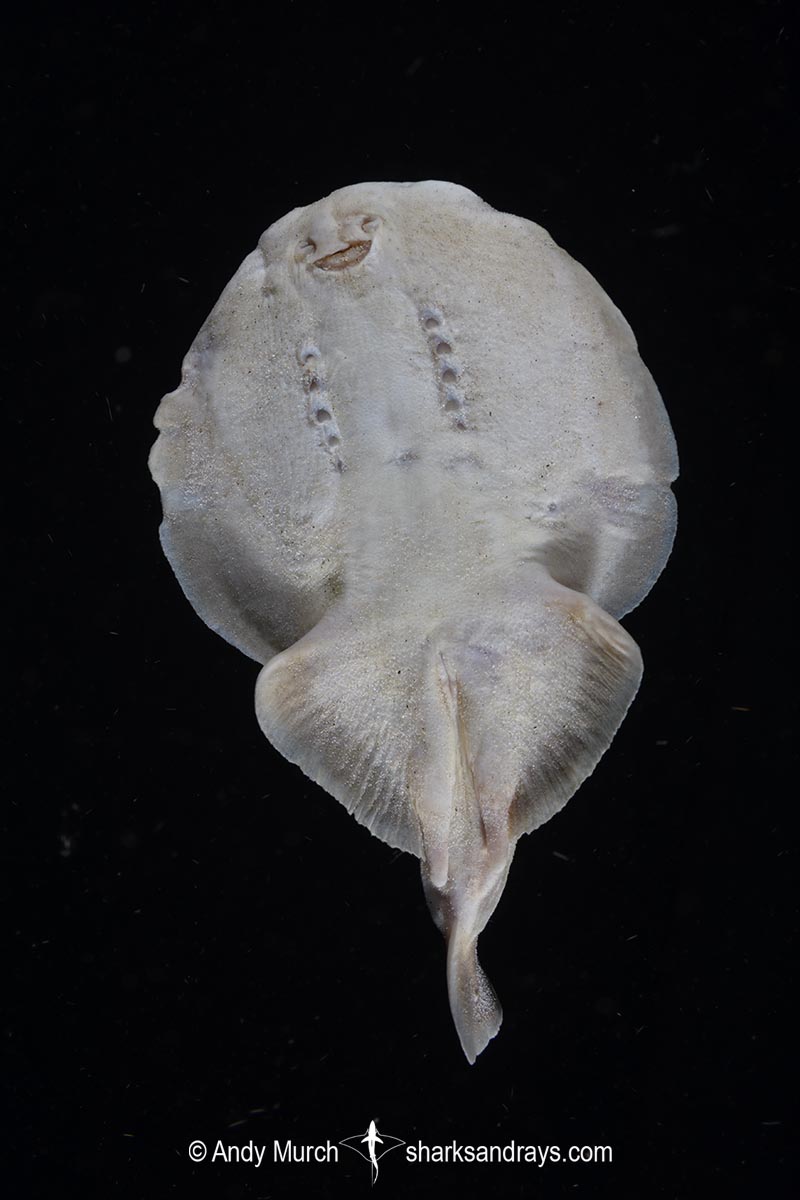
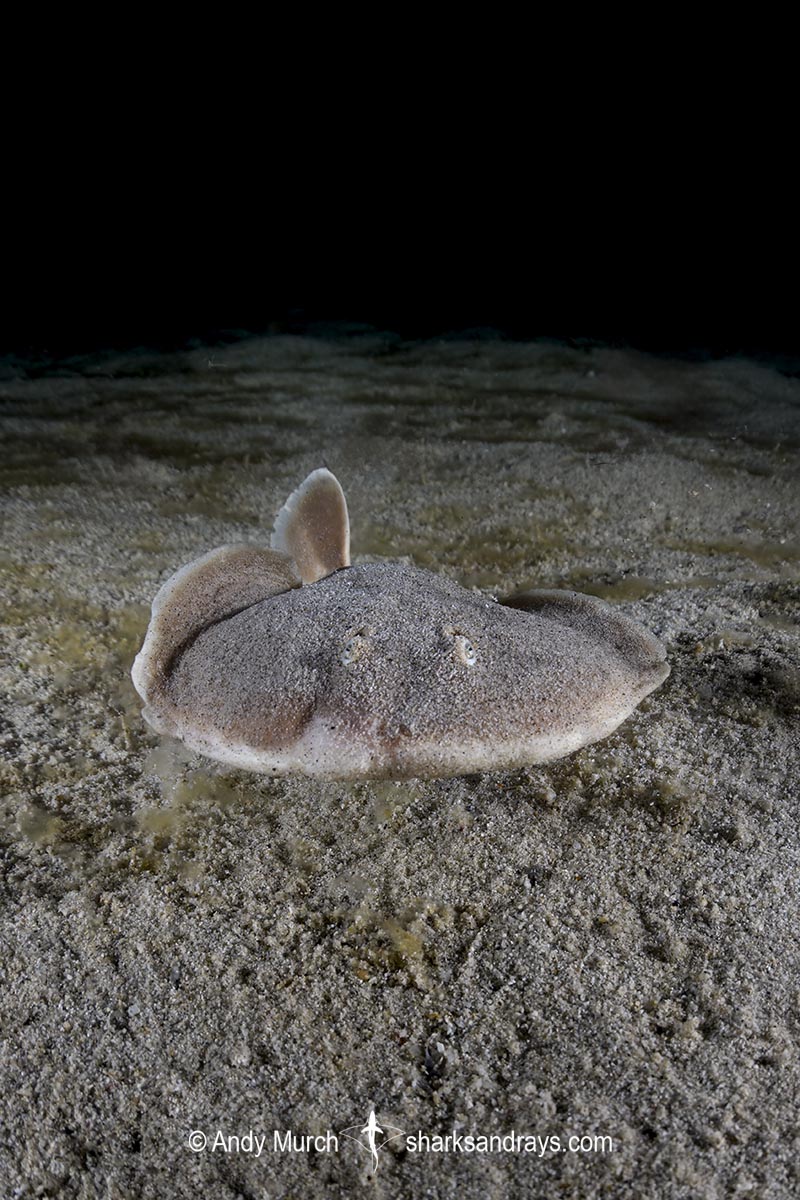
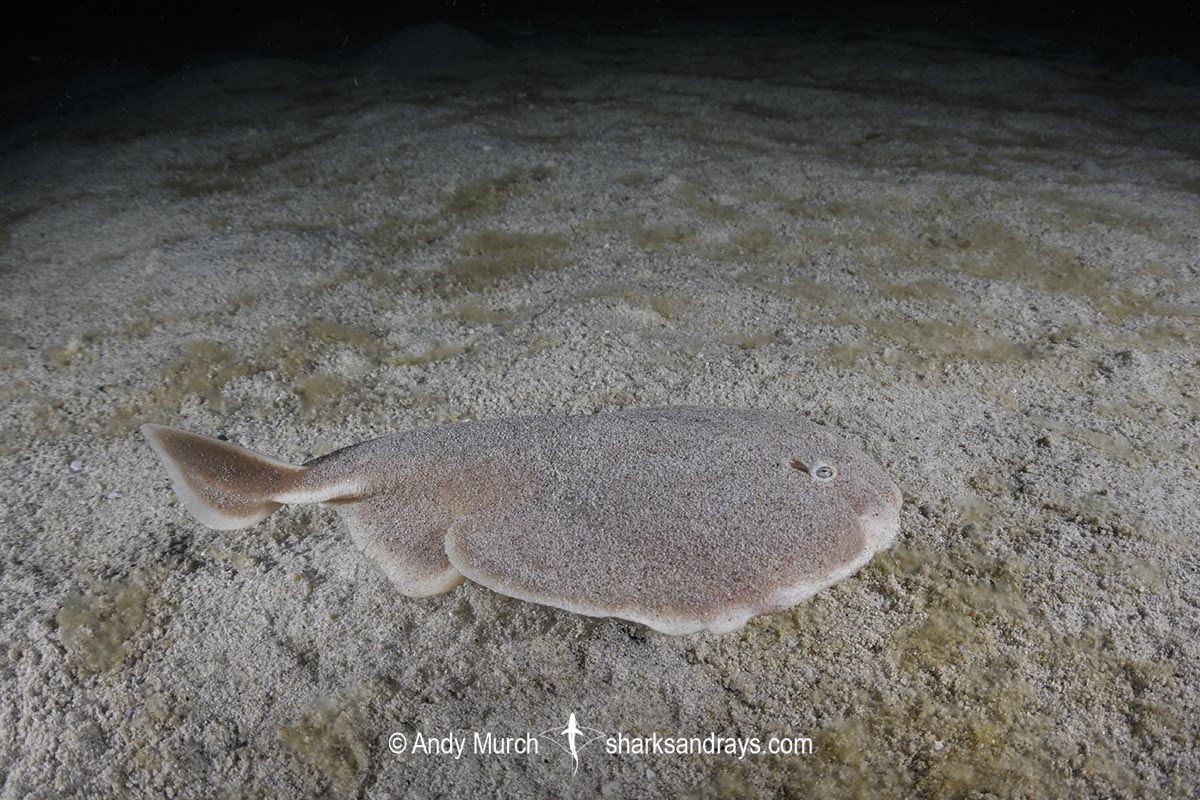
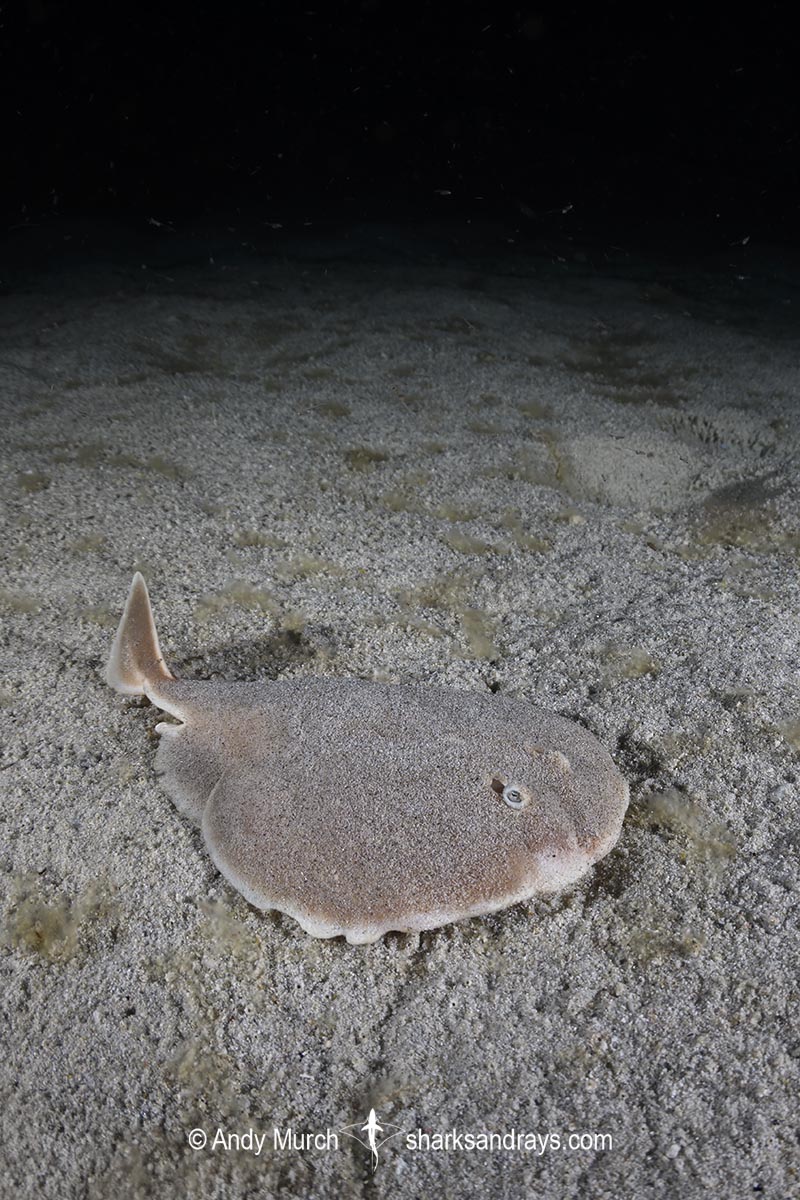
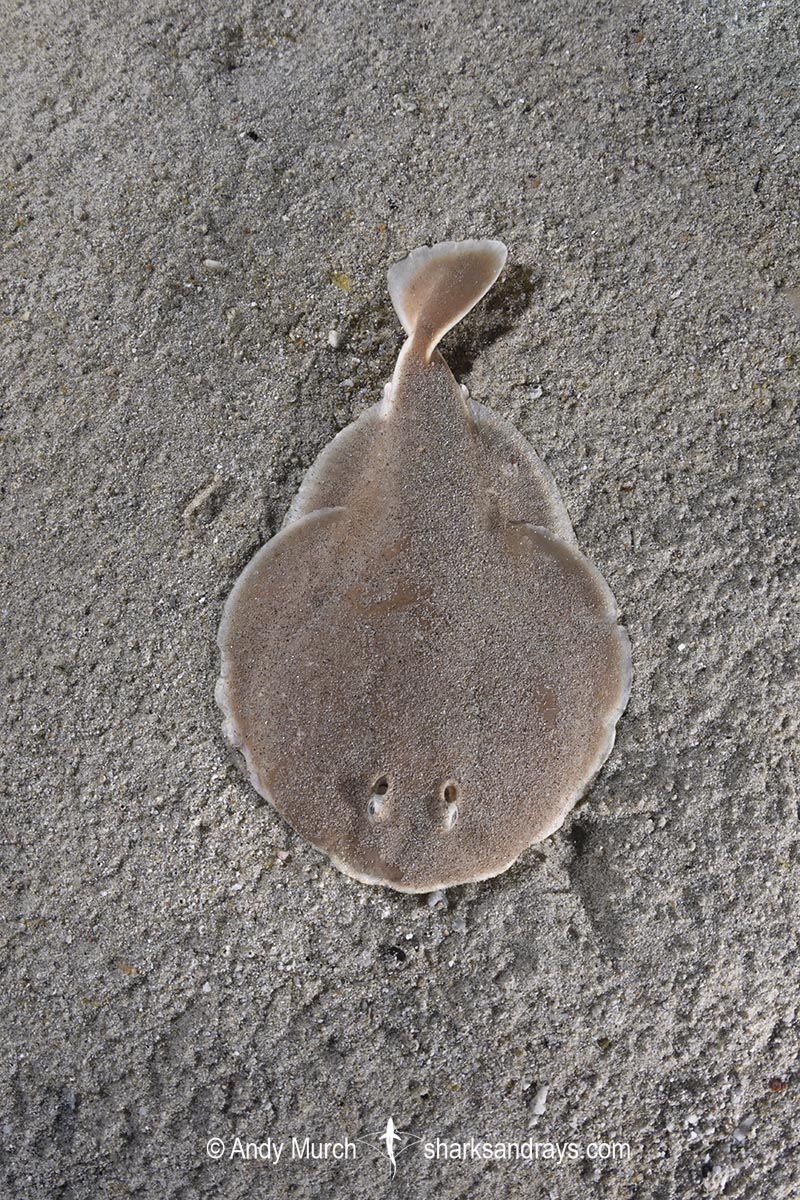
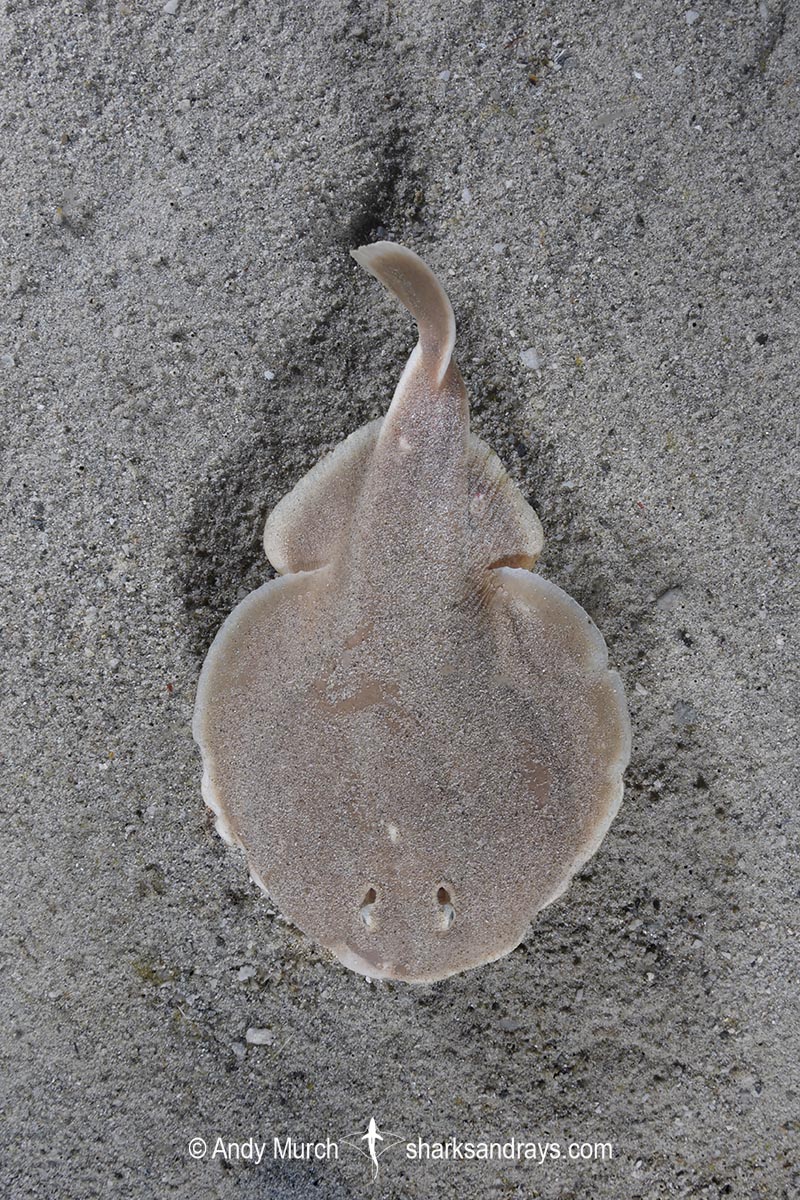
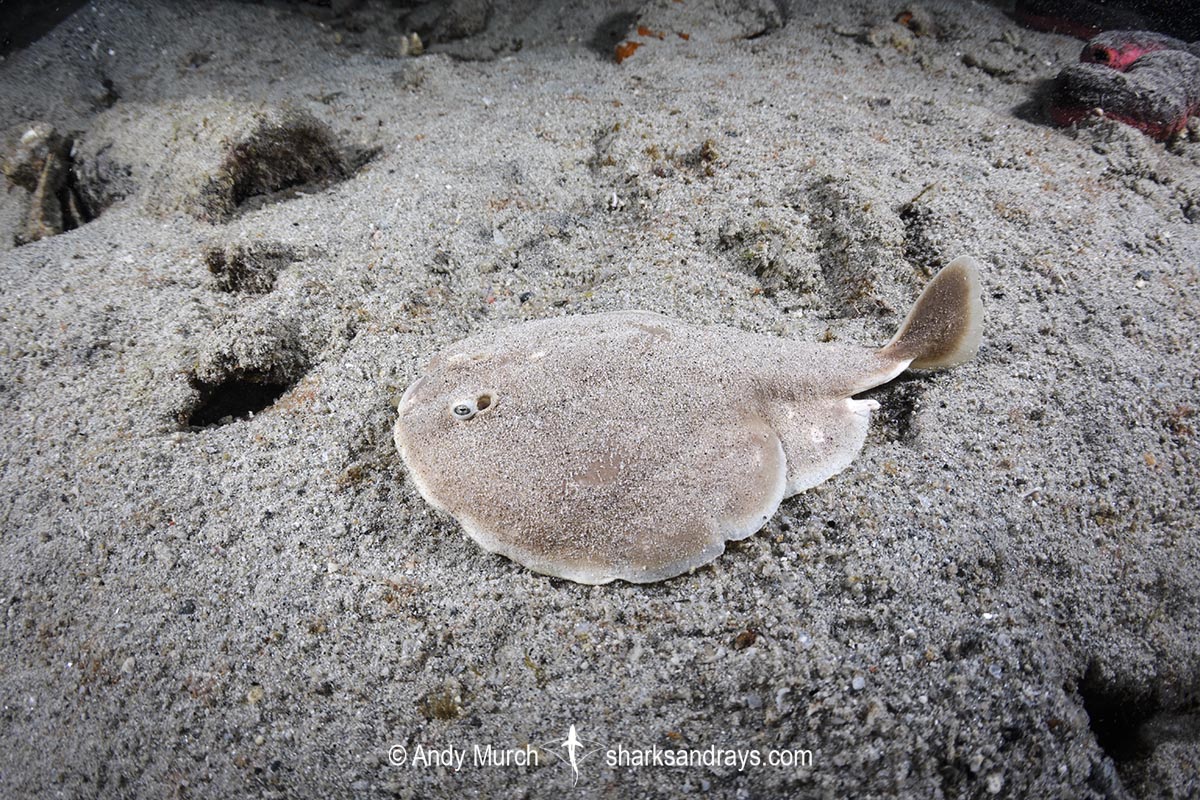
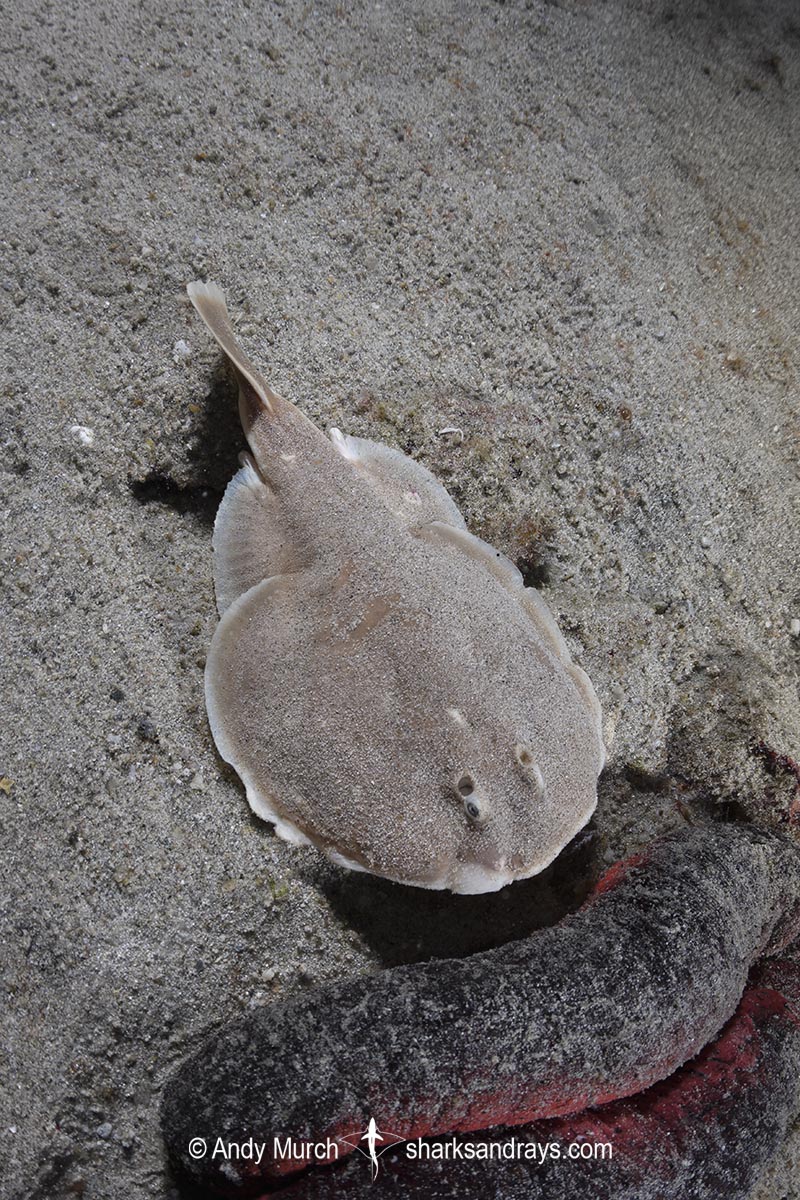
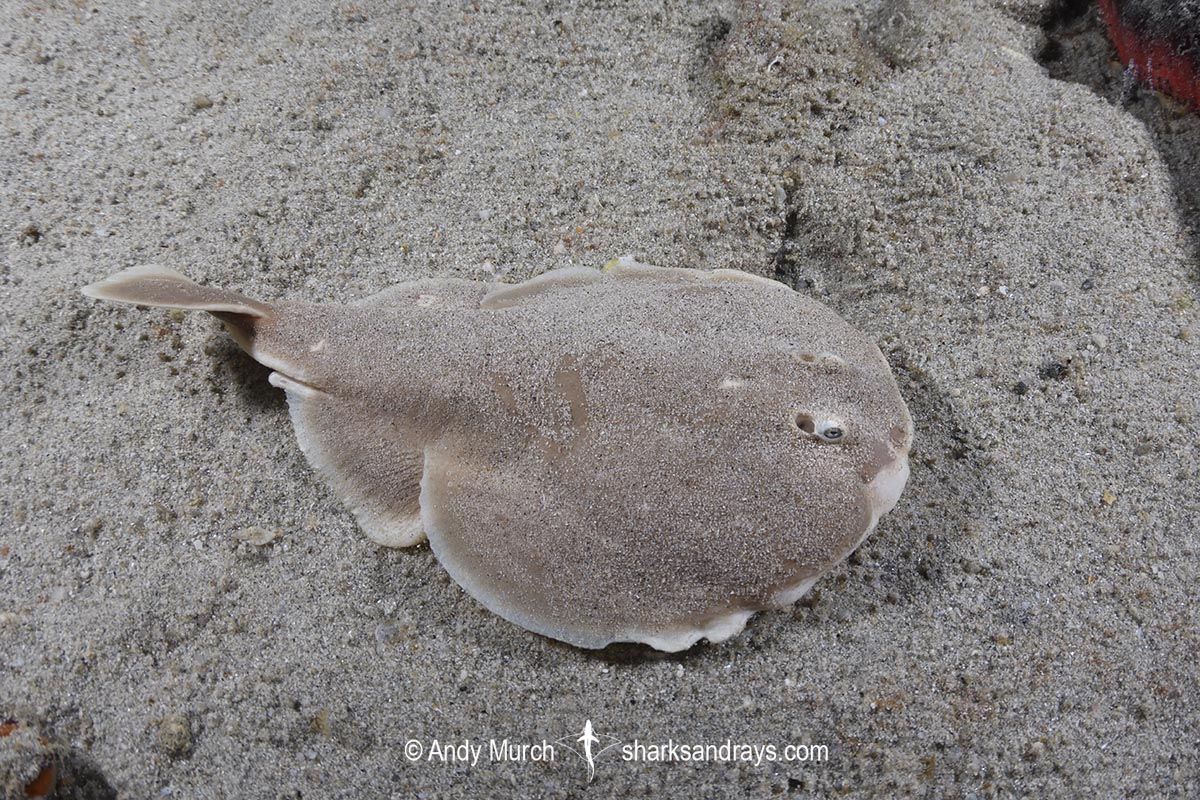
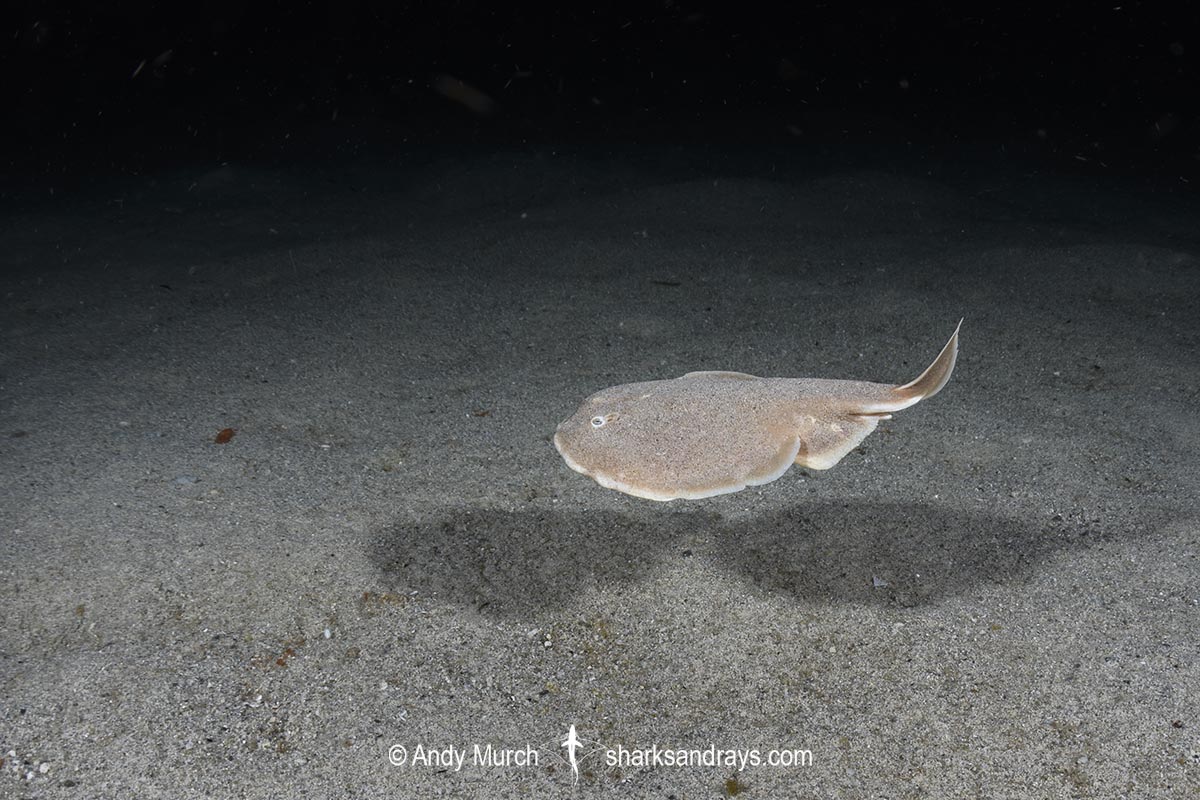
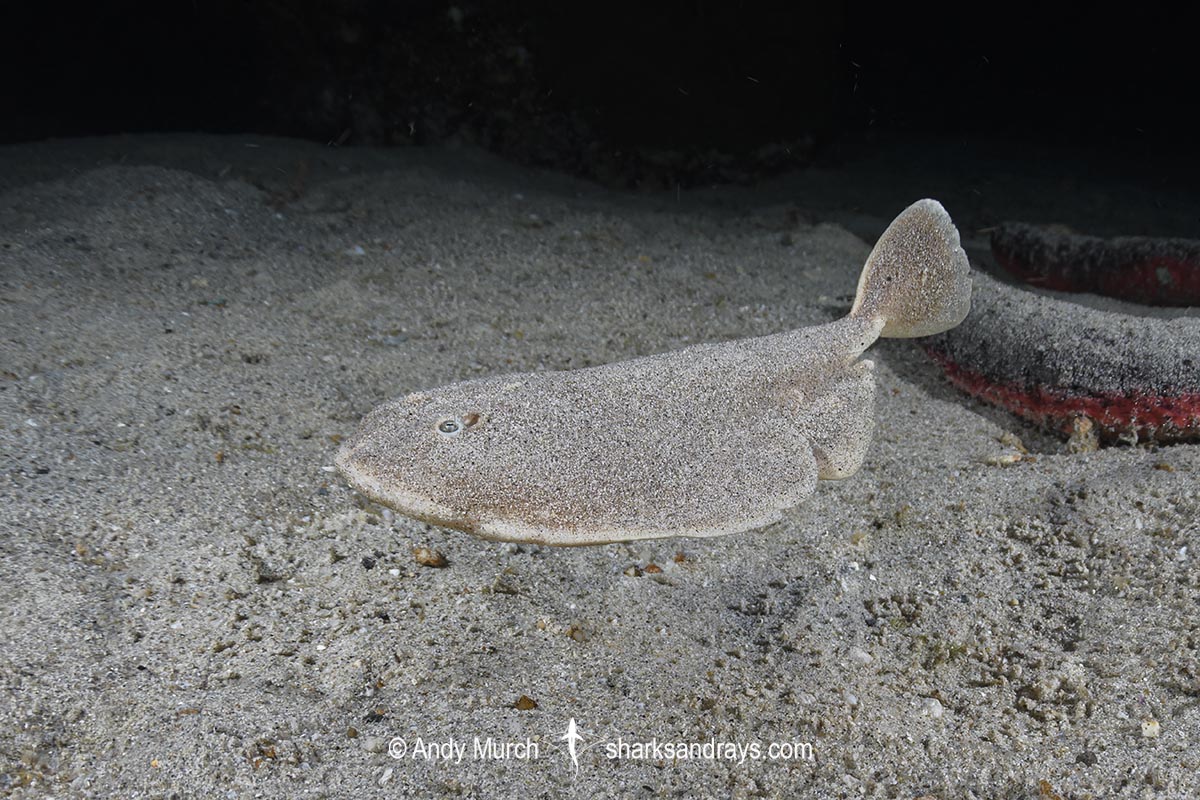
A very small sleeper ray with a disproportionately large, sub-circular disc, and overall teardrop-shaped body. Head small. Snout very short, tip mildly convex. Pectoral fin margins broadly rounded. Eyes very small, oval, and somewhat bulging. Spiracles circular, located directly behind eyes. Spiracular rim weakly raised, without papillae. Nostrils circular. Nasal curtain short, skirt-shaped, with deep central groove.
Pelvic fins broad, with mildly convex outer margins. Tail very short, broad based, heavily tapering. Caudal lateral folds low. Dorsal fins absent. Caudal fin large and triangular with slightly convex posterior margin.
Colour
Dorsum uniformly reddish brown to dark brown except for a whitish margin around eyes, disc, pelvic fins, and posterior margin of tail. Ventrum white with dusky lateral and posterior fin margins.
Size
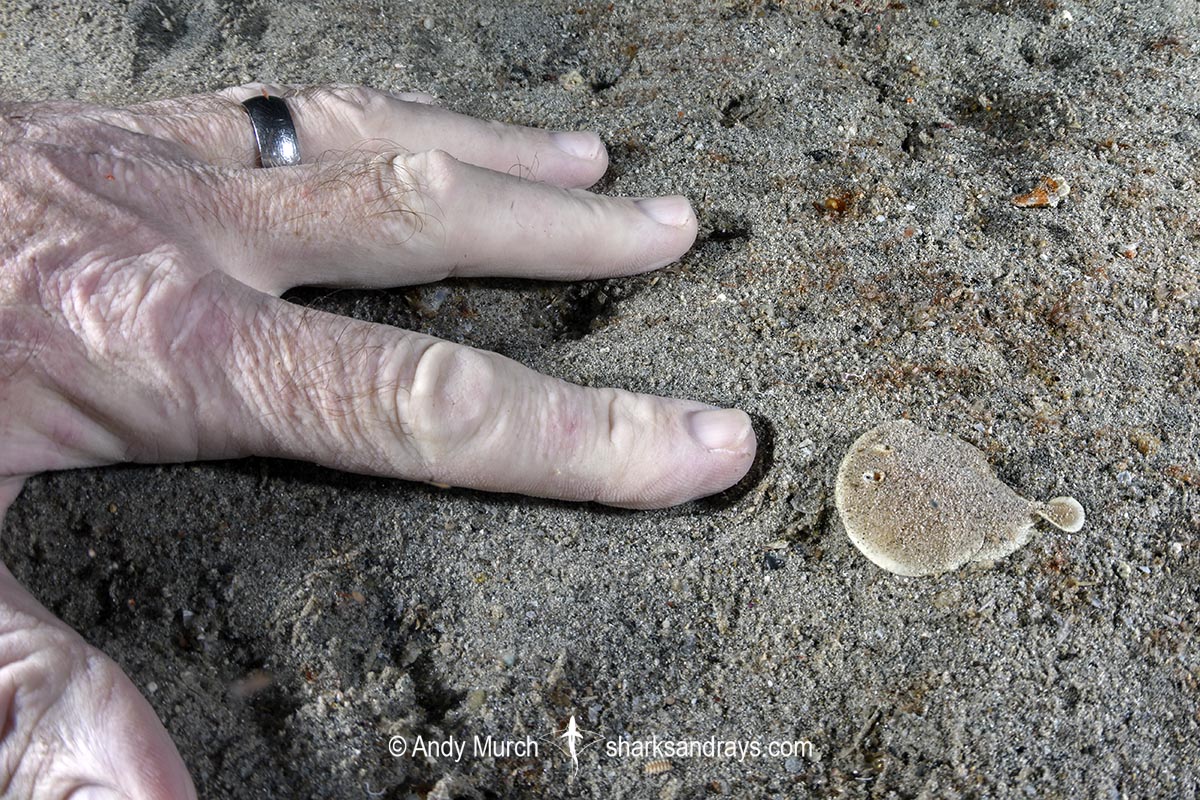
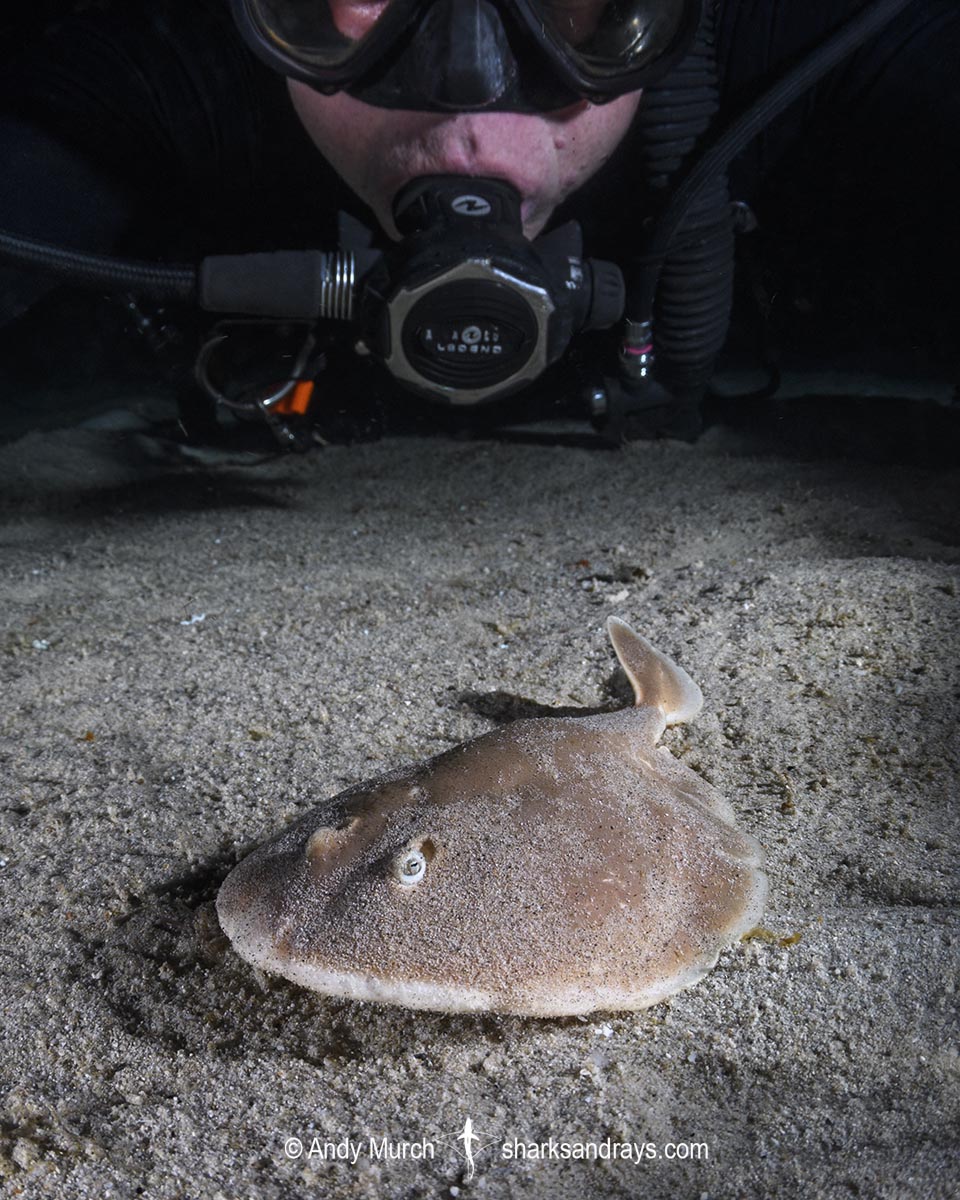
Maximum length 15cm. Males mature at 8-10cm. Females mature at 10-12cm. Size at birth 2-3cm. Probably the smallest ray in the world.
Conservation Status
VULNERABLE
The Finless Sleeper Ray (Temera hardwickii) has a relatively small fragmented range that is heavily fished. Although usually discarded at sea, it is sometimes retained for local consumption or fishmeal. Post release mortality is suspected to be high. Declines are estimated to be 30–49% over the past 10 years.
Habitat
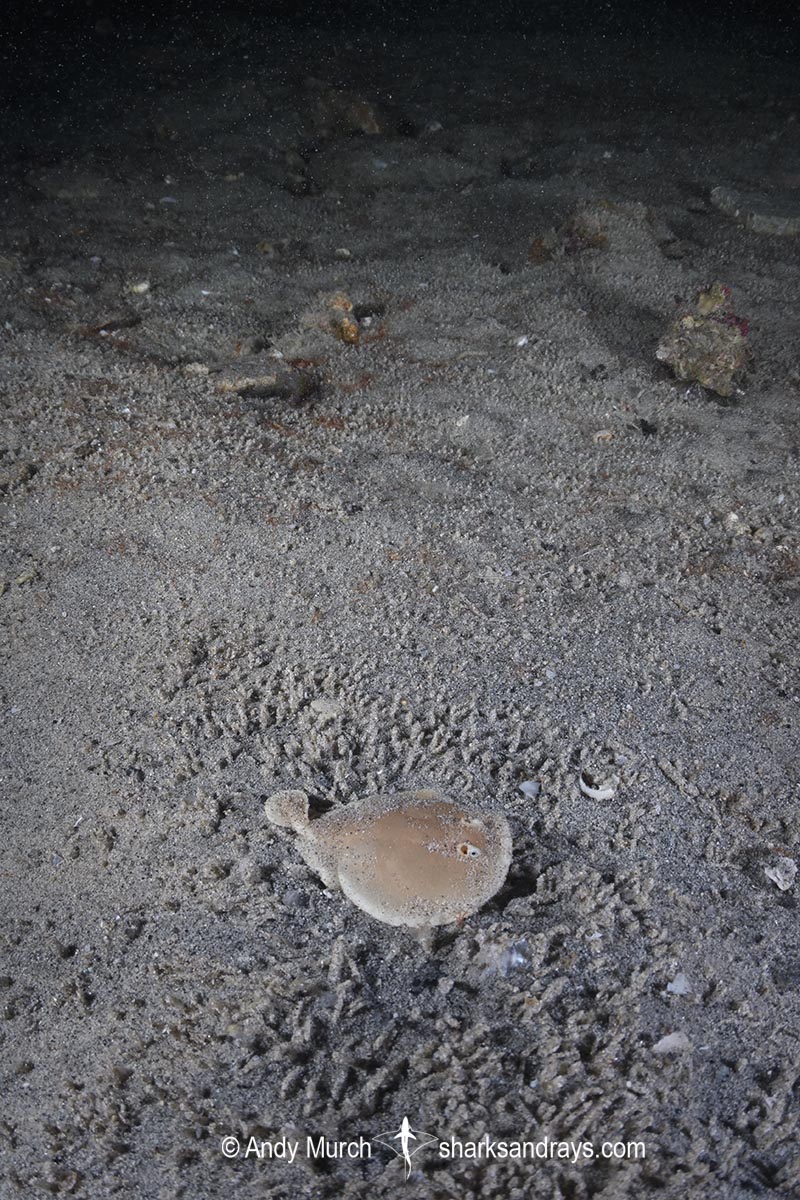
Warm temperate to tropical seas. Benthic on soft substrates from 0-20m.
Distribution
The finless sleeper ray has a fragmented shallow coastal range within Southeast Asia from the Nicobar and Andaman Islands, around Peninsula Malasia, to Thailand, Camodia, and on the northwest coast of Borneo.
Reproduction
Probably aplacental viviparous. Litter size unconfirmed, but one gravid female had four embryos.
Diet
Diet unknown. Probably consumes small benthic invertebrates.
Behavior
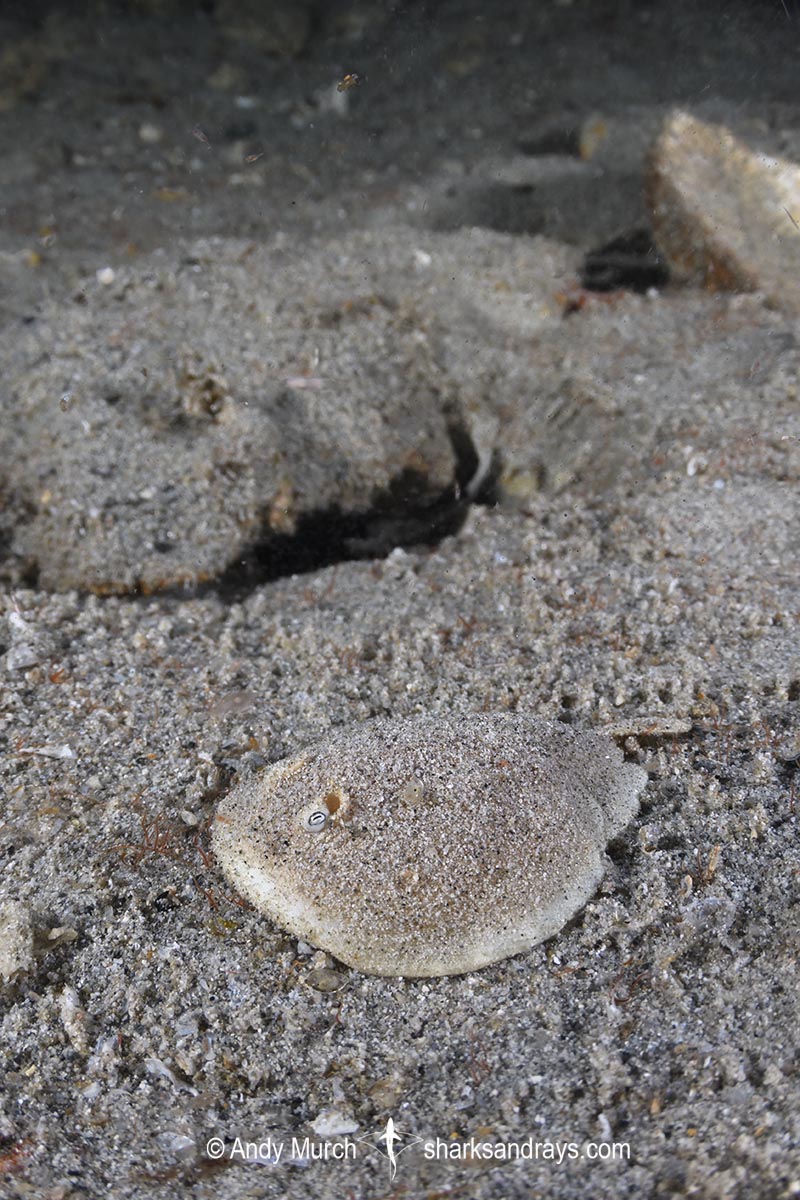
Poorly known. Nocturnal. Remains buried during the day. Capable of delivering a potent electric shock.
Reaction to divers
Easy to approach. Generally remains motionless when approach. More likely to bury than to bolt.
Diving logistics
The finless sleeper ray is rarely encountered by divers, but appears to be slightly more common on the east coast of Peninsula Malaysia. I have found this ray around Tioman Island; always at night, but the locals tell me it is sometimes seen during the day.
What’s new
View our full list of updates
Similar species
Spot-tail Sleeper Ray Distinguishable by presence of dorsal fin and paired pale blotches on posterior disc, above pelvic fins, and at tail base.
