Common names
Atlantic Manta Ray, Caribbean Manta Ray.
NOTE: Physical characteristics and recent genetic evidence suggest that the Caribbean manta ray may be a unique species but further research is needed before it can be scientifically described.
Binomial
Mobula yarae.
Synonyms
Manta birostris.
Identification
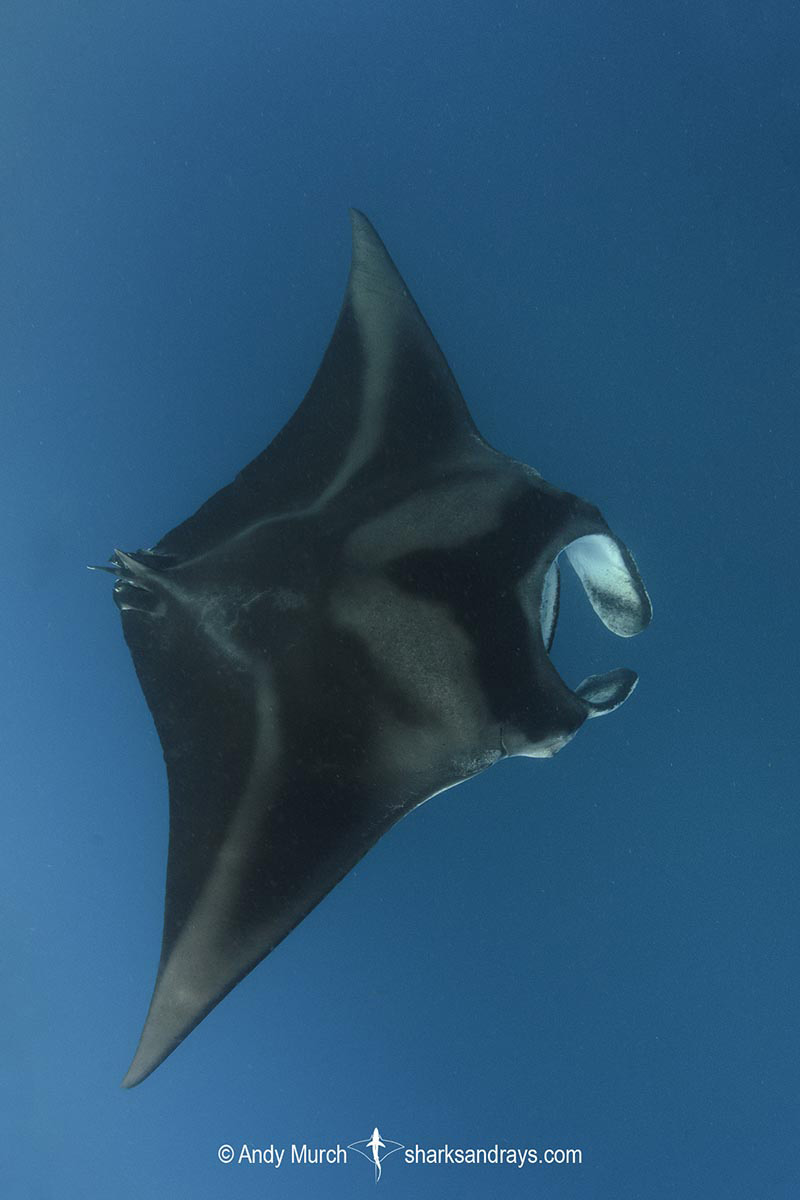
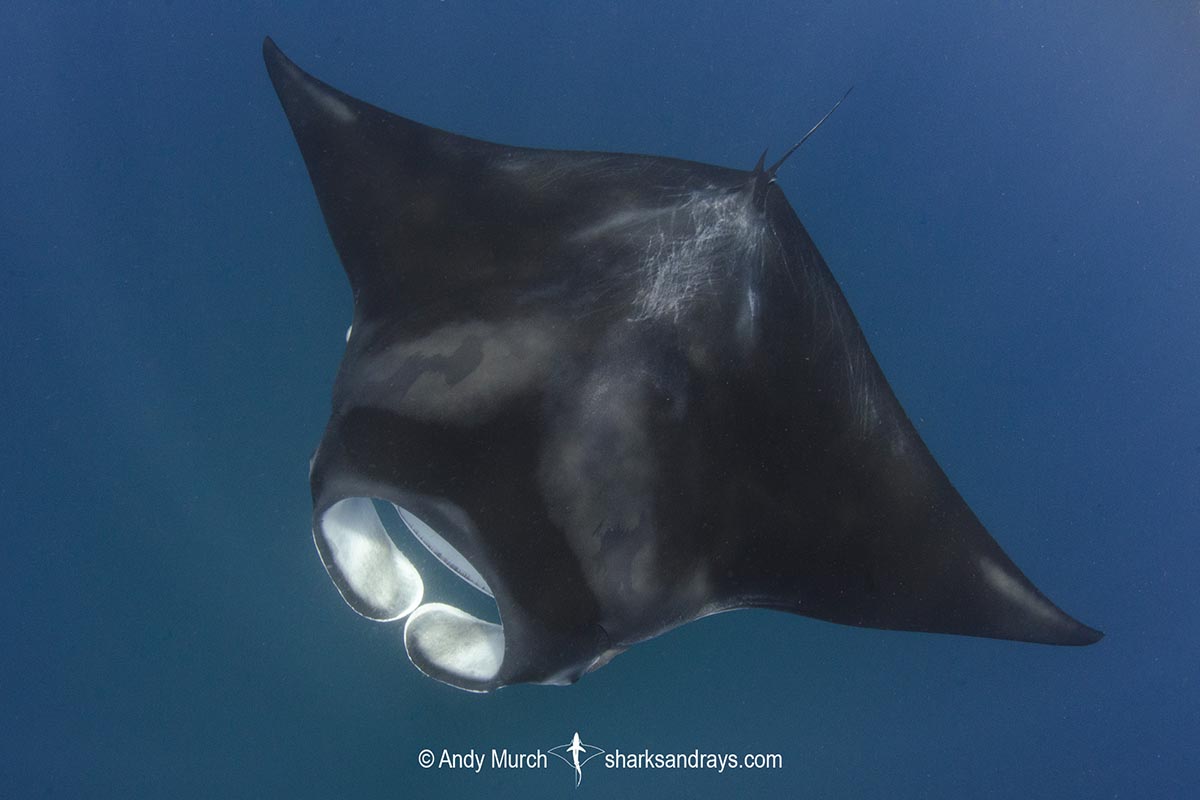
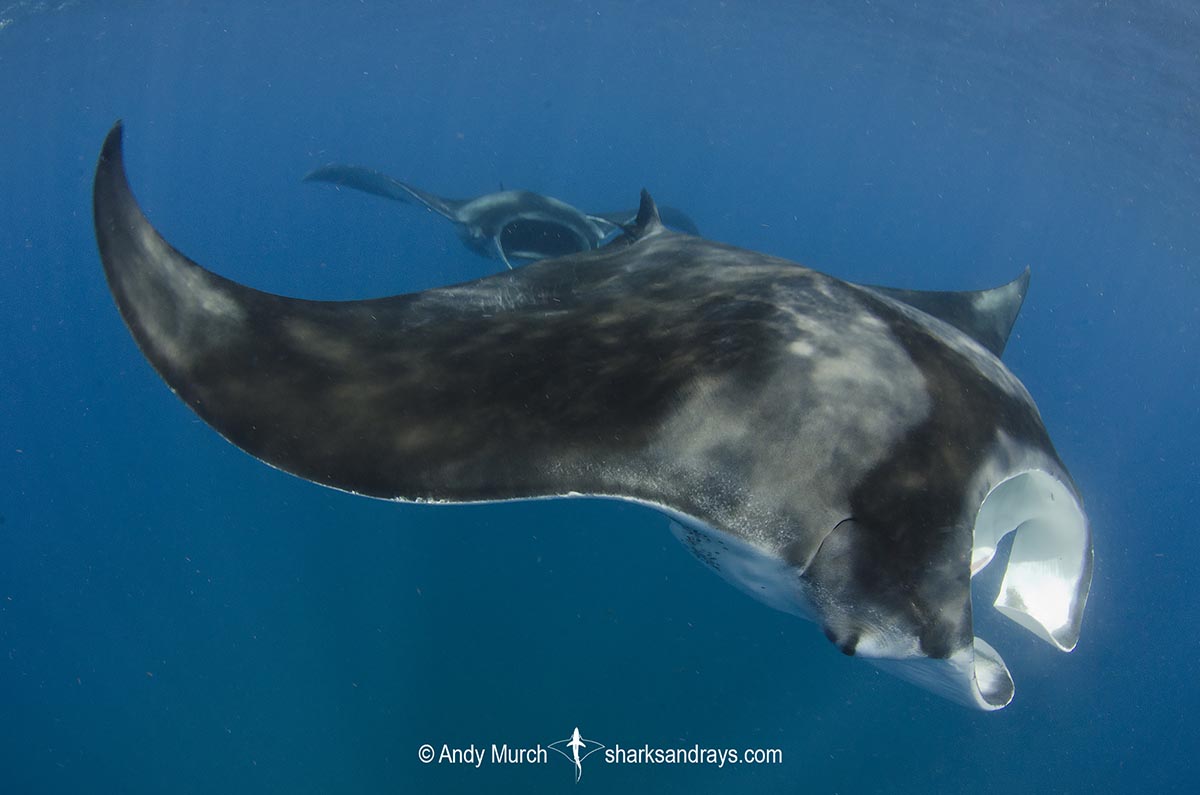
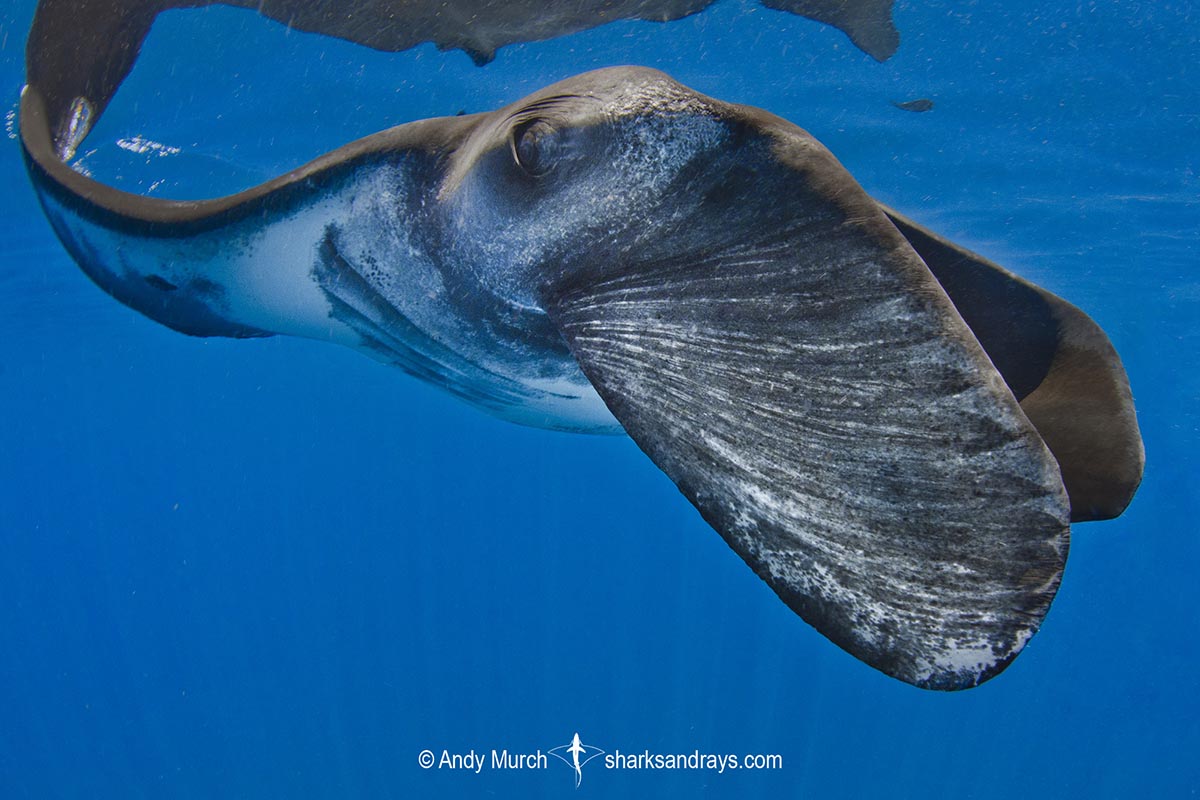
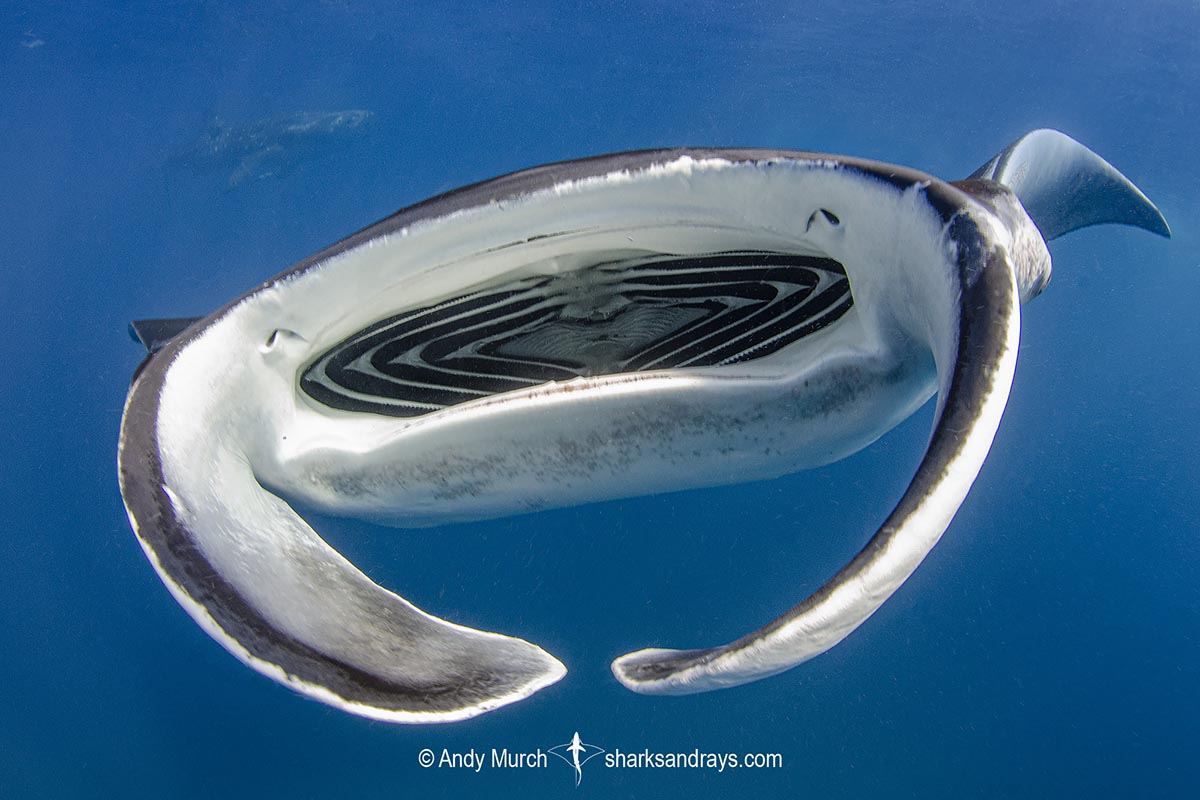
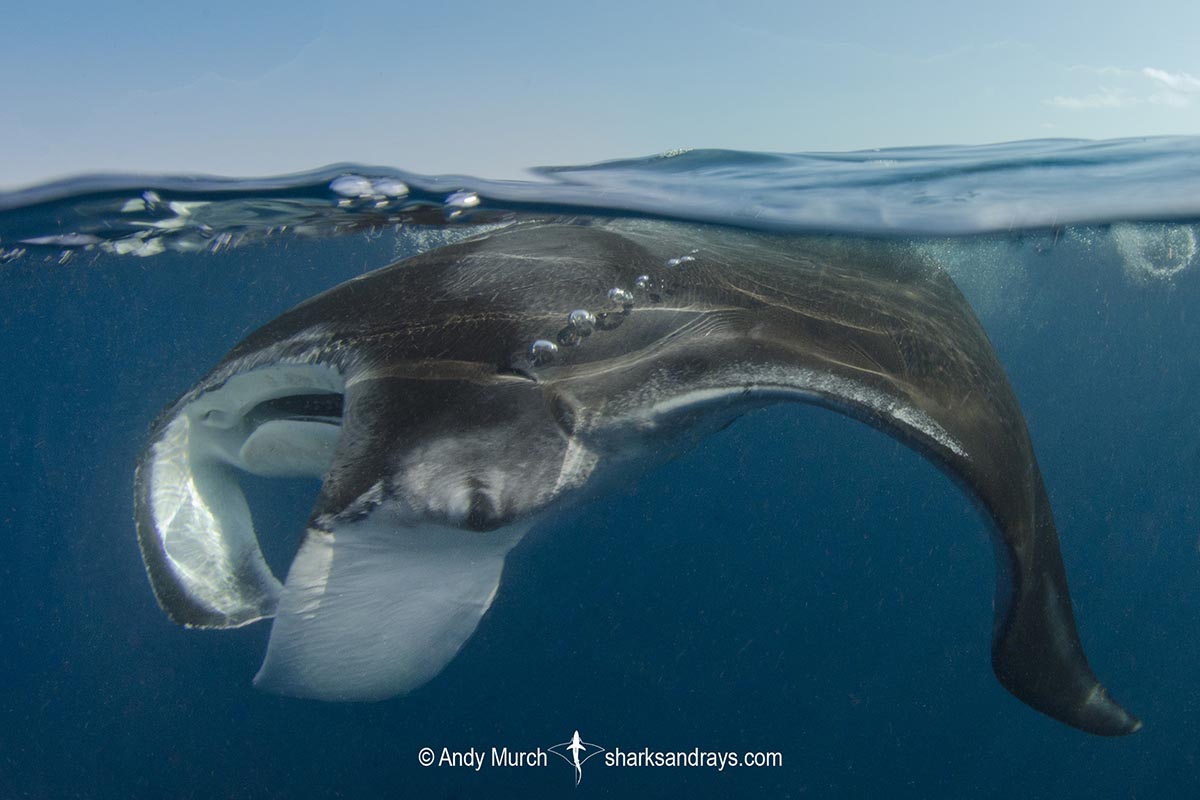
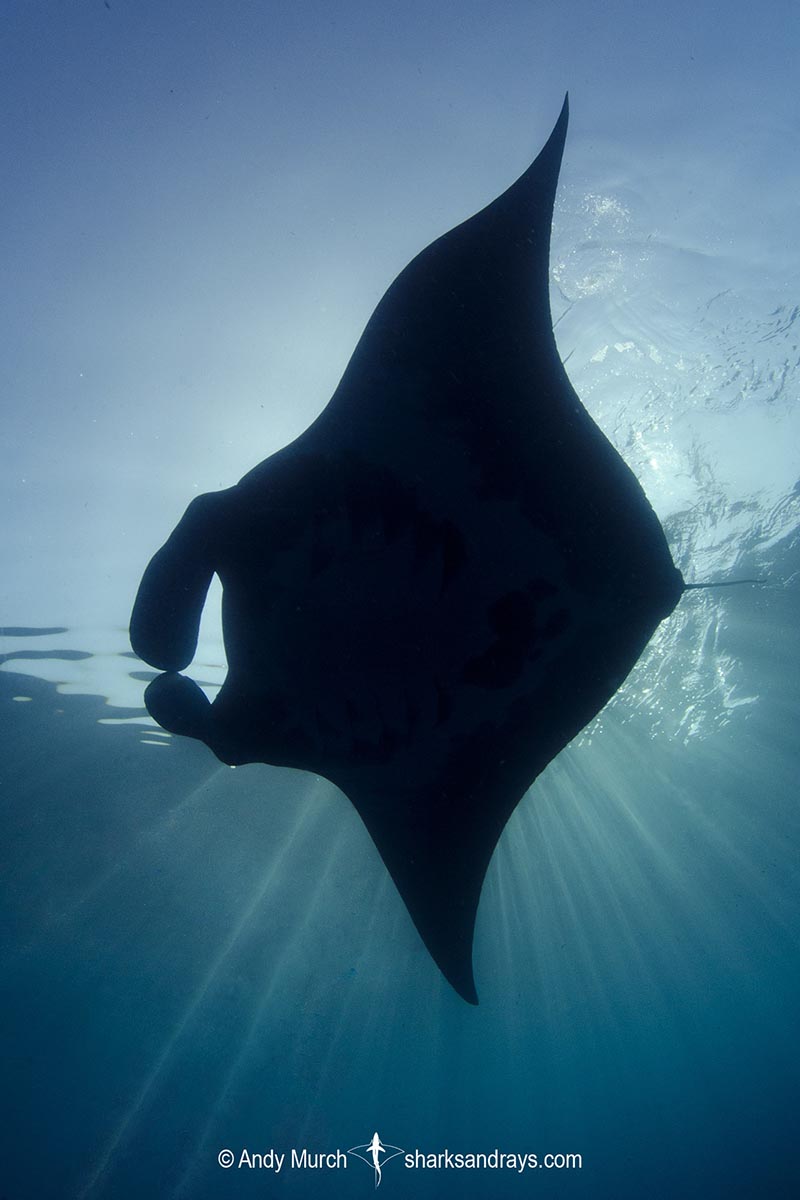
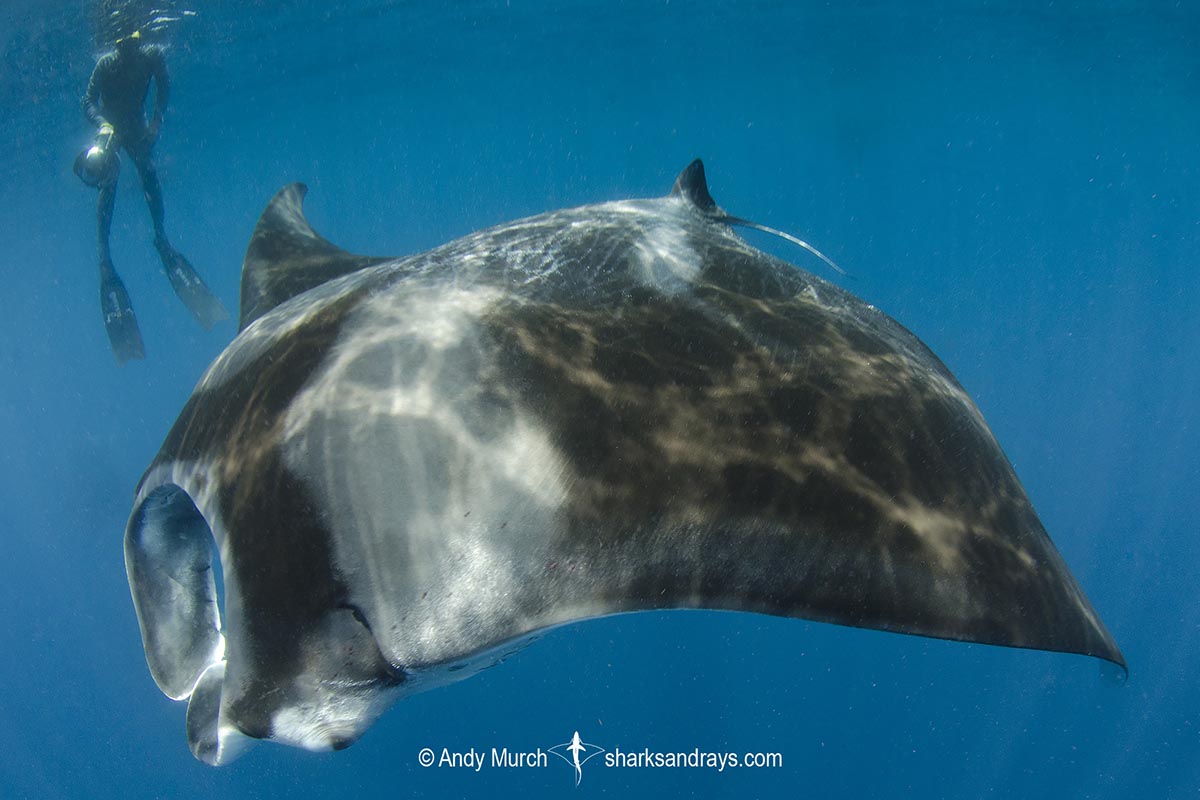
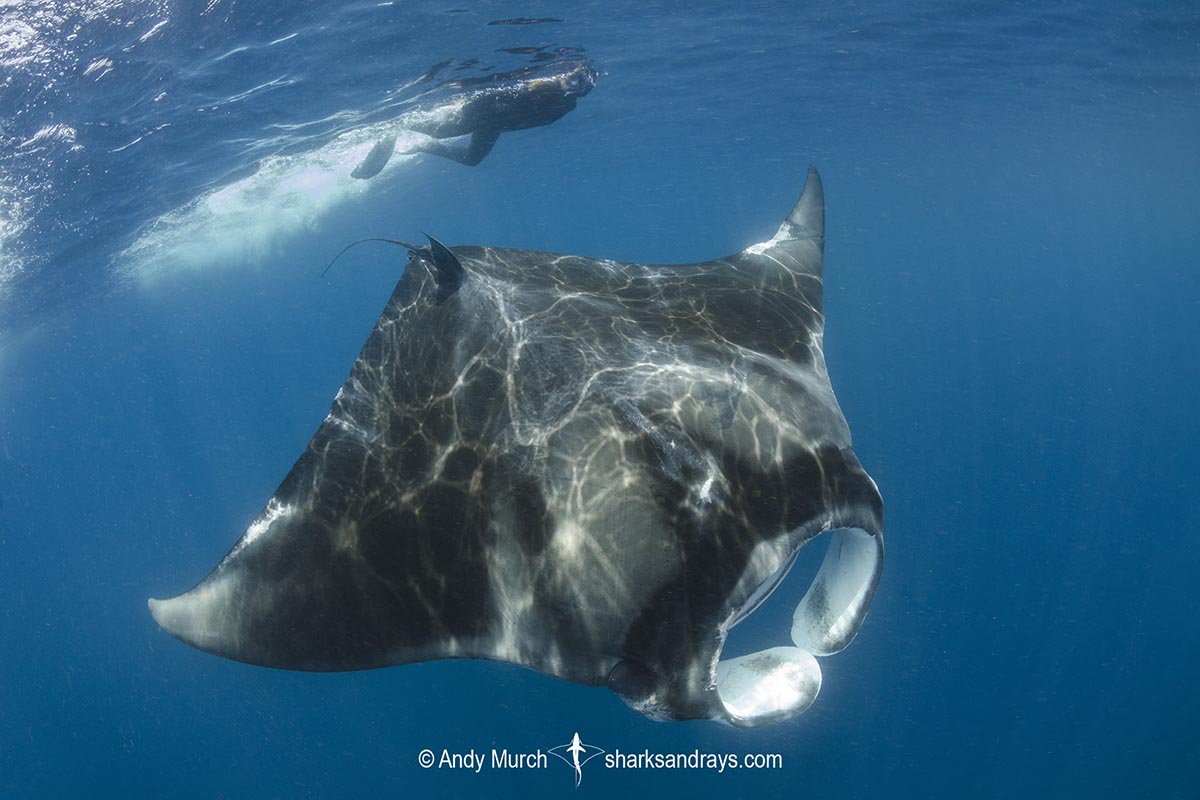
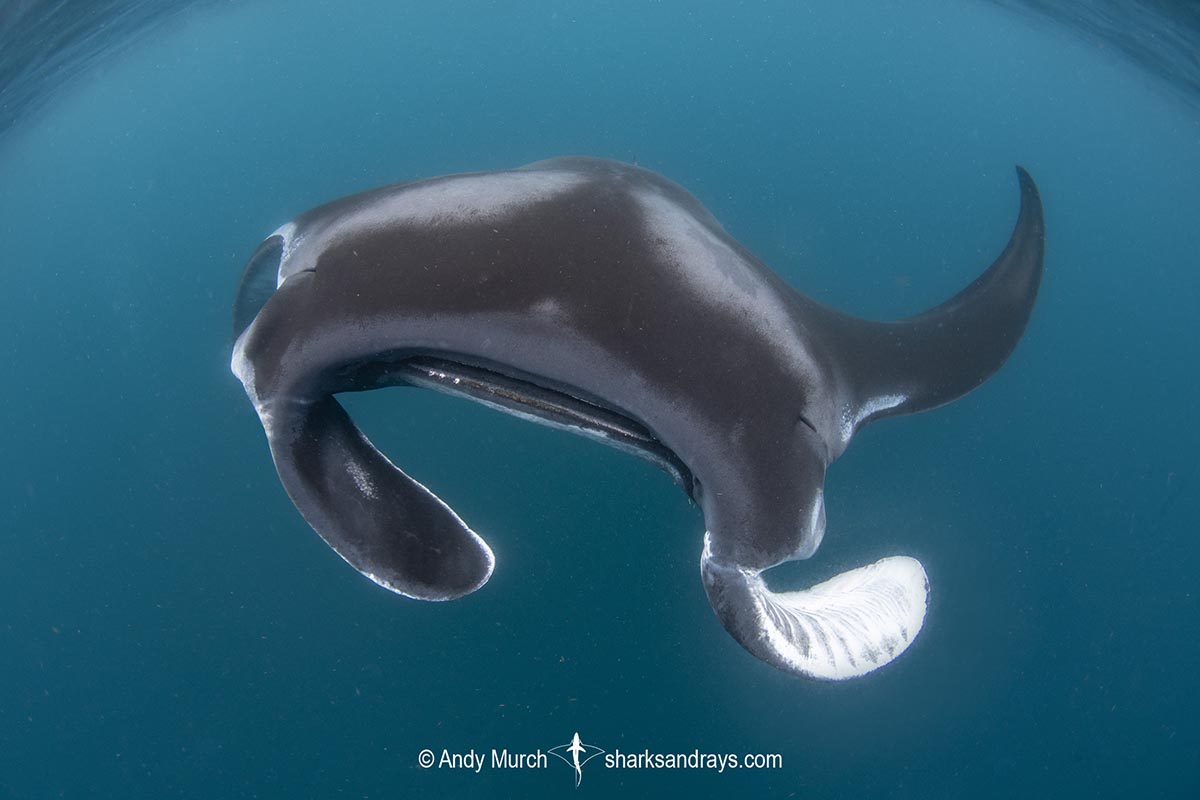
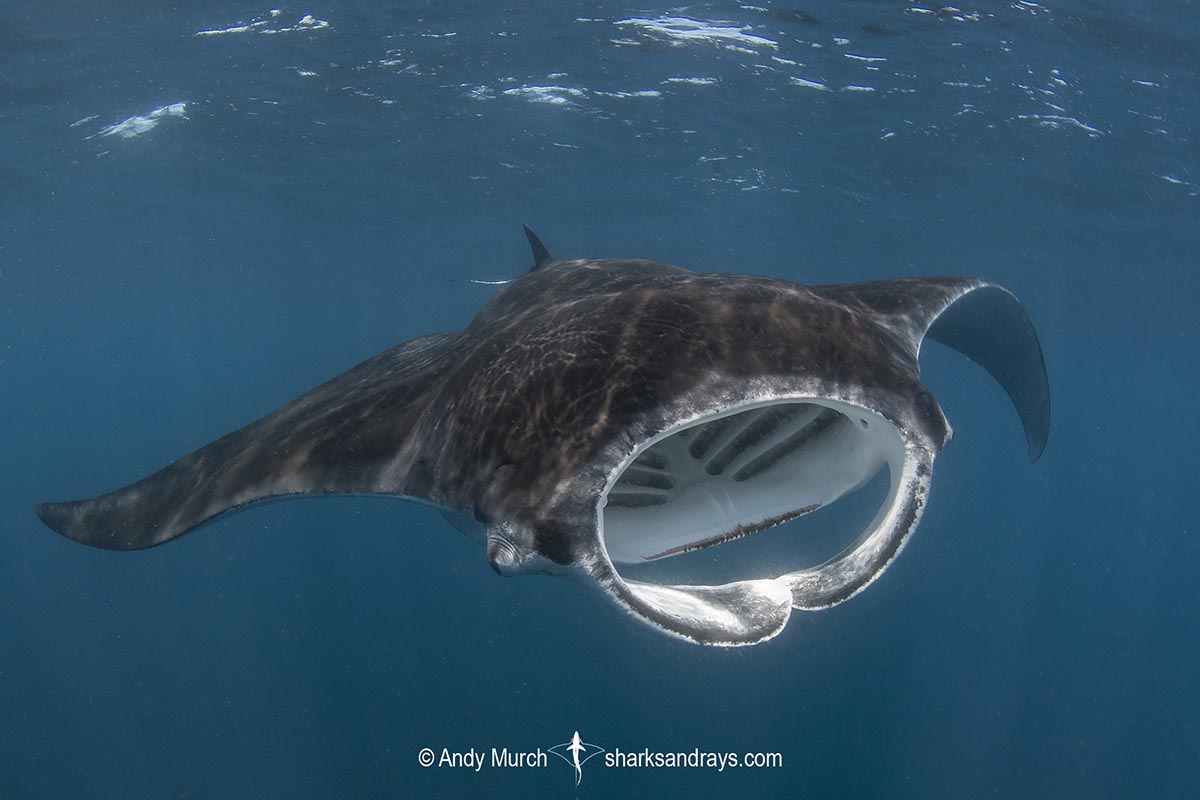
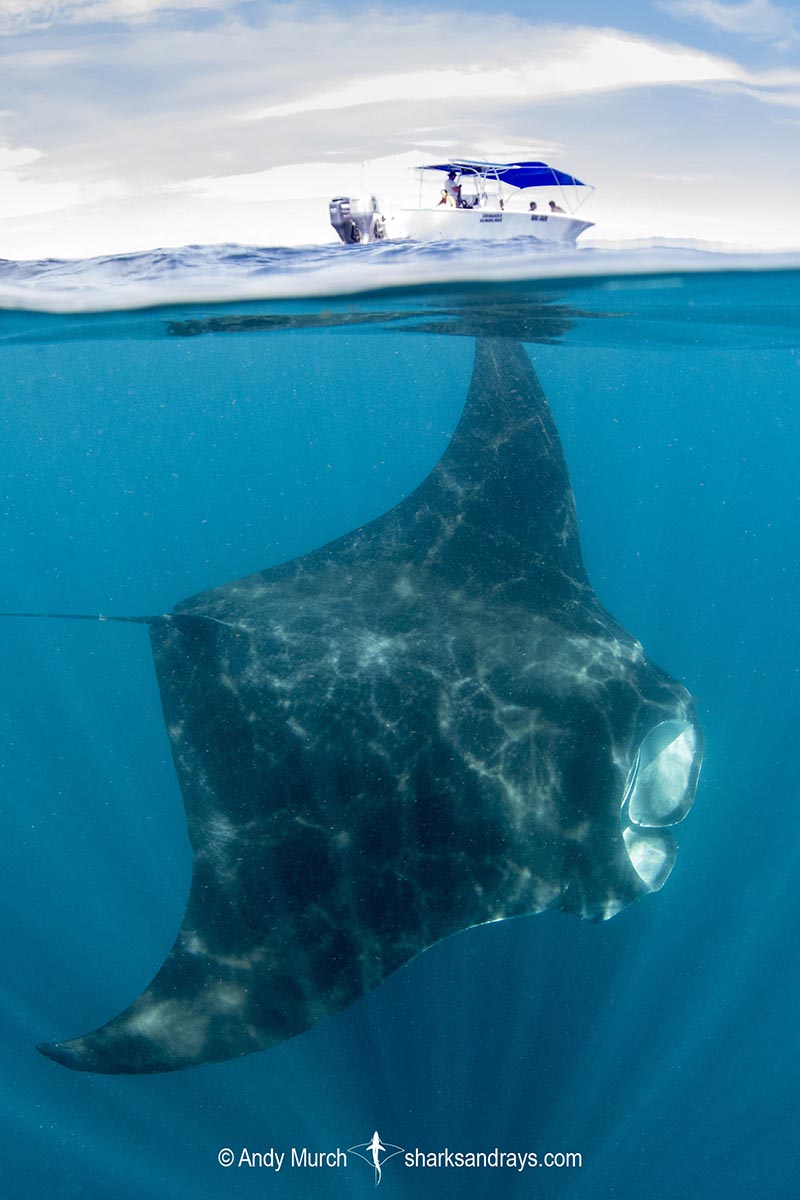
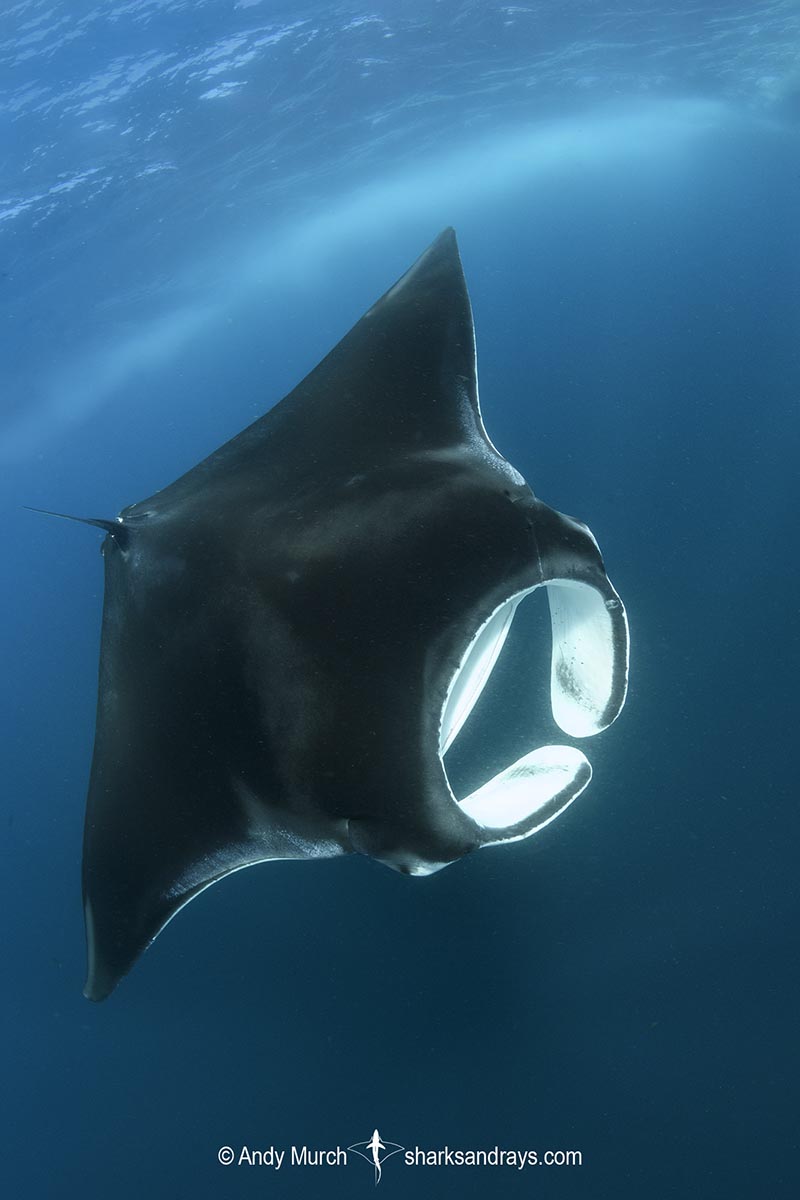
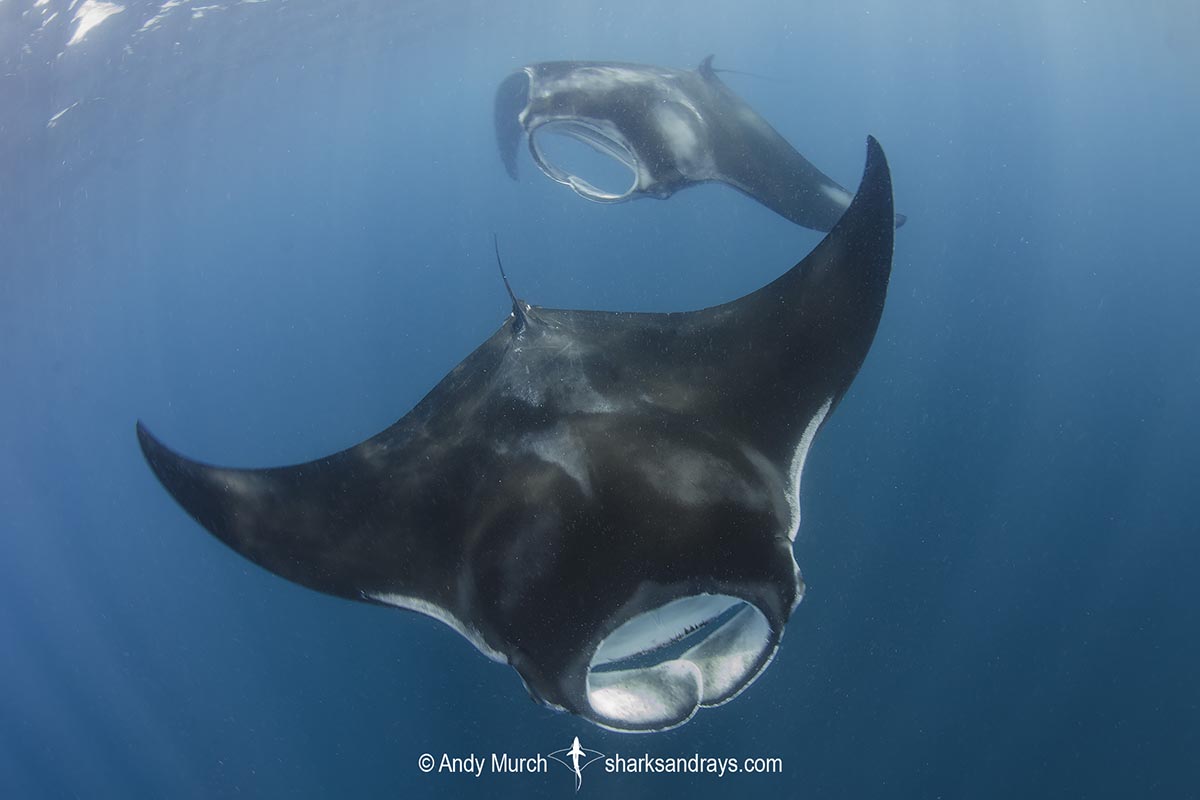
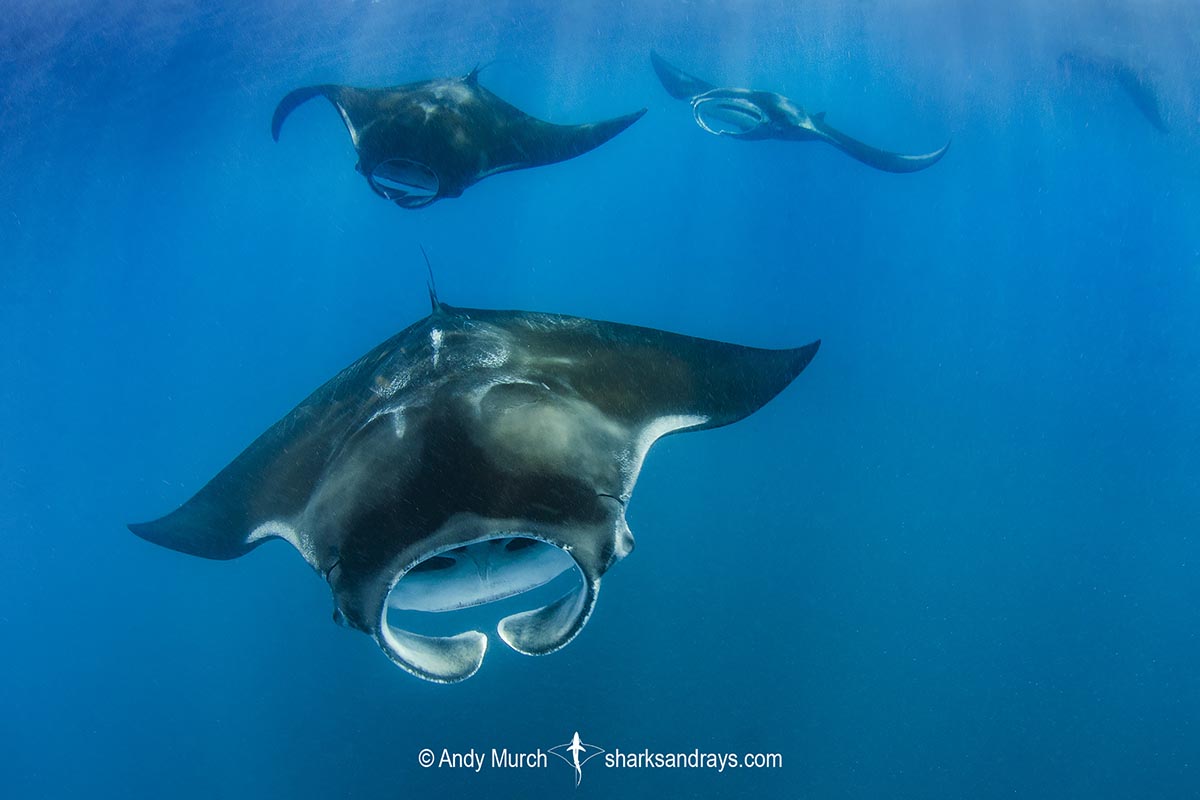
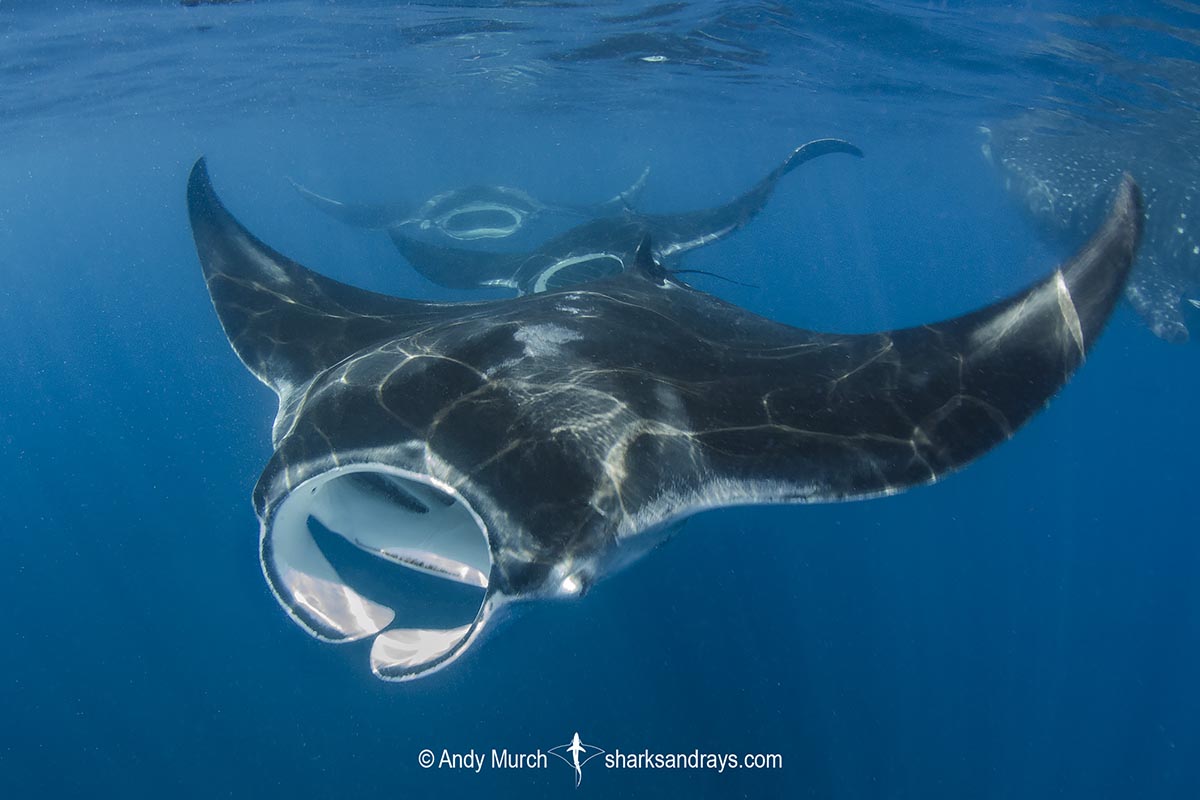
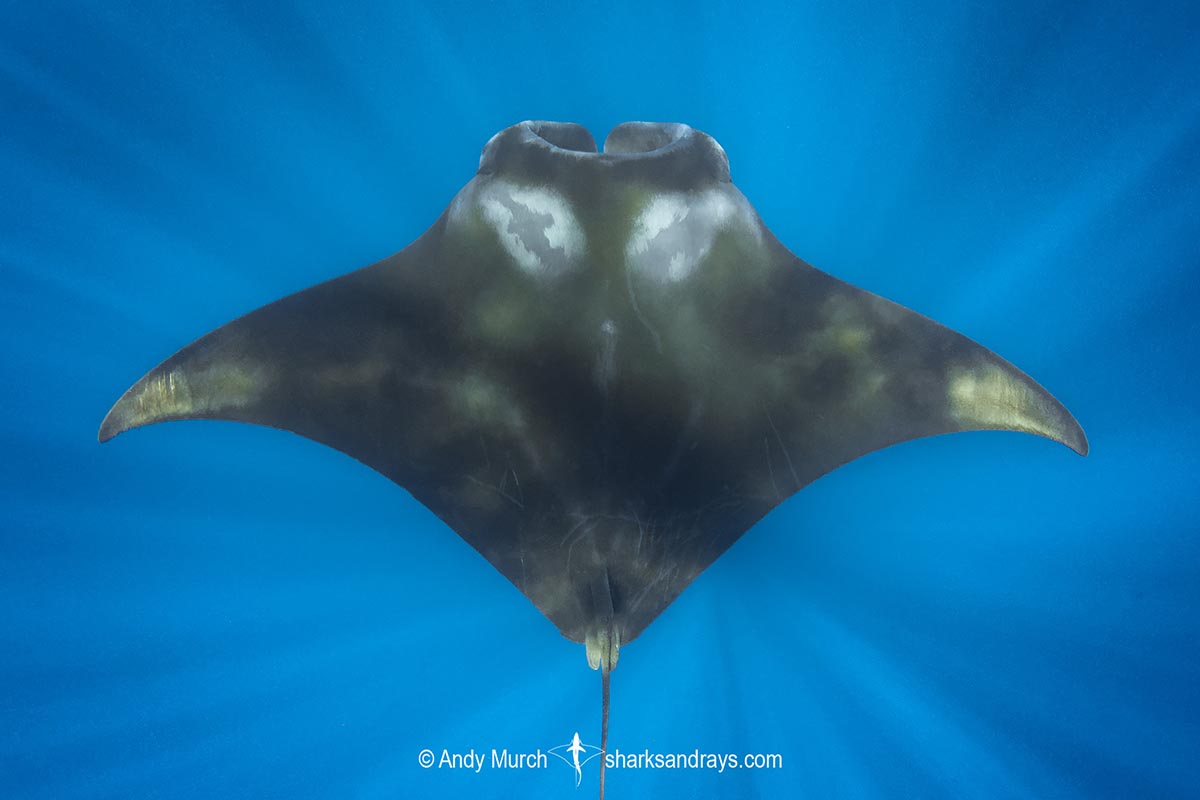
An extremely large ray with a kite-shaped disc and a large protruding head with a wide, terminal mouth. Disc width more than 2x length. Pectoral fins narrowly falcate, with convex anterior margins and concave posterior margins. Pectoral fin apices acutely pointed. Pelvic fins very small. One small dorsal fin present at base of tail; not falcate.
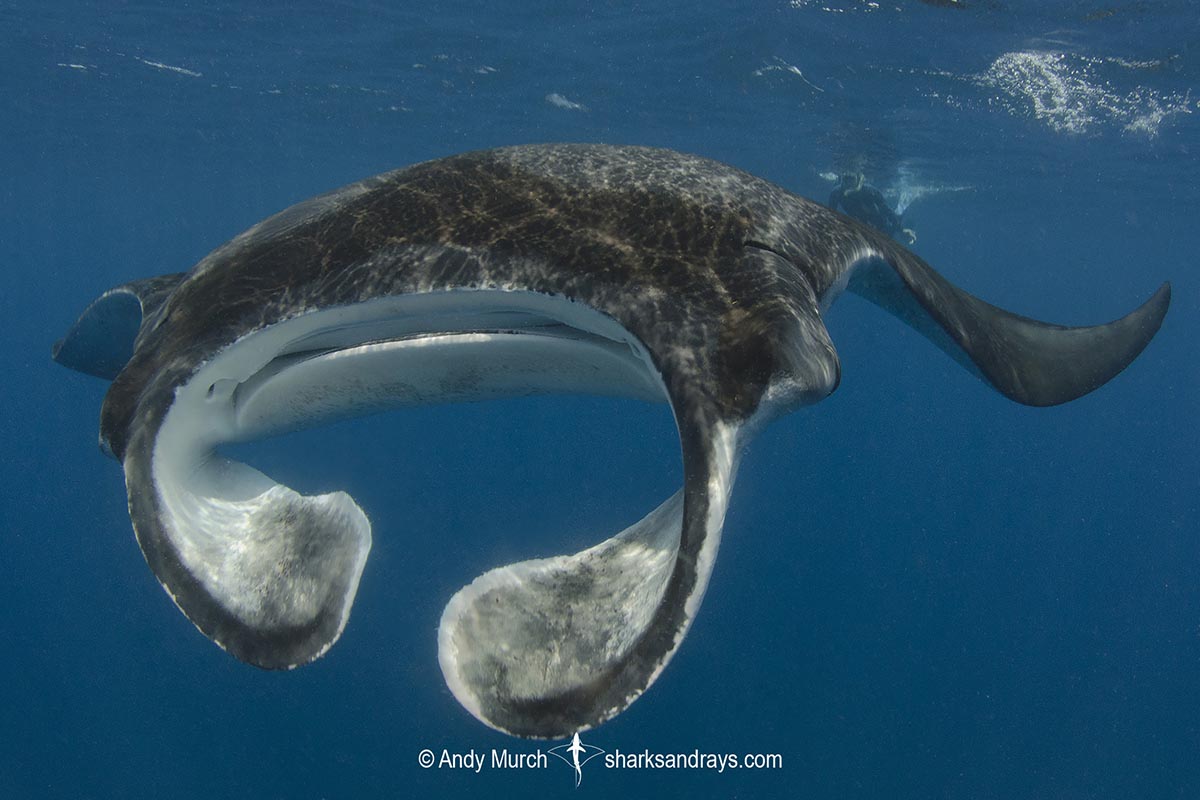
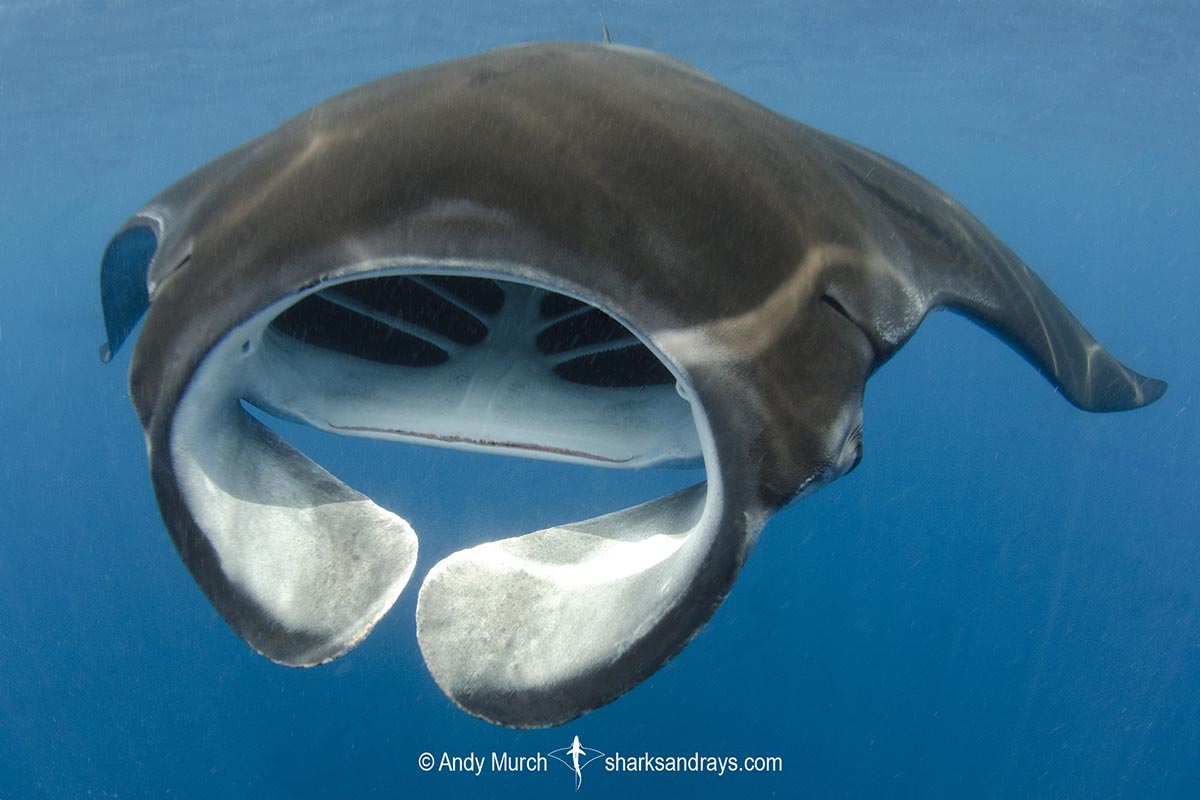
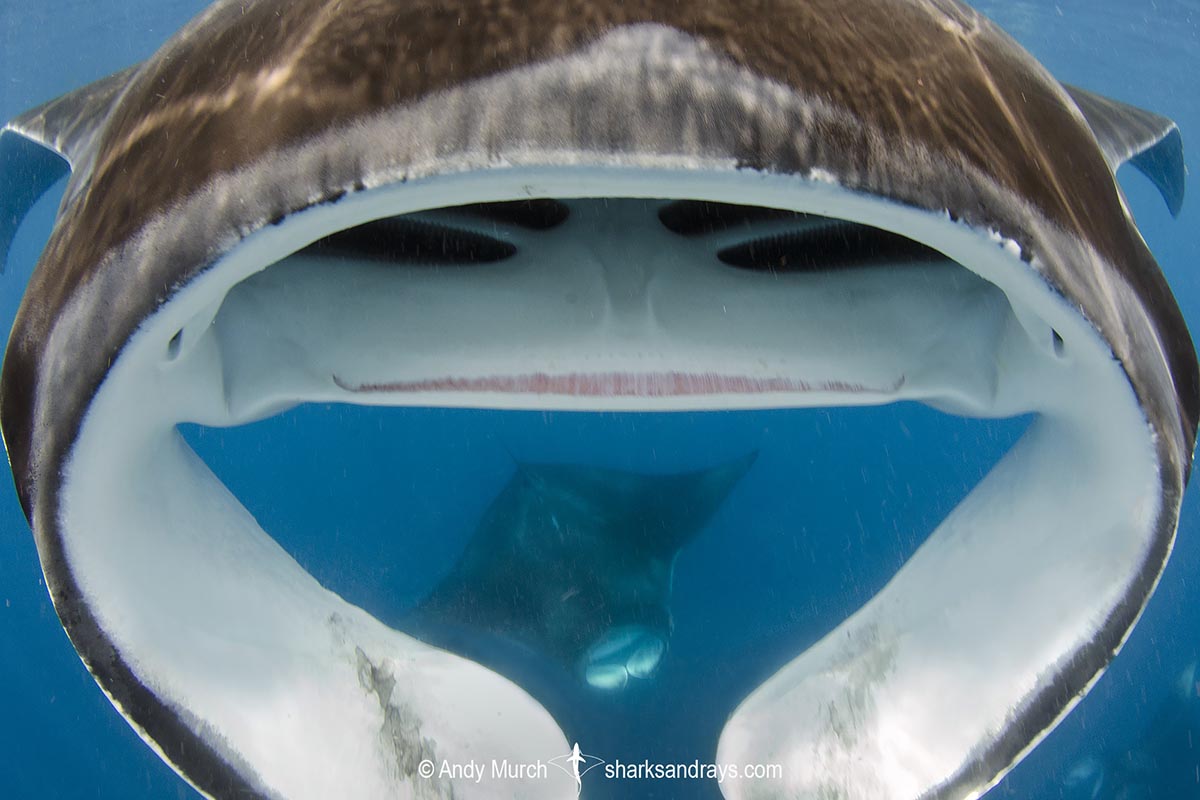
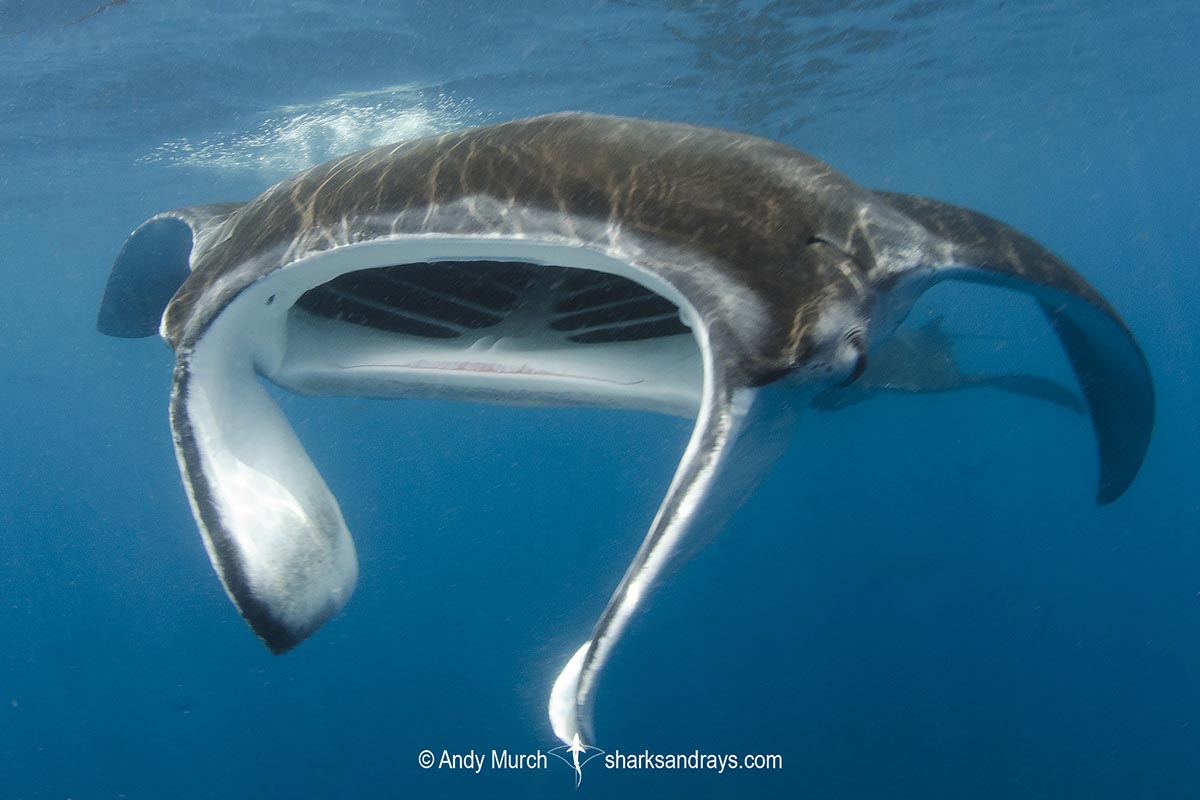
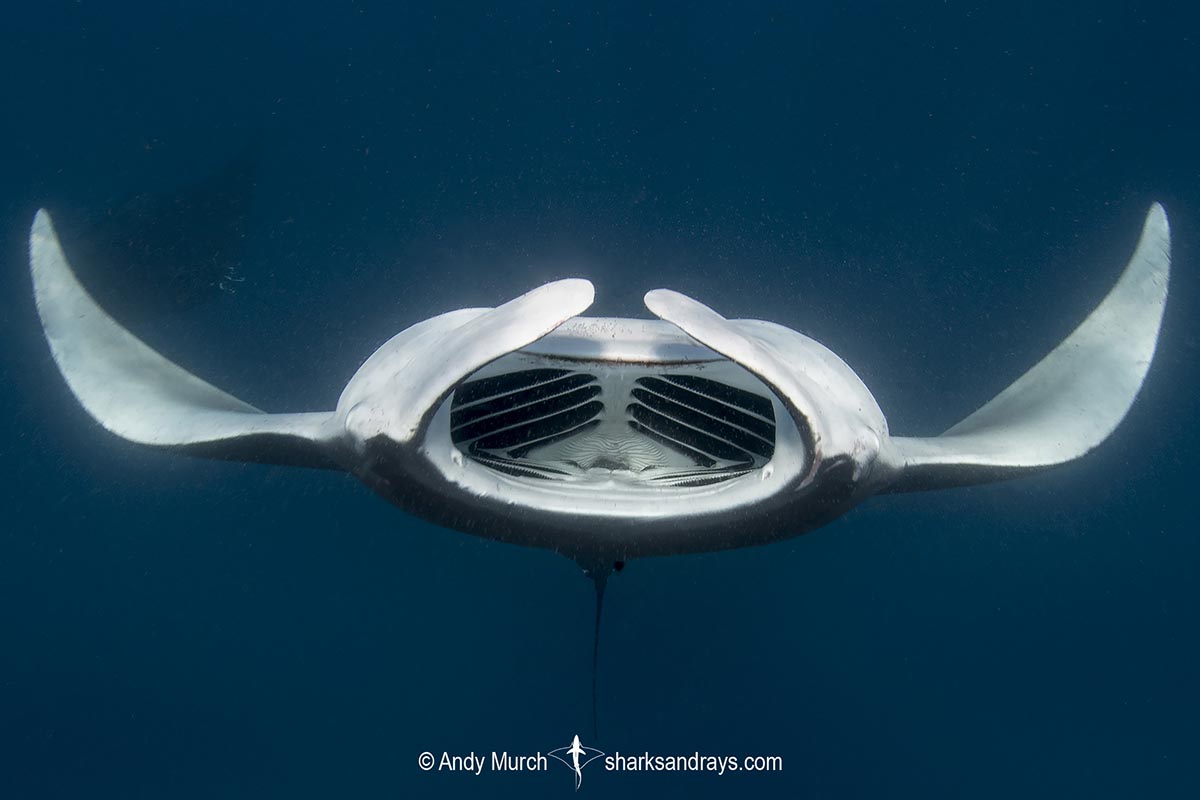
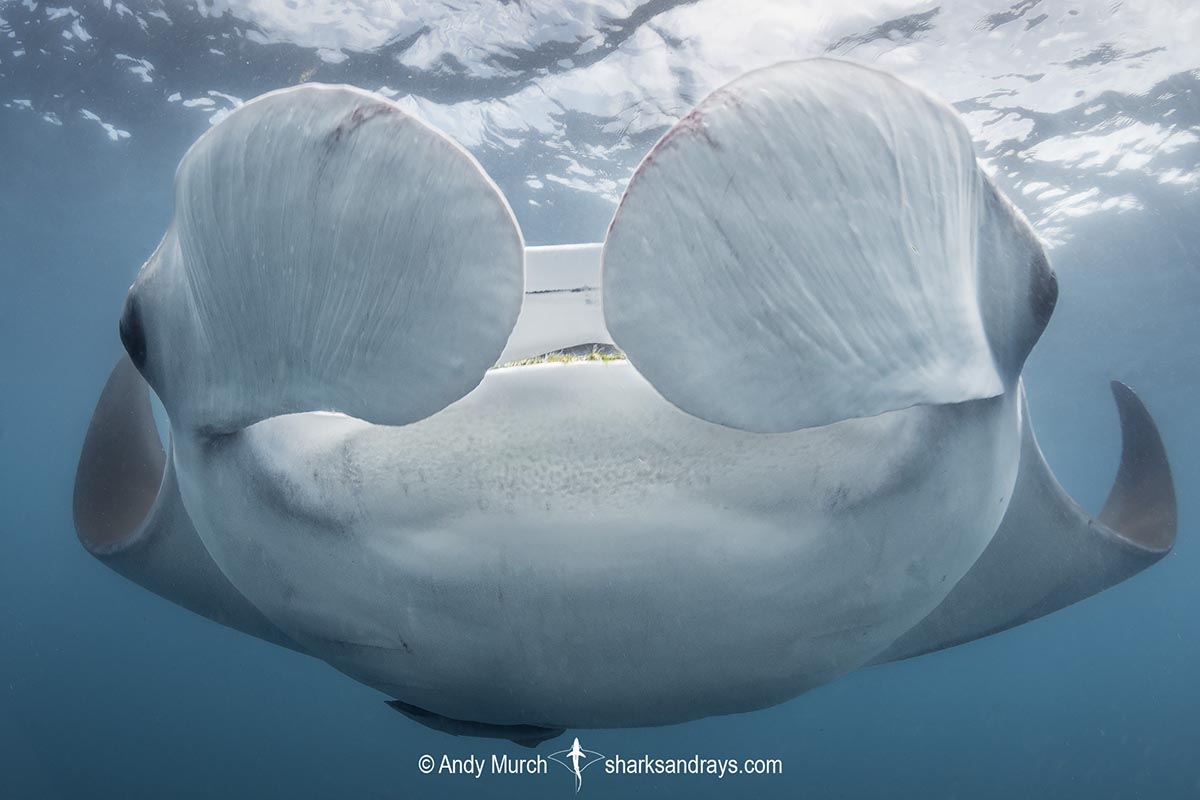
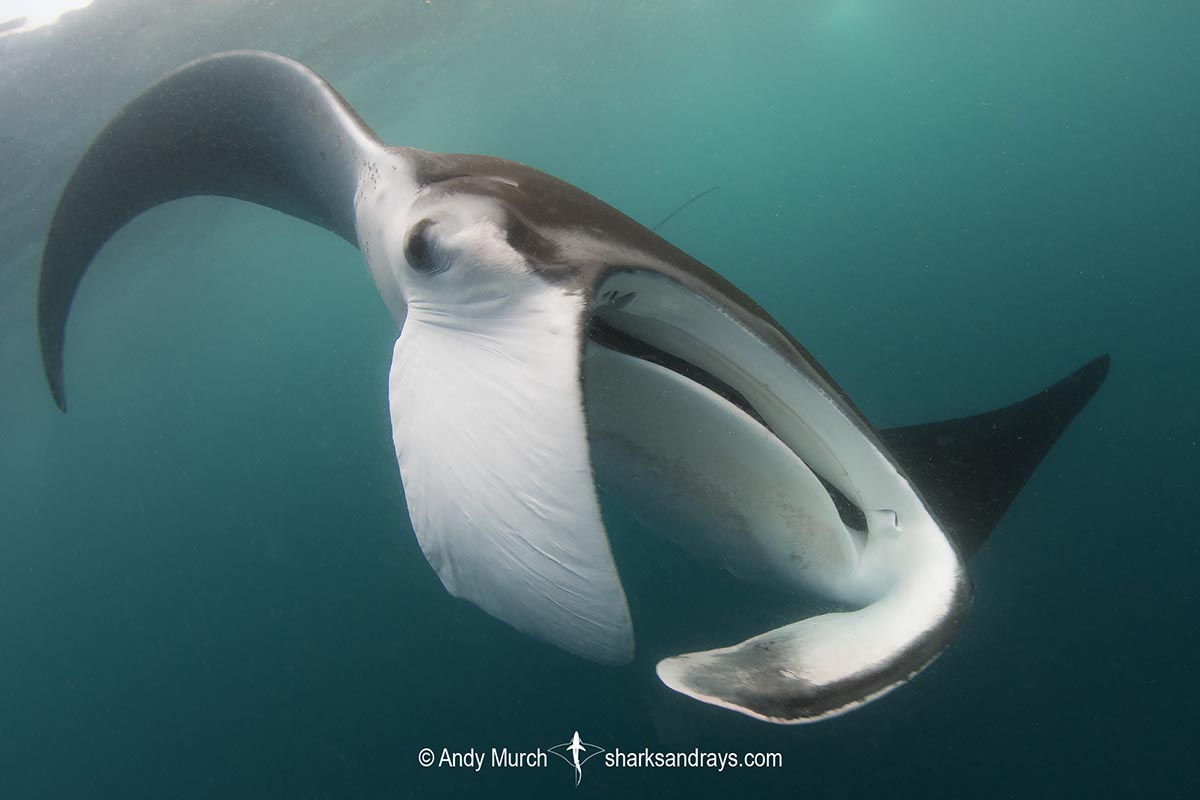
Head pronounced; extending well forward of pectoral fins. Slit-like spiracles posterior to eyes. Mouth very broad. Cephalic lobes long, broad, and highly flexible.
Band of vestigial teeth present on lower jaw.
Tail whiplike. One small caudal sting encased in a small calcified bulge near base of tail.
Colour
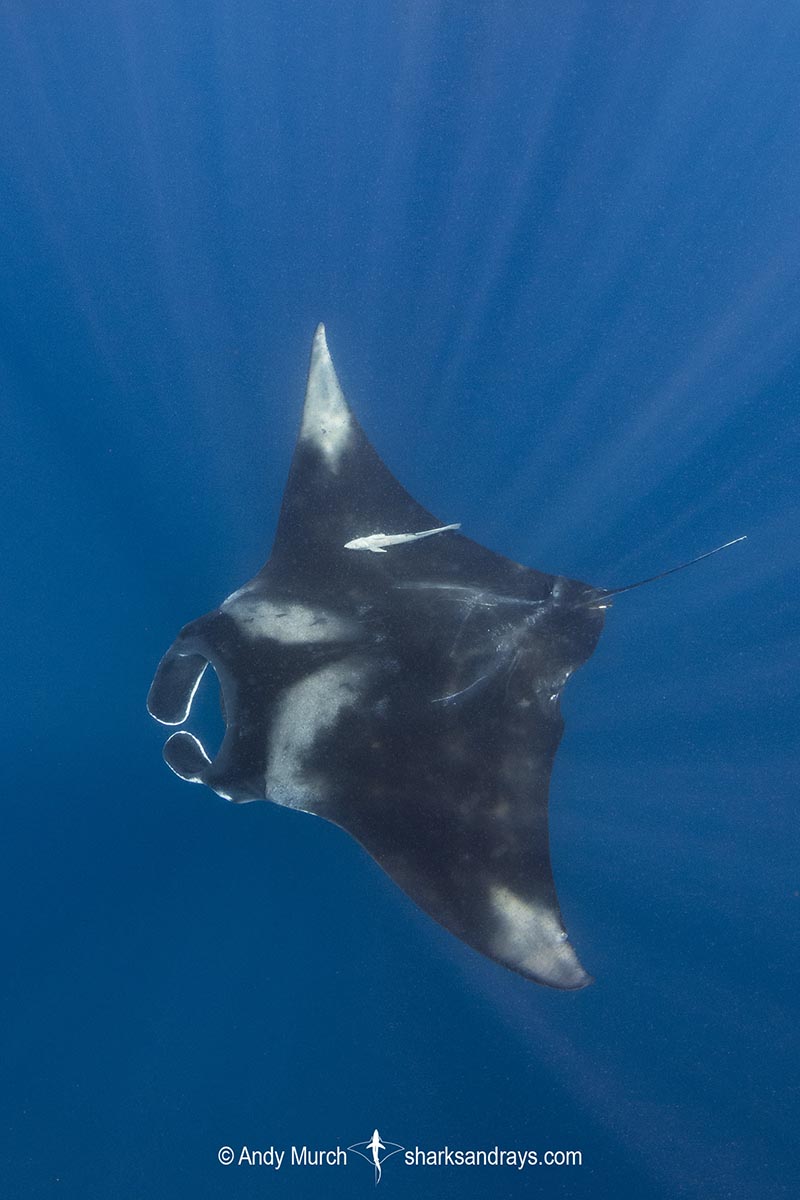
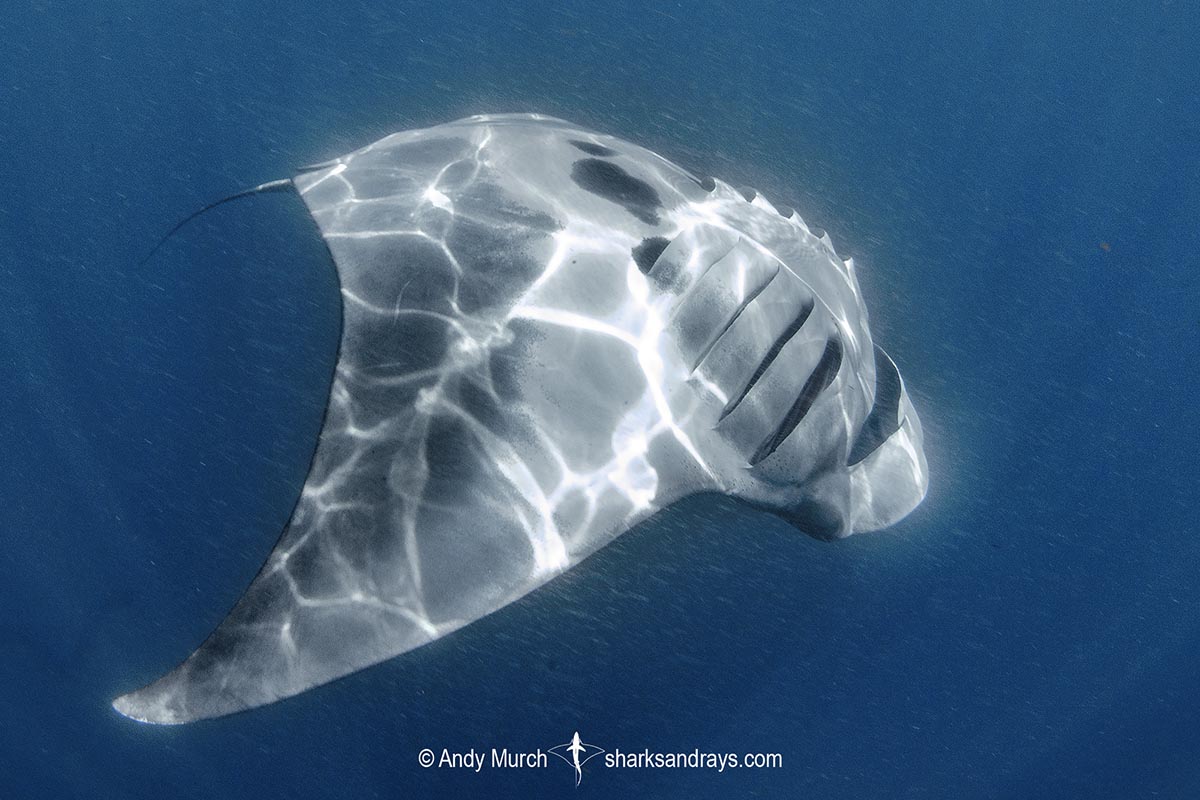
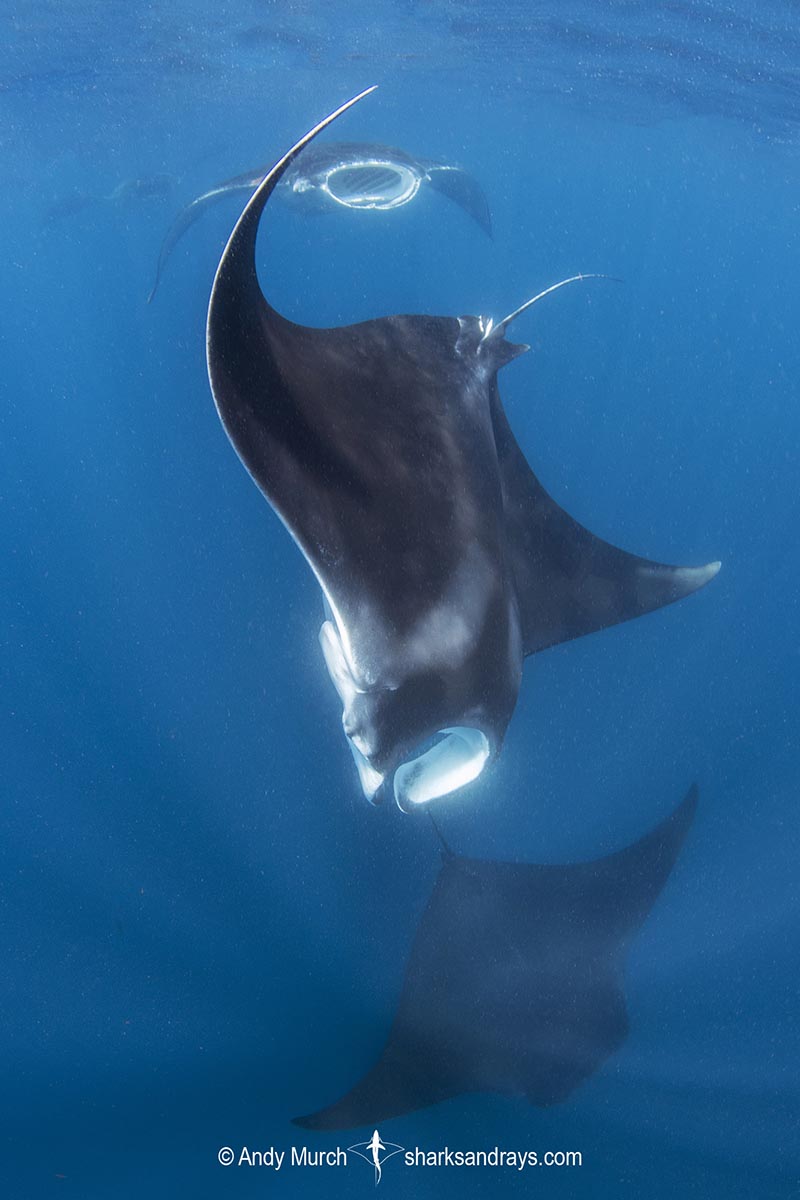
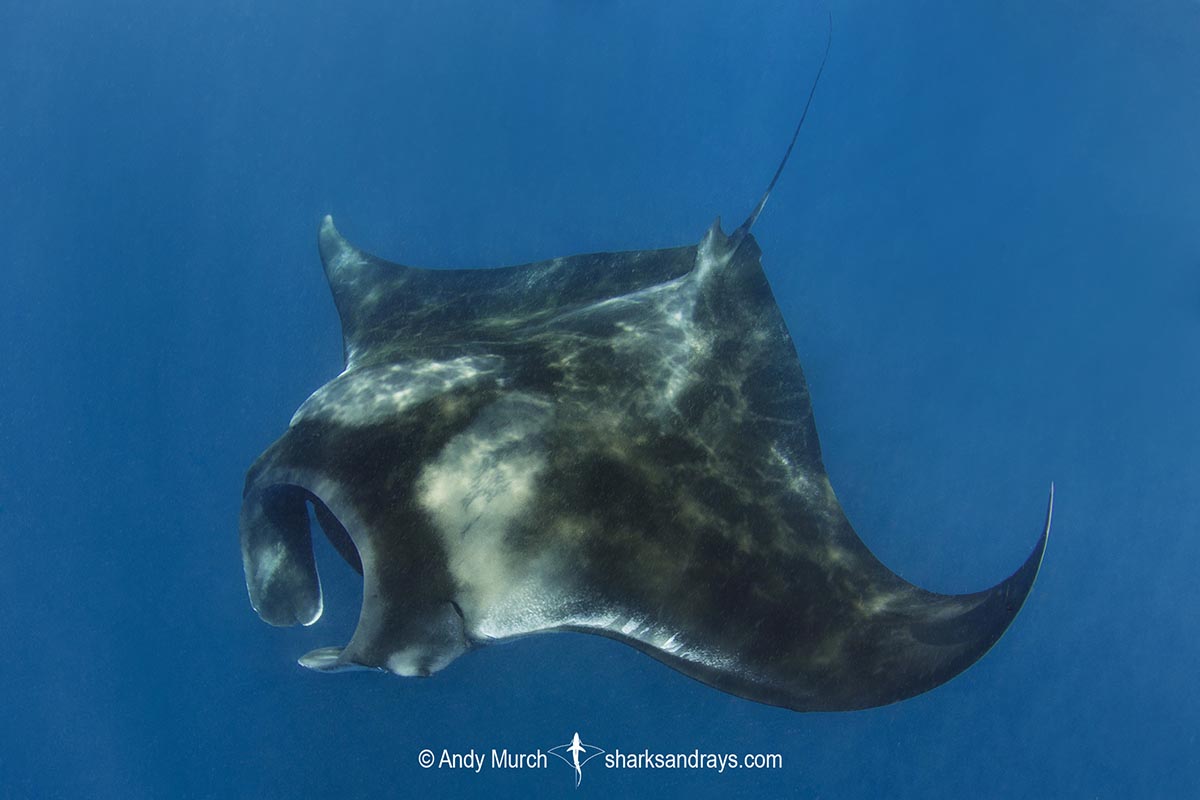
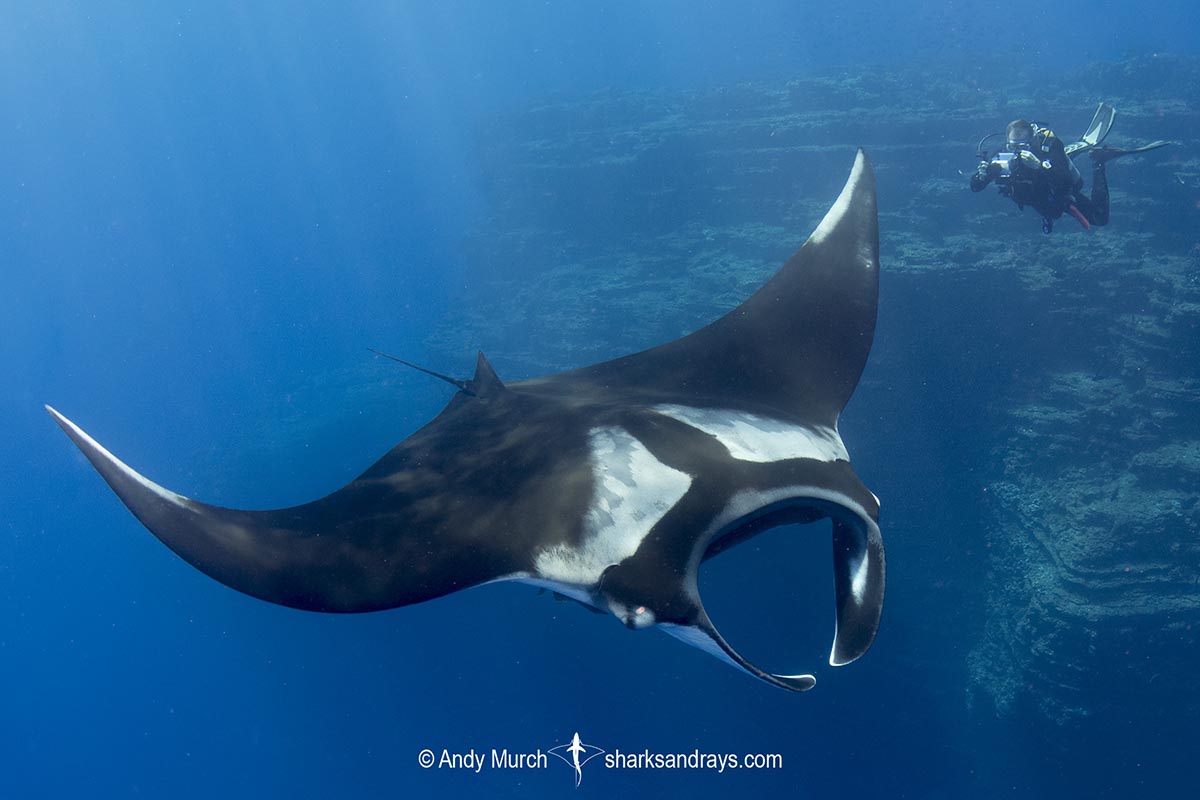
Markings are quite variable. Dorsum predominantly black, usually with varying white or grey shoulder markings that create a black T-shaped central space. The downstroke of the T narrows to a point. This differs from the standard T-shape on the centre line of an oceanic manta which has a wine glass shaped downstroke.
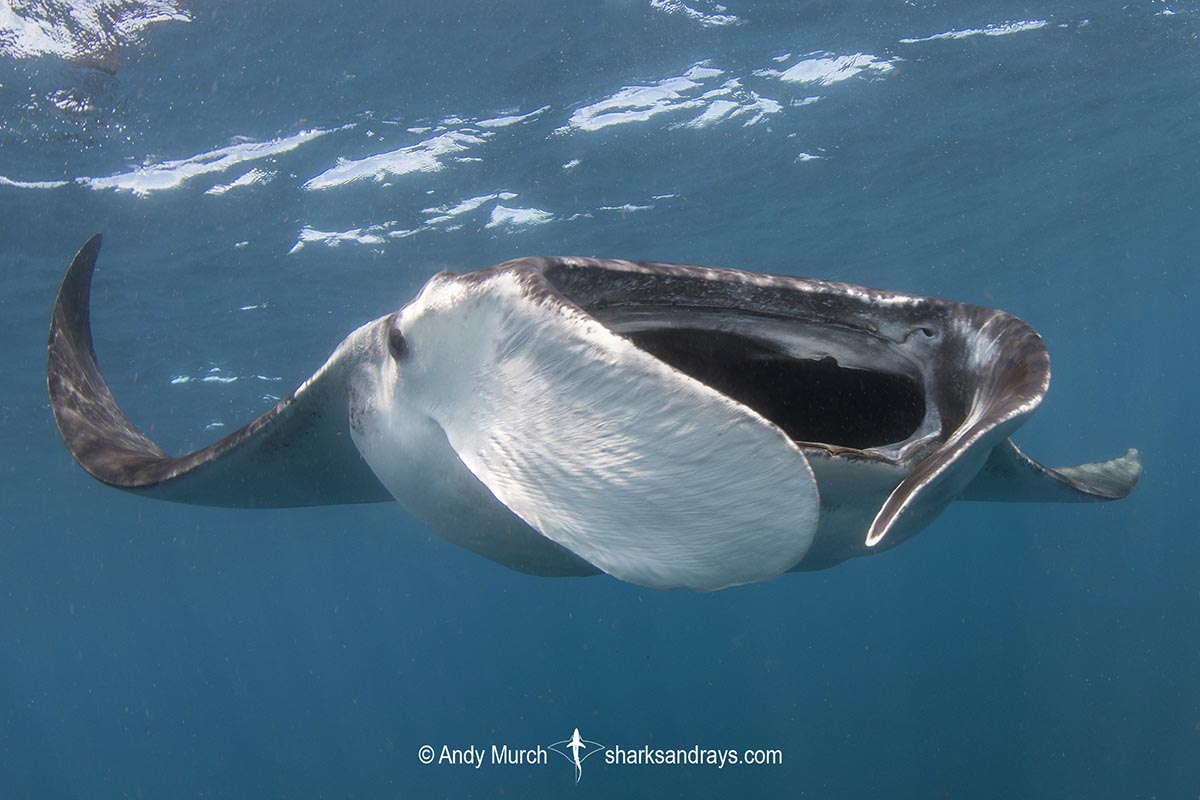
V-shaped marking anterior to tail, occasionally curving outward to reach pectoral fin apices. Mouth and inner surface of cephalic lobes usually white or dusky; outer/ventral surface white.
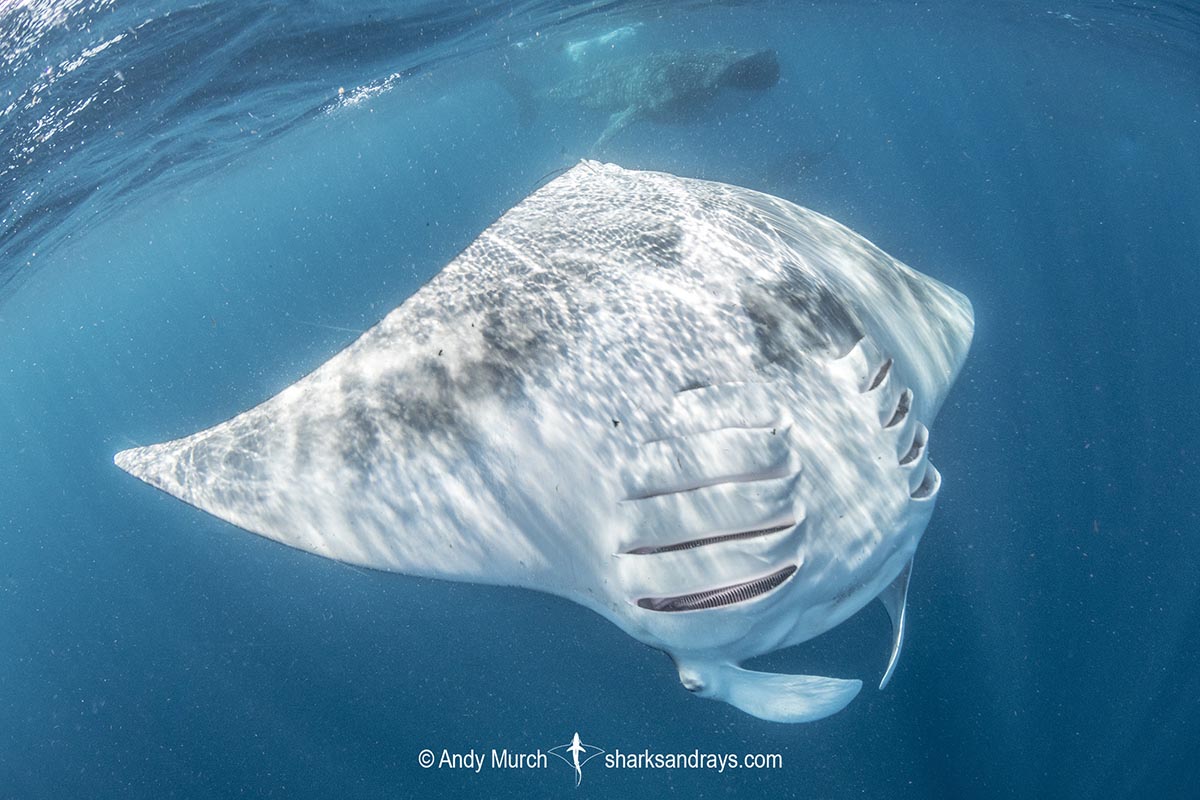
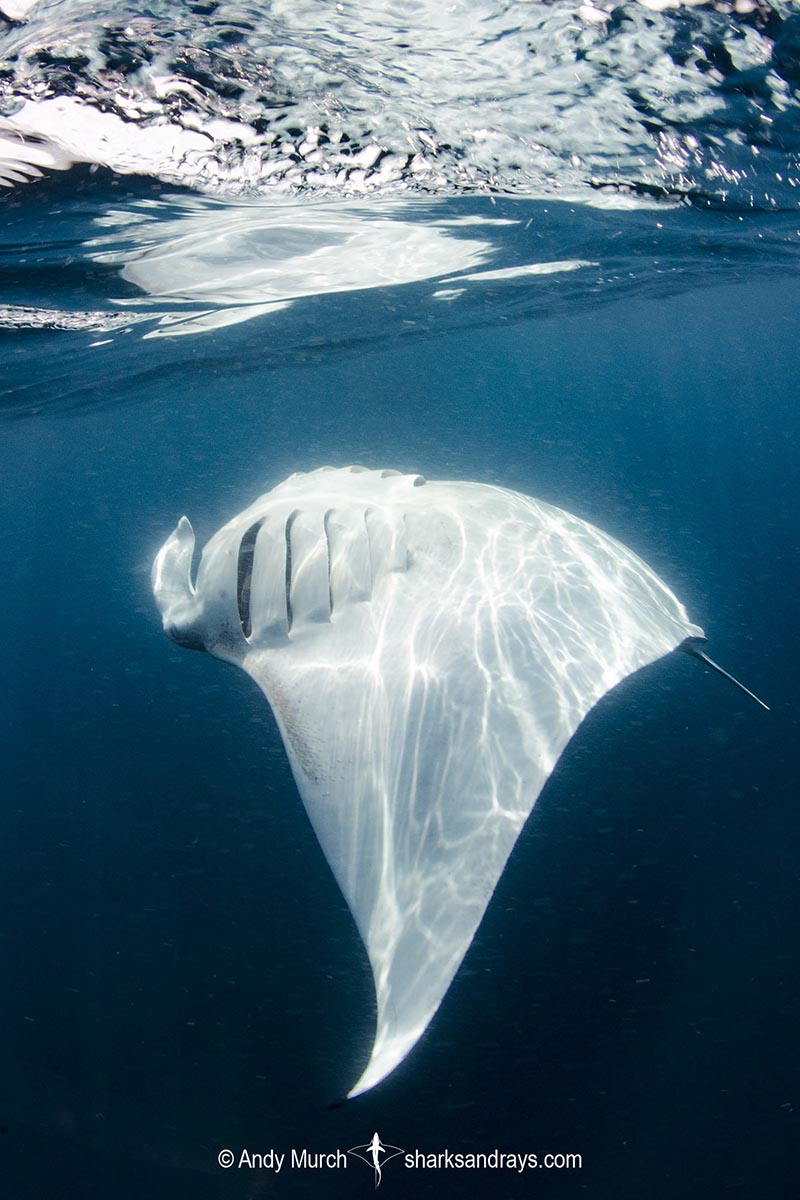
Ventrum mostly white, sometimes with dusky spots on 5th gill slits and a broad dusky margin along posterior edge of disc. Ventrum between gills and cloaca sometimes have irregular black spots and blotches that are unique to each animal.
Size
Maximum disc width at least 500cm. Possibly exceeding 600cm. Disc width at birth unknown.
Conservation Status
NOT EVALUATED
The Atlantic Manta Ray (Mobula yarae) has yet to be assessed by the IUCN, but the closely related oceanic manta ray is listed as globally endangered.
In Mexico, mantas are taken for food and for their gill rakers which are sold to Asian markets. In Brazil, rampant unregulated overfishing has led to heavy depletions of virtually all elasmobranch species, so it is likely the Atlantic Manta will also be assessed as endangered.
Habitat
Pelagic in tropical/subtropical seas. Found in coastal areas and in the open ocean. Maximum depth has not been established.
Distribution
Western tropical/sub-tropical Atlantic from North Carolina to Brazil including the Gulf of Mexico and the Caribbean.
Reproduction
Aplacental viviparity. Litter size unknown but the closely related M. birostris has 1 pup per litter with a maximum 4–7 pups during its estimated lifespan.
Diet
Diet mainly planktonic organisms and possibly small bony fishes.
Behavior
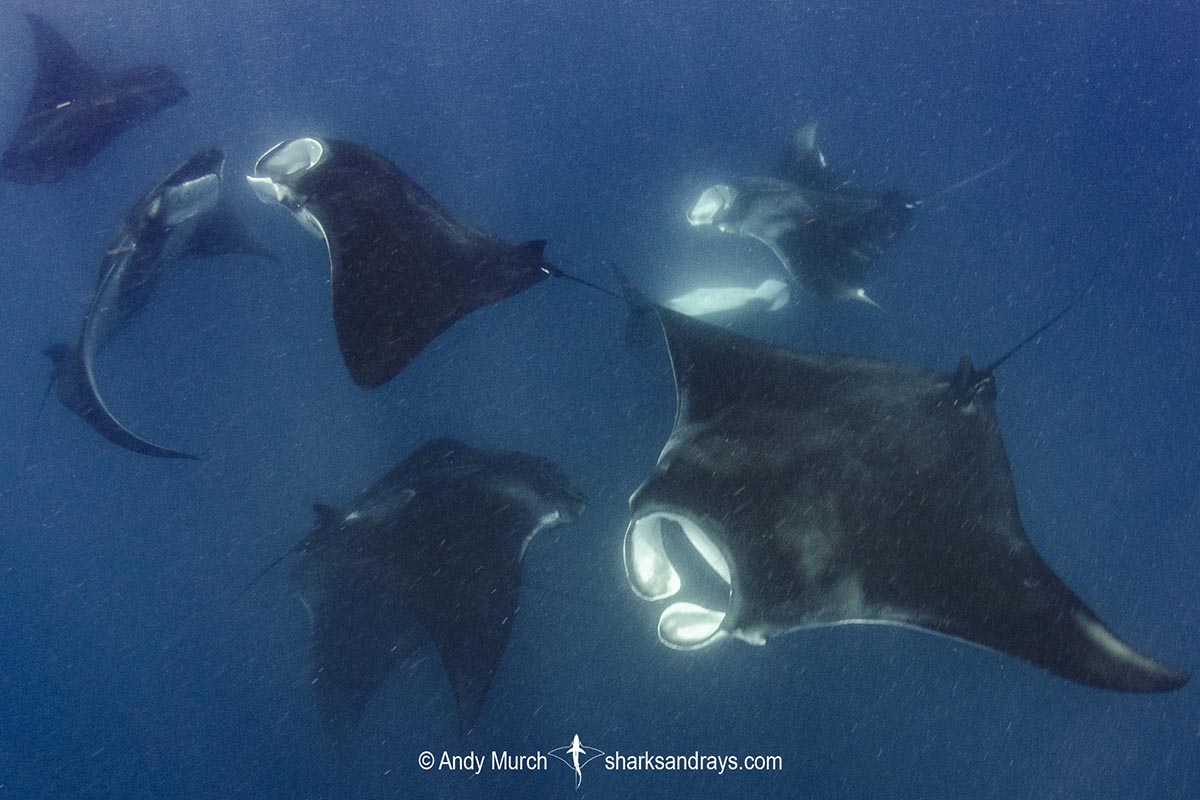
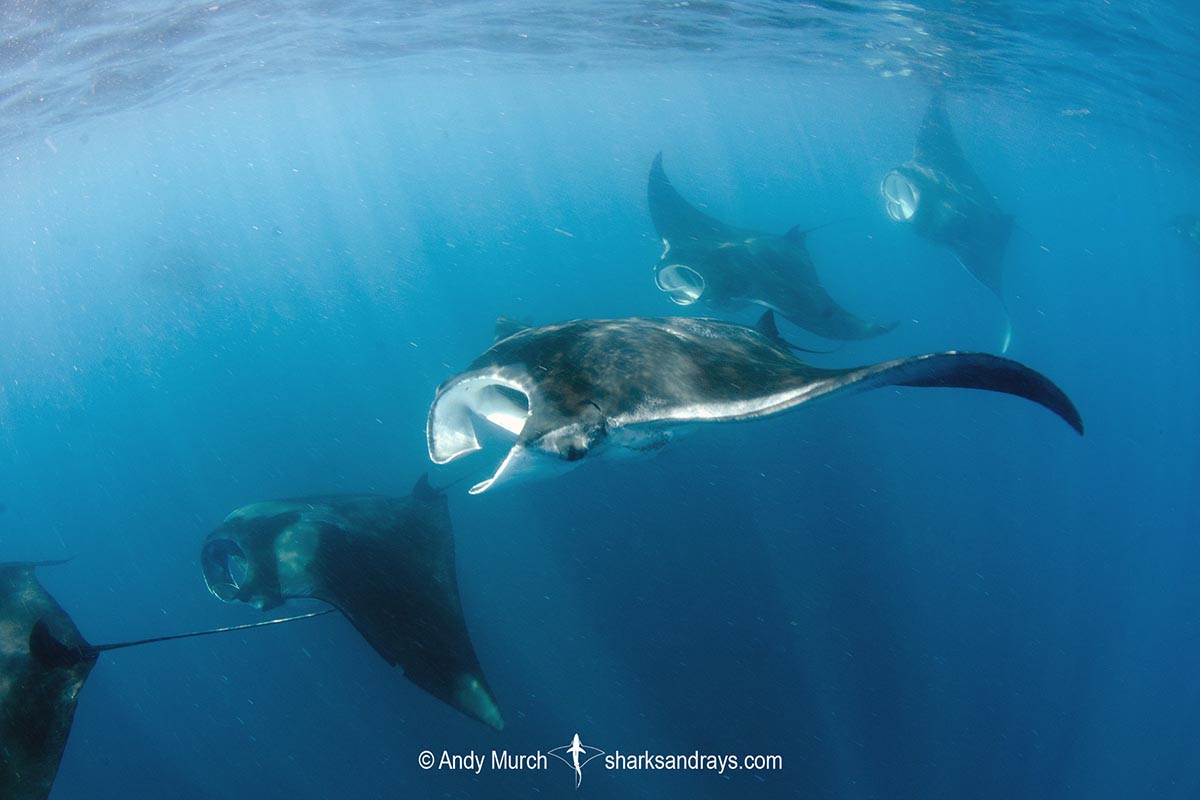
An active swimmer that may be solitary or in small or large aggregations. Between June and September many Atlantic Mantas congregate in the lower Gulf of Mexico and adjacent Atlantic waters to feed on tuna eggs.
Reaction to divers
Fairly tolerant of snorkelers and divers when concentrating on feeding.
Diving logistics
YUCATAN PENINSULA, MEXICO.
Scores of Atlantic mantas often show up to join the huge aggregation of whale sharks that feast on clouds of tuna eggs each summer north of Isla Mujeres. The mantas are not always in the same spot as the whale sharks but experienced captains can usually find the mantas. Later in the season (July-August) seems to be the best time.
North of Cancun in the mouth of the Gulf of Mexico, there is a manta cleaning station that the locals call Manta Valley. This spot is a bit hit or miss during whale shark season but is apparently much more reliable in the fall. As it is far from shore, this site is highly weather dependent.
The Brazilian archipelago Fernando de Noronha is another great spot for sighting Atlantic Mantas. Peak sightings occur from June to October.