
Common names
Porcupine River Stingray, Porcupine Freshwater Stingray.
Binomial
Potamotrygon histrix.
Synonyms
Potamotrygon hystrix, Trygon histrix, Trygon hystrix.
Identification
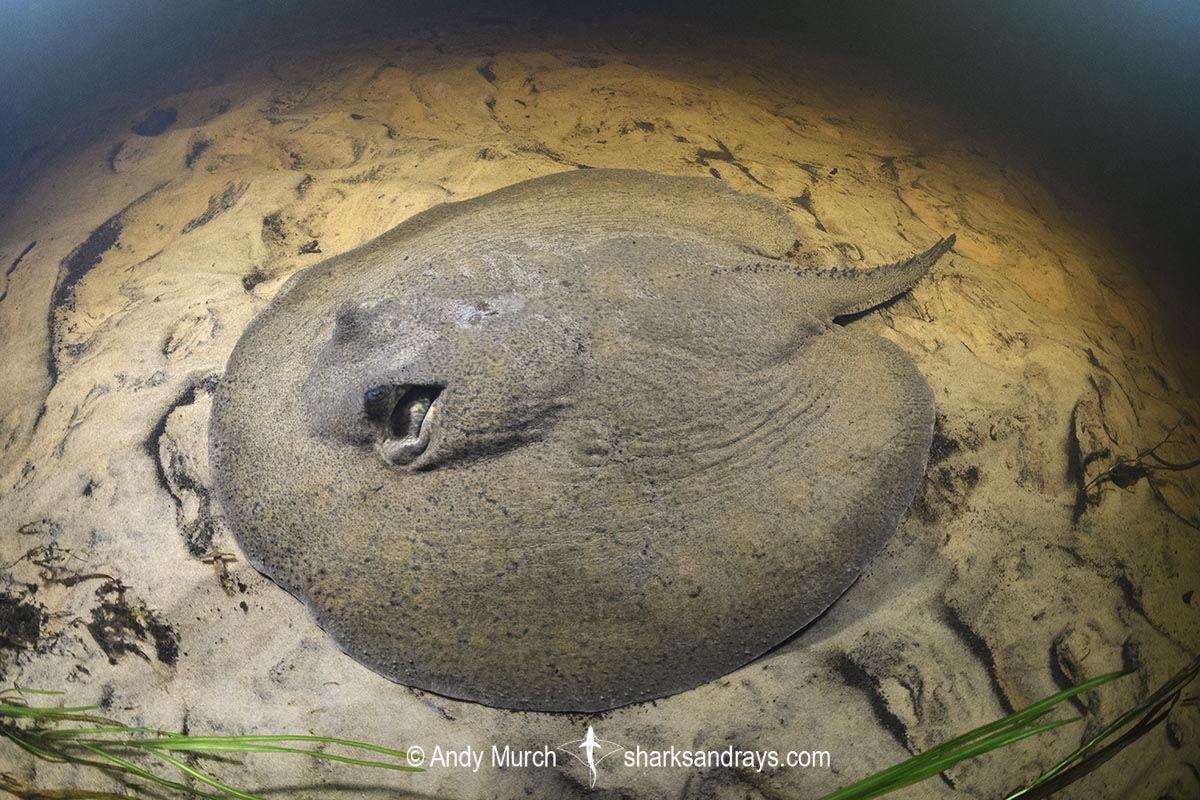
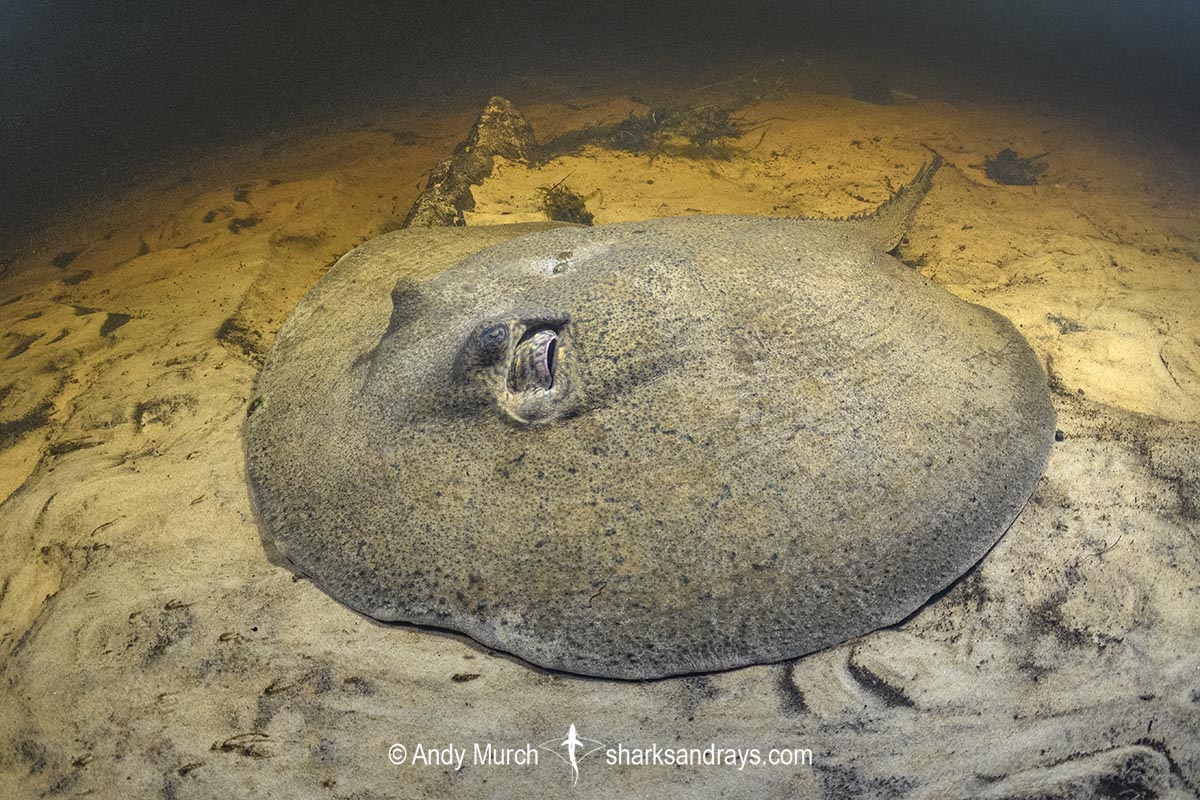
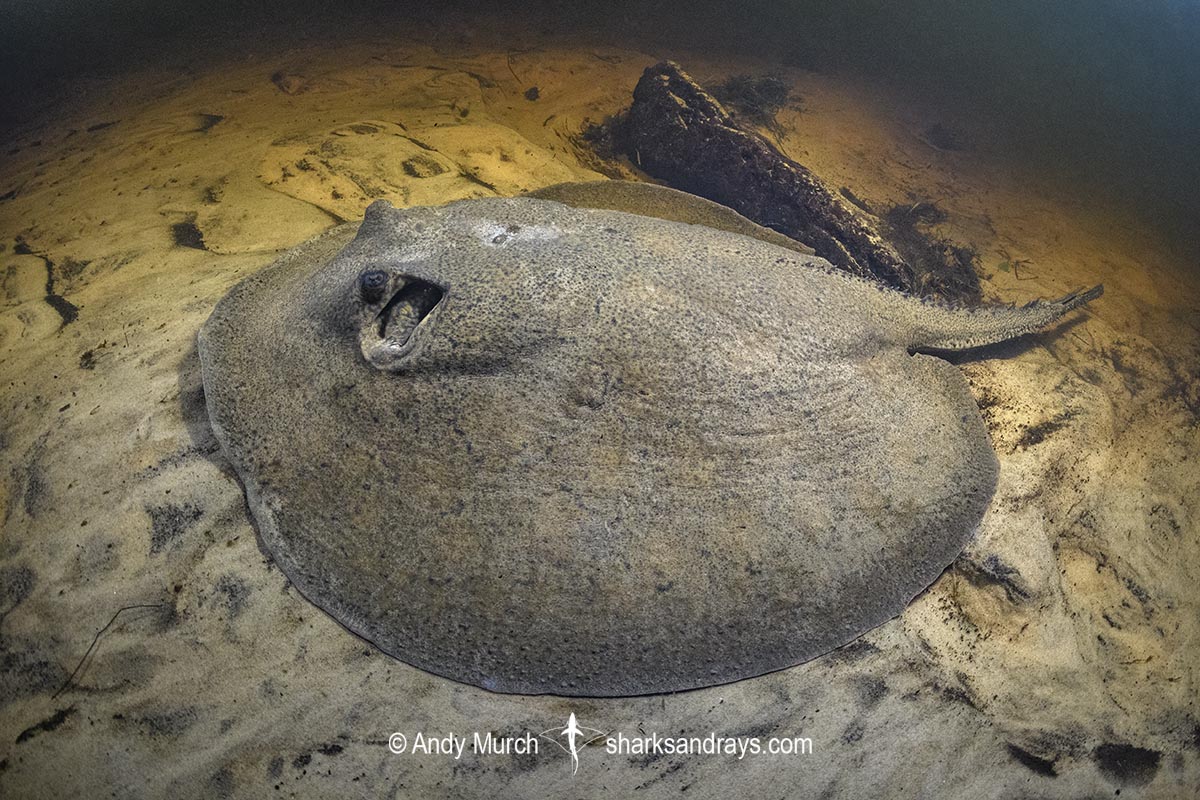
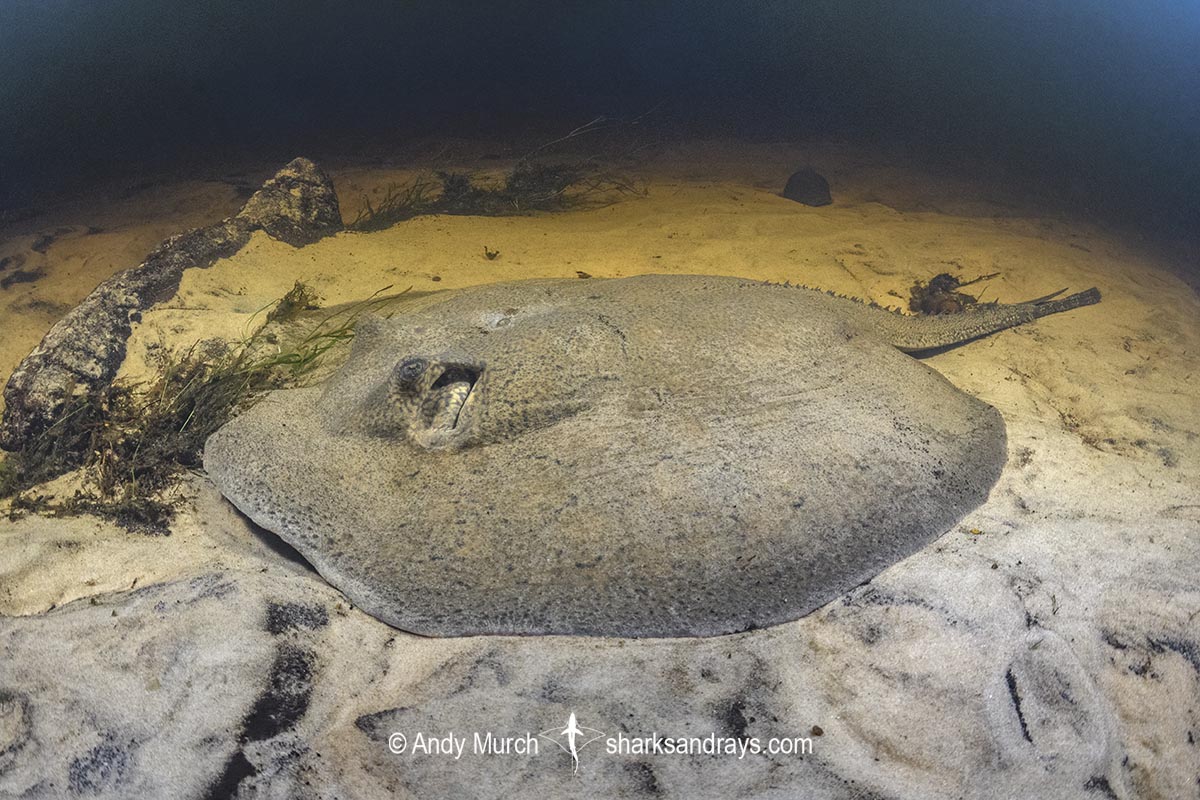
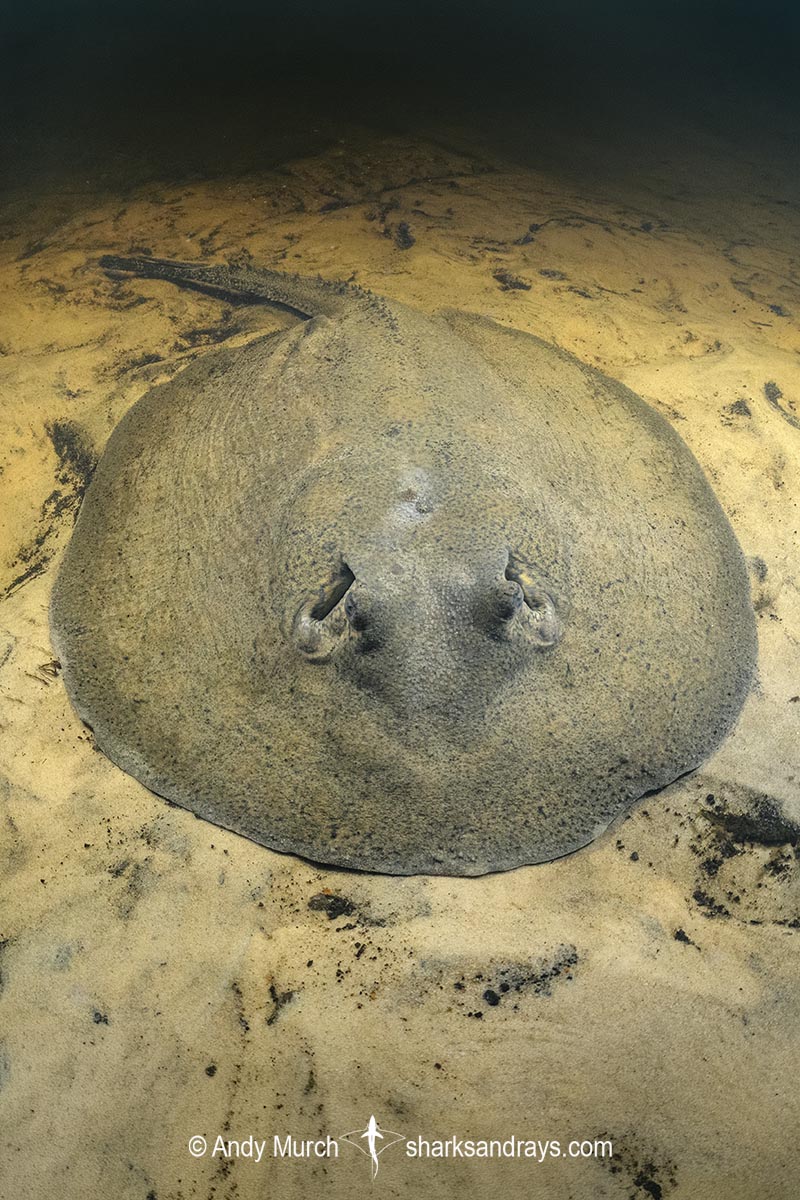
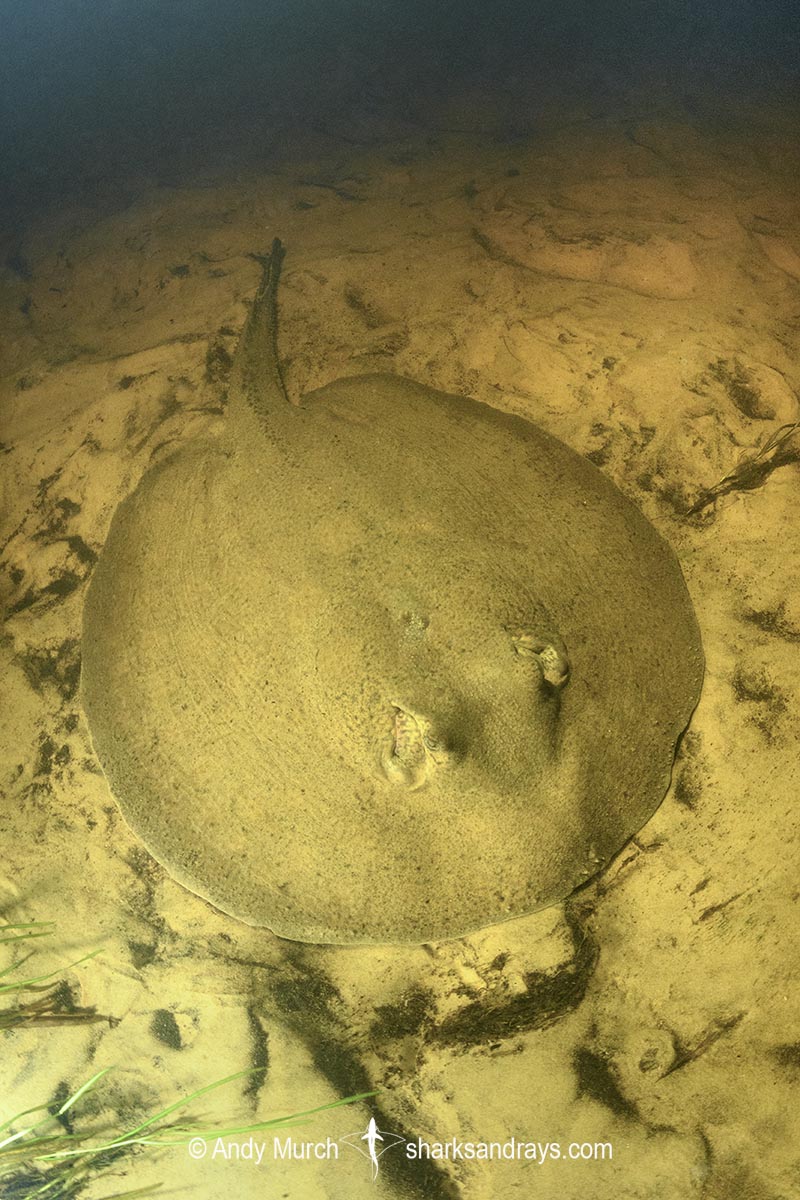
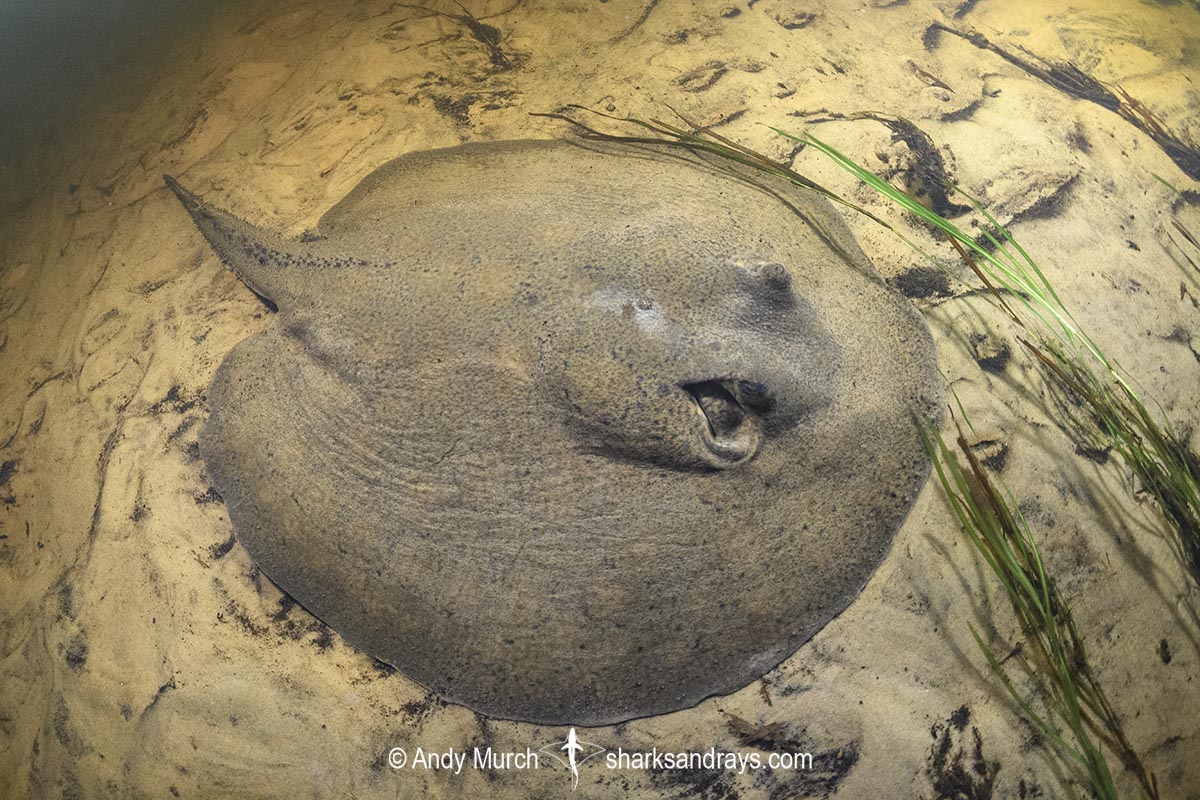
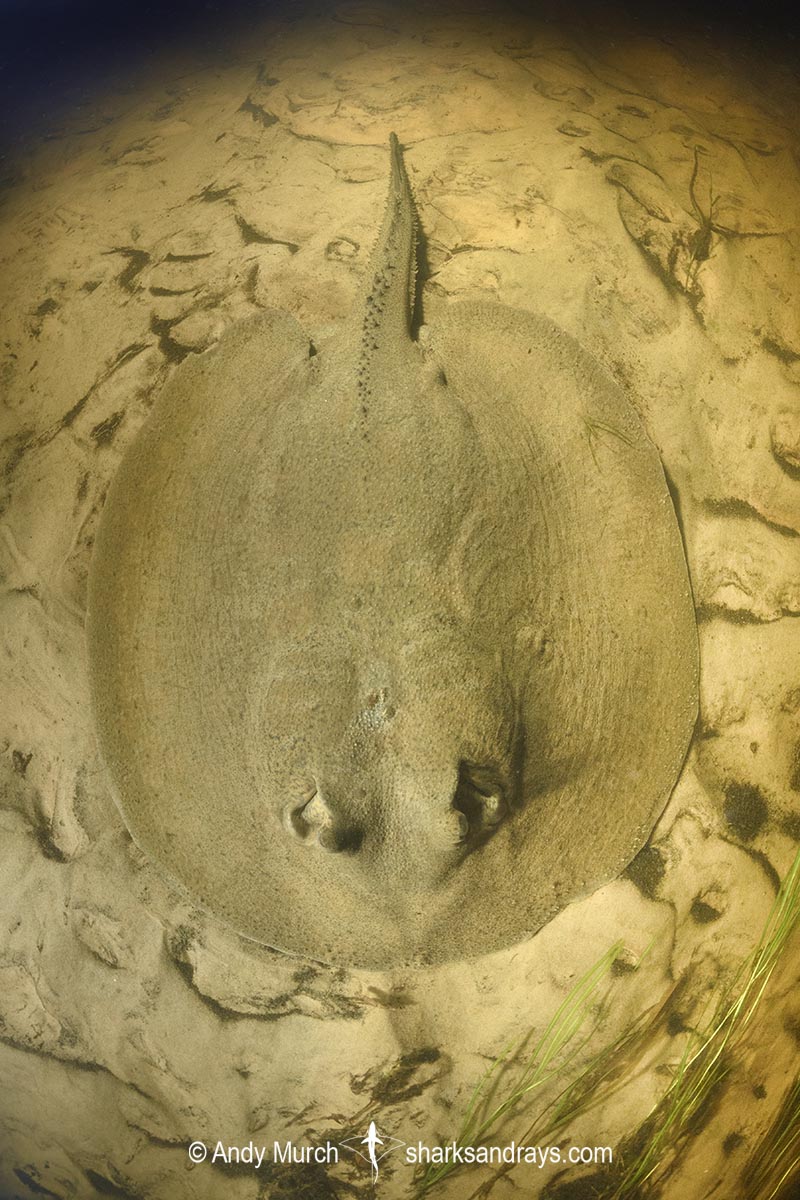
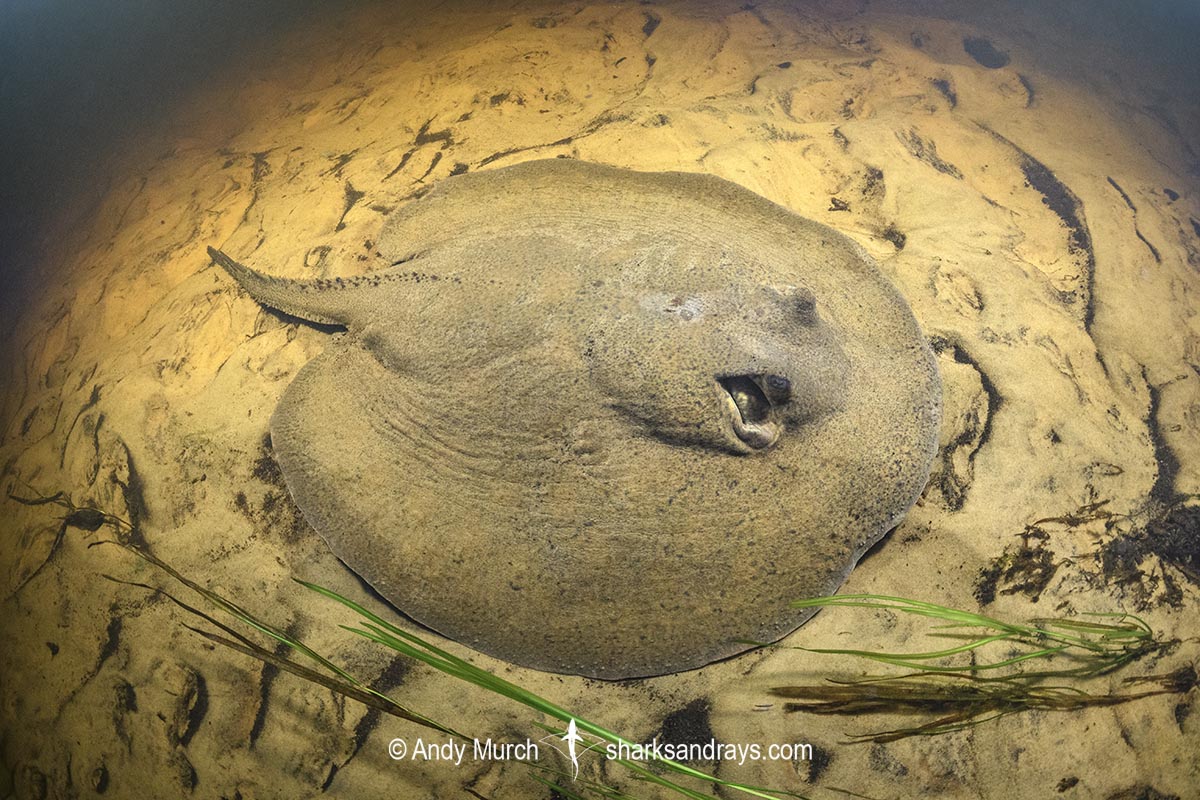
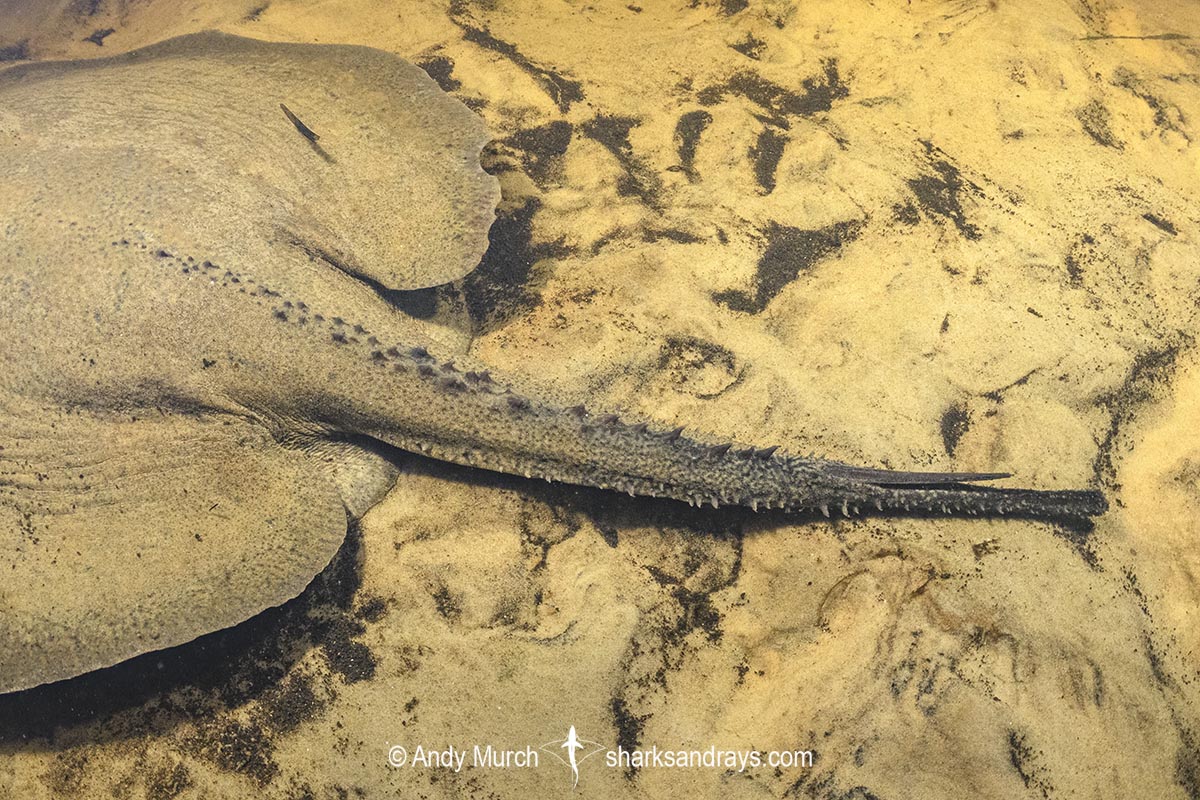
A small freshwater stingray with an oval disc that is slightly longer than wide. Snout broadly rounded with a barely distinguishable, small central lobe. Eyes fairly large and protruding. Spiracle very large and trapezoid, length approximately 4x orbit diameter; lacking prominent spiracular papillae. Nostrils thin. Mouth large with 5 oral papillae. Disc covered in small dermal denticles. Pelvic fin posterior margins mostly covered by pectoral disc. Tail broad based, shorter than the disc width (personal in situ observation conflicting with description) densely covered in denticles. Well developed dorsal and lateral finfolds at tip. Two to three irregular rows of large acute thorns along dorsal midline from disc to caudal sting. Many small thorns laterally on tail from base to tip. Well developed caudal stings positioned distally on tail.
Colour
Dorsum light greyish brown to olive or dark brown, with small dark vermiculations. Vermiculations most noticable around and within spiracles.
Ventrum pale grey with a darker margin, or uniformly grey except for oral and spiracular region.
Size
Maximum disc width ~46cm.
Conservation Status
VULNERABLE
The Porcupine Freshwater Stingray (Potamotrygon histrix) is restricted to a narrow corridor within the Paraná-La Plata River Basin. This species is infrequently retained for human consumption and rarely enters the aquarium trade due to its drab appearance. However, habitat modification and degradation from damming, mining and and agriculture within its limited range leave the porcupine river stingray vulnerable to population depletion.
Habitat
Demersal in temperate and subtropical freshwater river systems. Data limited but may prefer larger river channels and flood plains.
Distribution
South America. Endemic to the Río de la Plata drainage basin.
Reproduction
Viviparous. Up to 9 pups per litter reported.
Diet
The porcupine river stingray consumes benthic crustaceans, mollusks, and small fishes.
Behavior
Poorly known. Forages by day in the Corrientes River (personal observation).
Reaction to divers
Easy to approach with non-threatening movements. Will eventually move away but easily followed if traveling downstream.
Diving logistics
It is possible to find porcupine river stingrays while diving in the Ibera Wetlands in northern Argentina. Specifically in the Corrientes River, but this species appears to be less common than other rays in the area such as P. amandae and P motoro. During a September trip with three days of diving, I found only one Potamotrygon histrix.
Timing is important because visibility in the river is very low for most of the year. September offers the best water clarity, but pulses from further upstream can disrupt visibility at any time of year.
According to fishermen, there are more stingrays present in December (summer) but at that time of year, underwater observation is impossible.
What’s new
View our full list of updates
Similar species

Amanda’s River Stingray – Potamotrygon amandae Quite similar in shape, size, and drab appearance, but P. amandae usually has a scatering of small yellow spots and lacks small vermiculations.
