Kenyan Sharks and Rays Photography Expedition
June 2025
June 2025
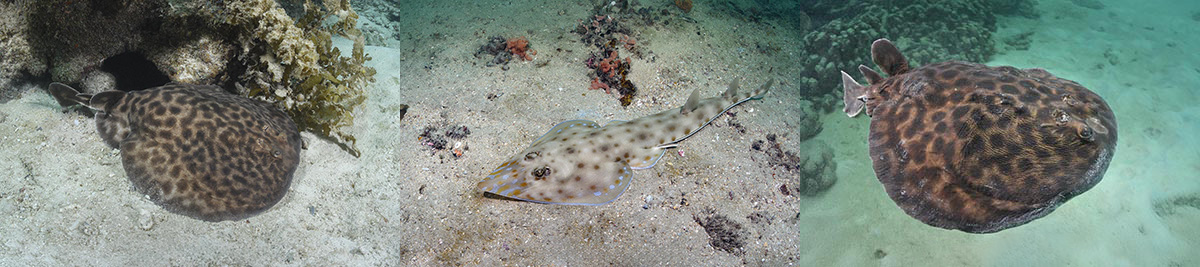
In June 2025, I flew to Mombasa, Kenya, to look for three East African shark and ray species. Once on the ground, I headed to Shimoni; a small coastal town close to the border with Tanzania and the jumping off point for Wasini Island.
My first mission was to photograph a Zanzibar Guitarfish (Acroteriobatus zanzibarensis).
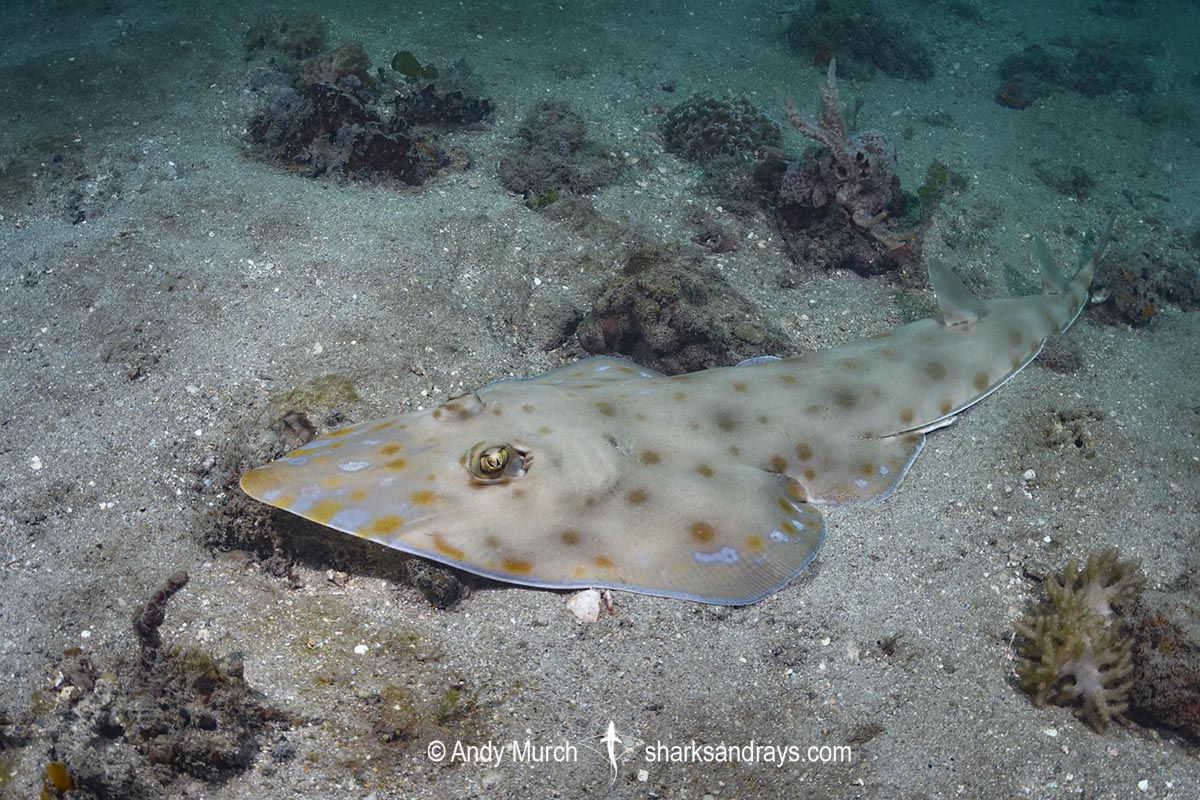
As the name implies, Zanzibar Guitarfish are present on the Tanzanian island of Zanzibar, but they are rarely seen there. By scouring dive reports, I identified Wasini as a potential hotspot.
Dive Masters at the local dive shop next to Shimoni Beach Resort told me that the best place to find them was in the shallows (5-10m) in the channel between Wasini Island and the mainland.
I spent a couple of days diving in the channel. The water visibility was poor, but I was lucky enough to find a handful of guitarfish. Fortunately, they turned out to be fairly docile (some guitarfish are quite flighty) so I was able to get some nice images of them before they took off.
The second ray I hoped to find was a Blackspotted Torpedo Ray (Torpedo fuscomaculata). This is a wide ranging species along the coast of east and southern Africa, but some researchers have suggested that it may be a species complex. The ones I have seen in images taken in southern Africa appear to have much smaller spots, but this could just be regional variation.
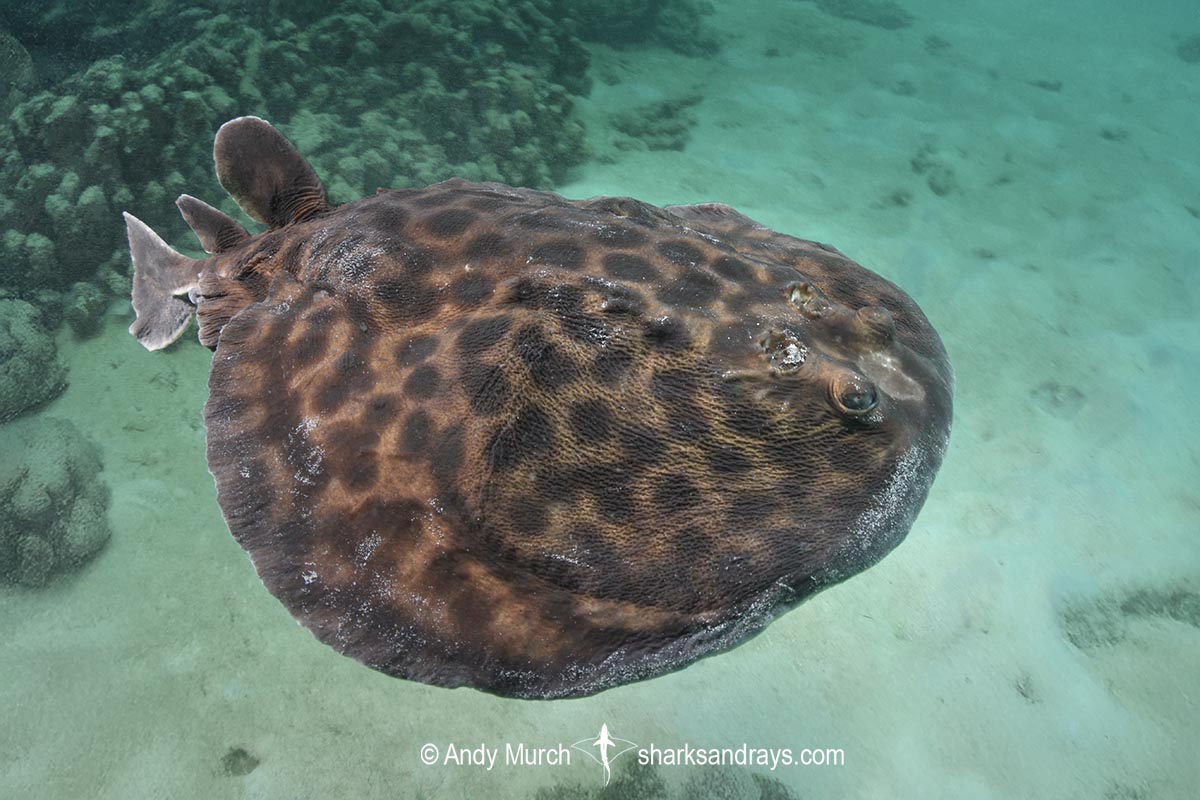
Blackspotted Torpedo Rays are very difficult to locate further south, but my dive guide seemed confident that we would be able to locate at least one if we dove around the base of the reef in Wasini Marine Park; a protected area on the Indian Ocean side of Wasini Island.
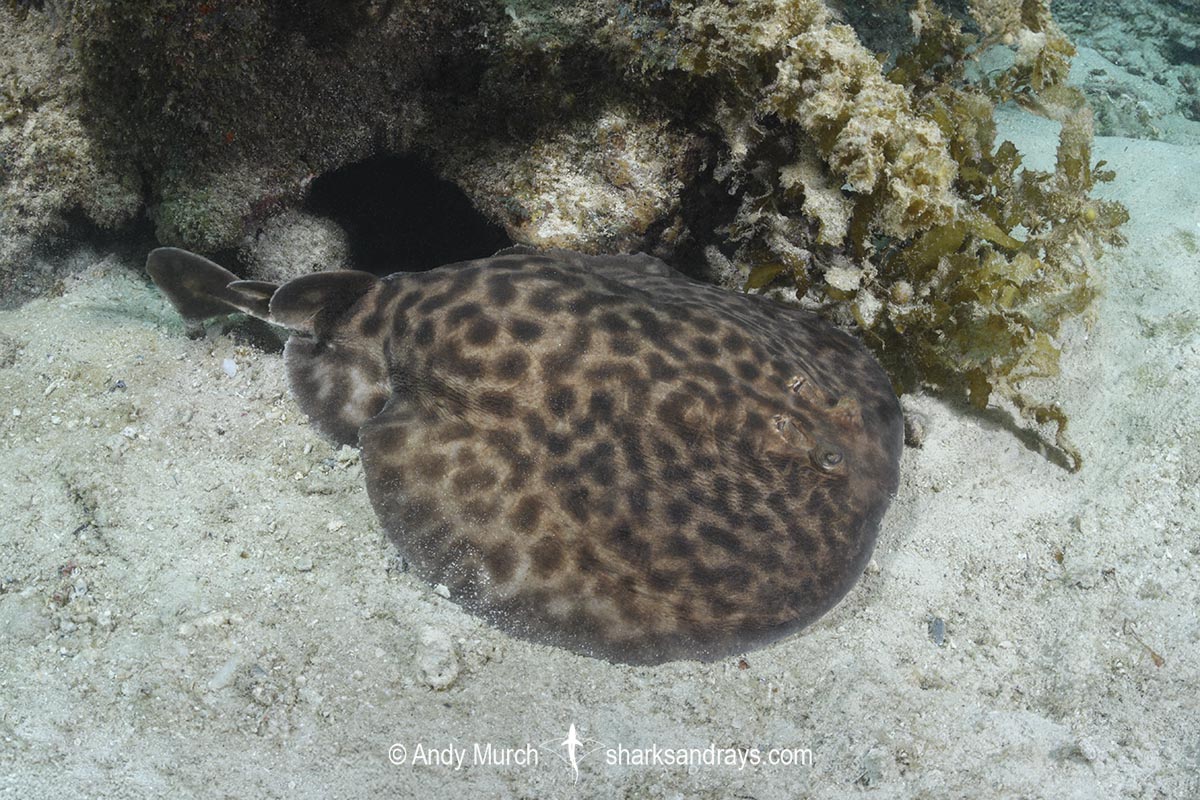
Sure enough, I found my first one buried under the sand, just before we ascended from our first dive.
The next day I found two more torpedo rays, one tucked under a ledge, but the other resting out in the open.
When I approached the exposed one, it quickly buried. I tried gently fanning it, but it persisted in its undulating movements that sprinkled more and more sand down over its disc, thwarting my attempts to get a clear ID shot.
When I found the third and final torpedo ray, it was not impressed with my close approach; exploding from under the sand and flaskhing its white underside at me before swimming off at full speed. Fortunately, top gear for a small torpedo ray is not especially rapid, so I was able to follow it and snap a few midwater shots before it finally settled onto the sand and reburied. Mission accomplished!
The third species I had hoped to run into, was a Shorttail Nurse Shark (Pseudoginglymostoma brevicaudatum) but I knew it was a longshot. Sightings of this species have become extremely rare. When my dive guide told me that he only sees one or two per year, I realized we were unlikely to succeed, but we spent a couple of days looking under every coral head in the area, just in case there was one around, to no avail. Unless I commit months of my time looking for this species, it seems unlikely I’ll ever find one.
Regardless of the absent nurse shark, it was a very successful field trip. Two new rays documented for the Shark and Ray Image Database, and a great adventure in a rarely dived part of Africa.

© 2026 Sharks and Rays. Big Fish Expeditions