
Common names
Xingu Discus Ray, Apple Ray.
Binomial
Paratrygon raonii.
Synonyms
Paratrygon aiereba.
Identification
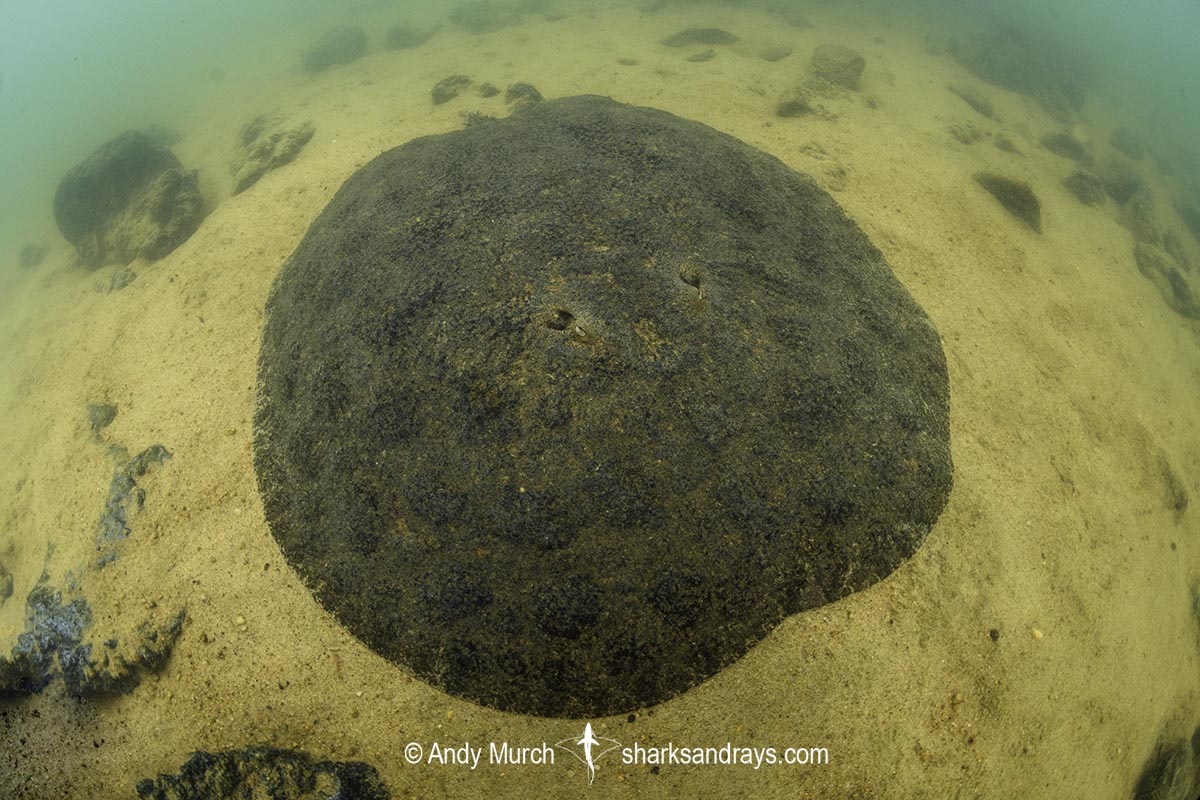
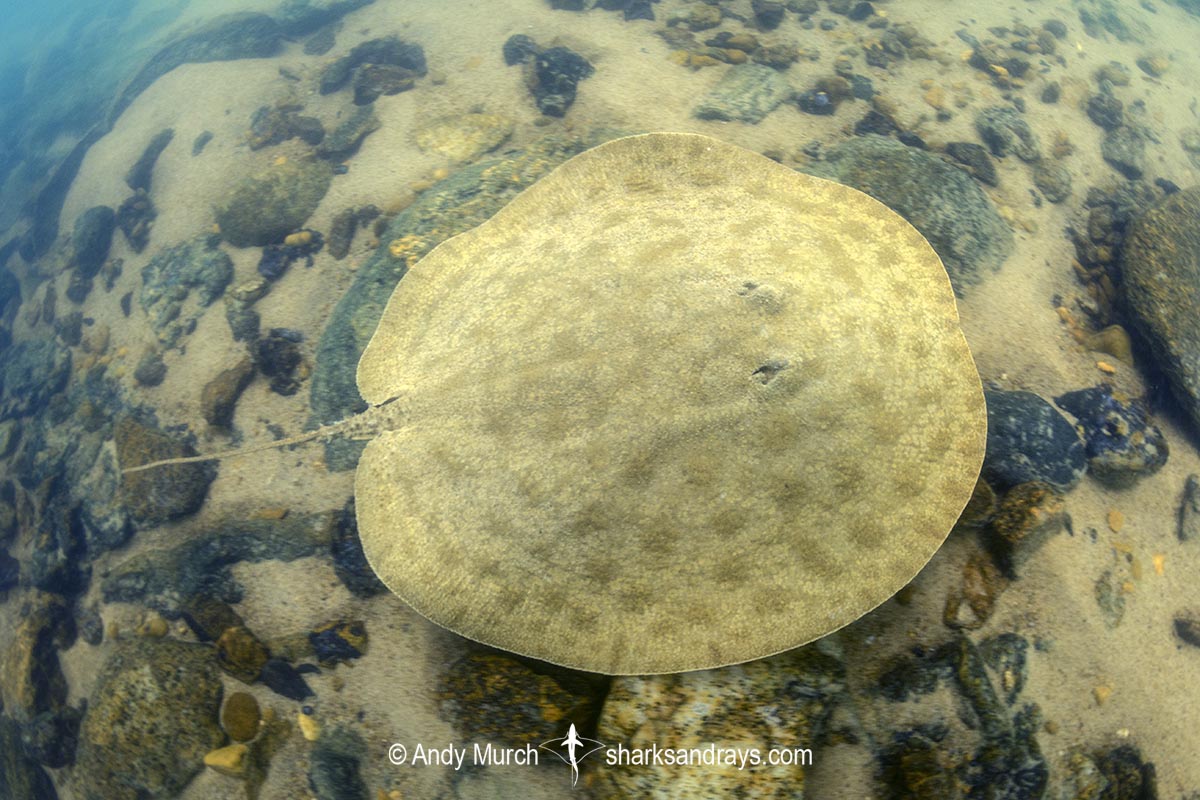
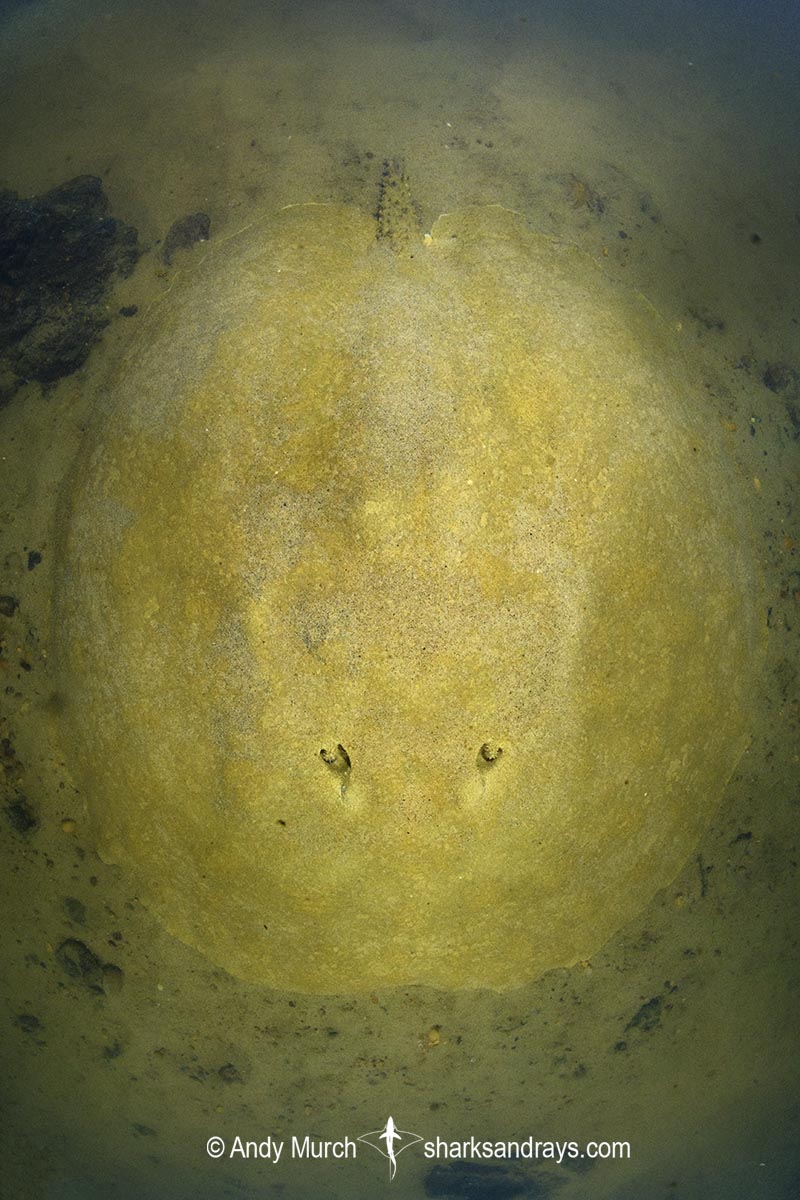
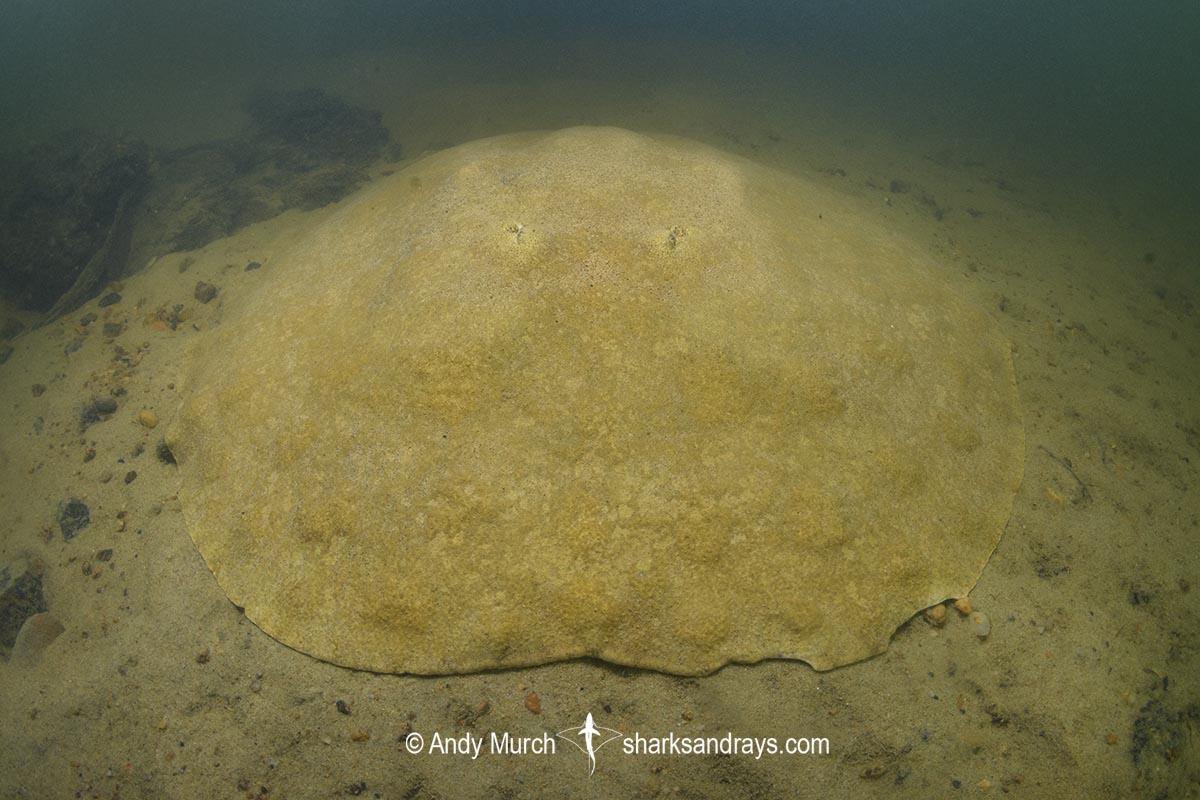
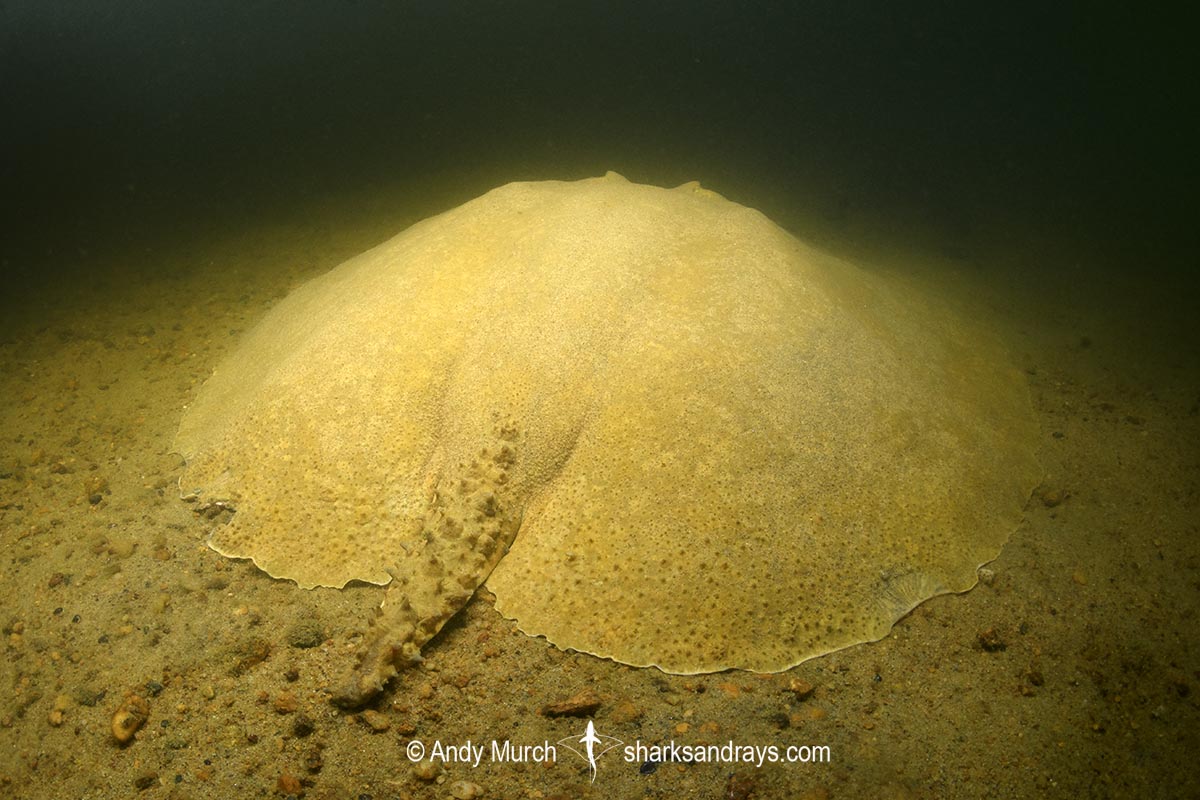
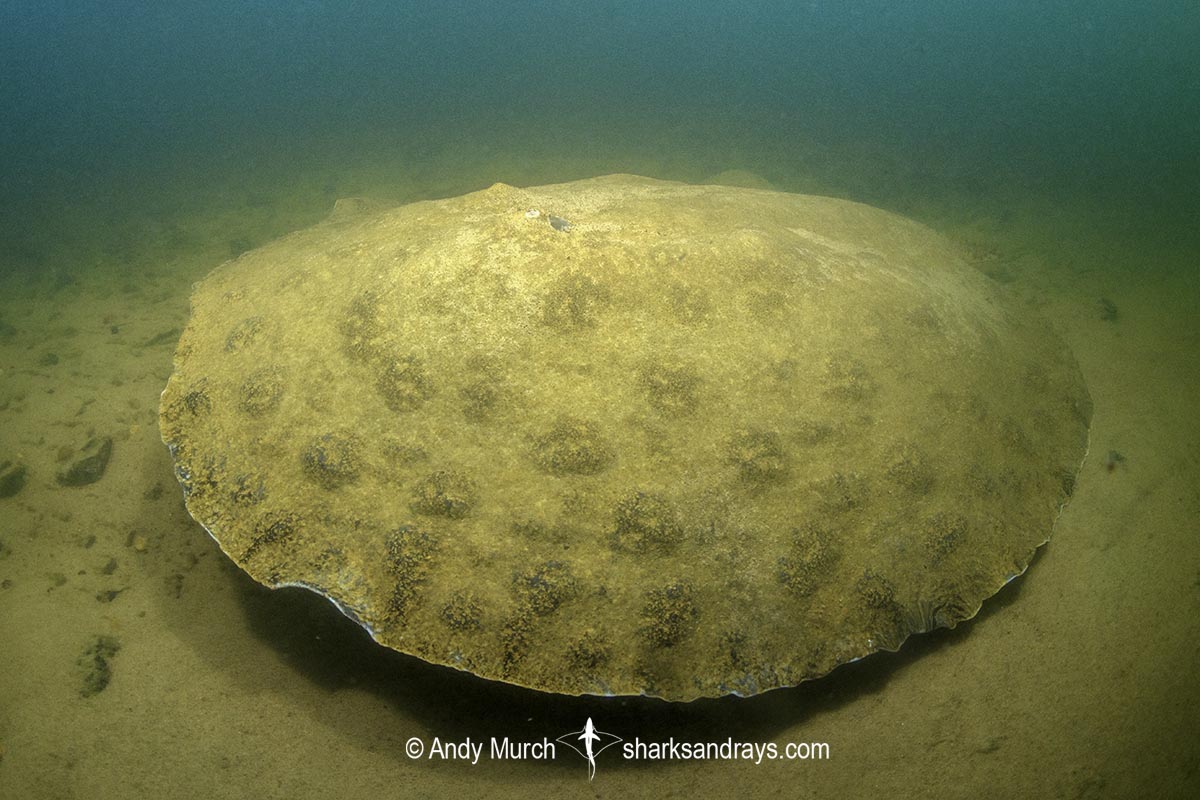
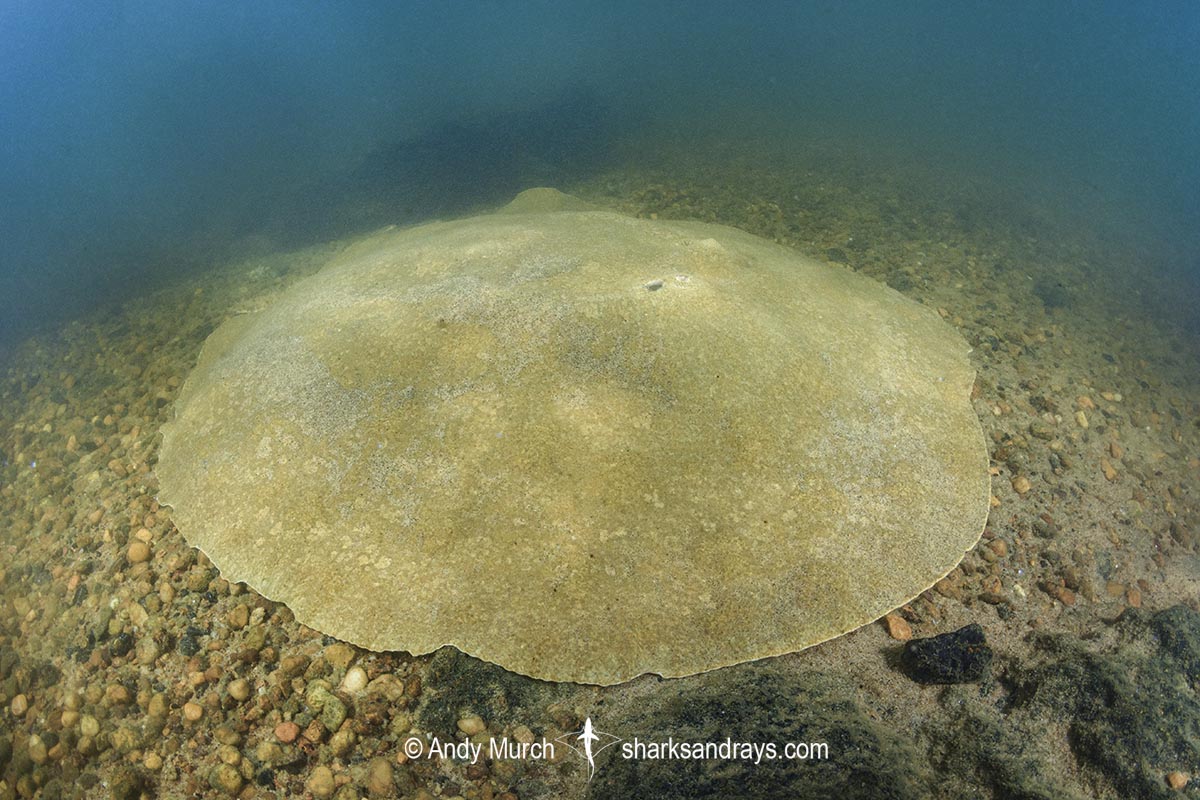
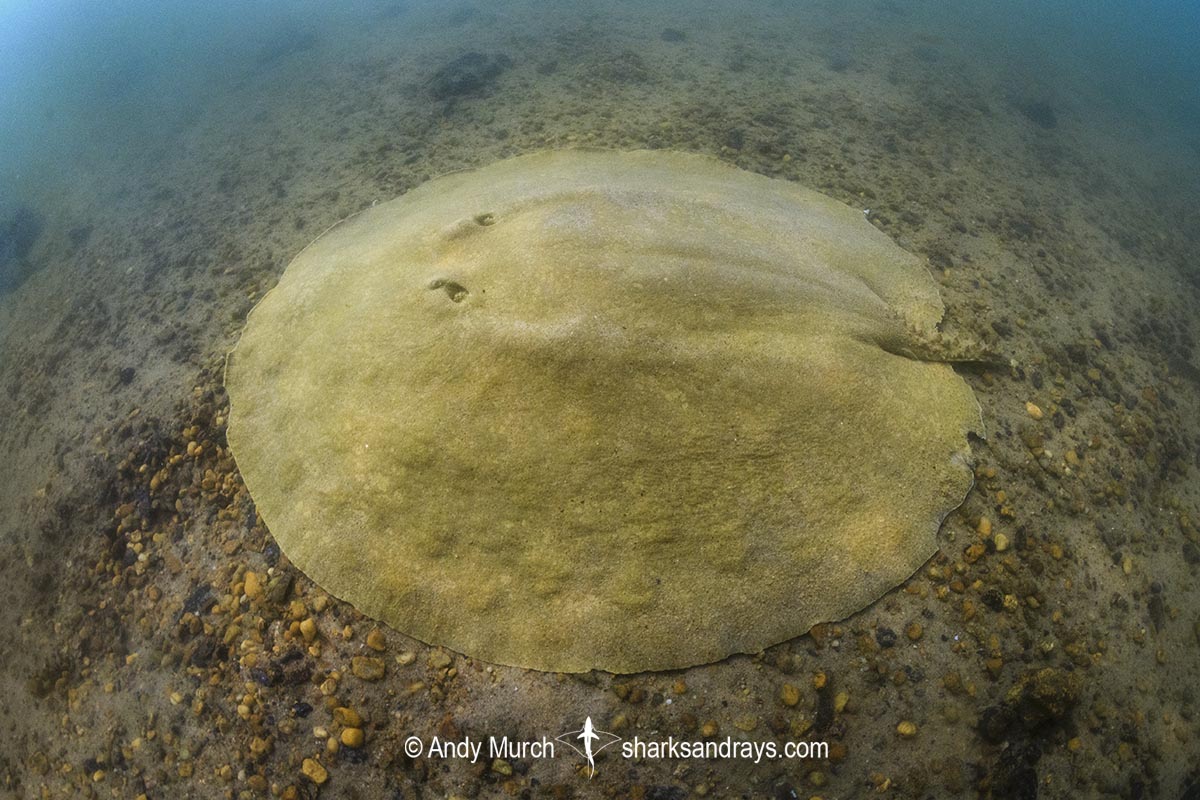
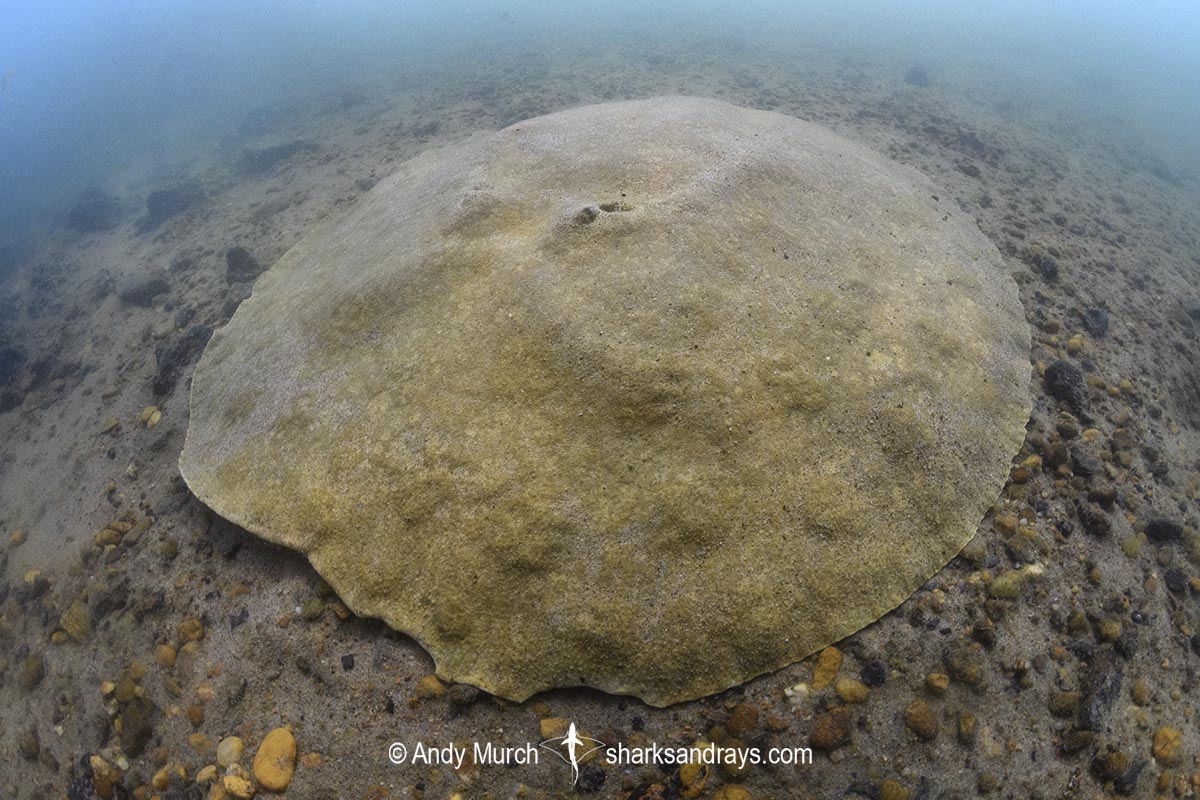
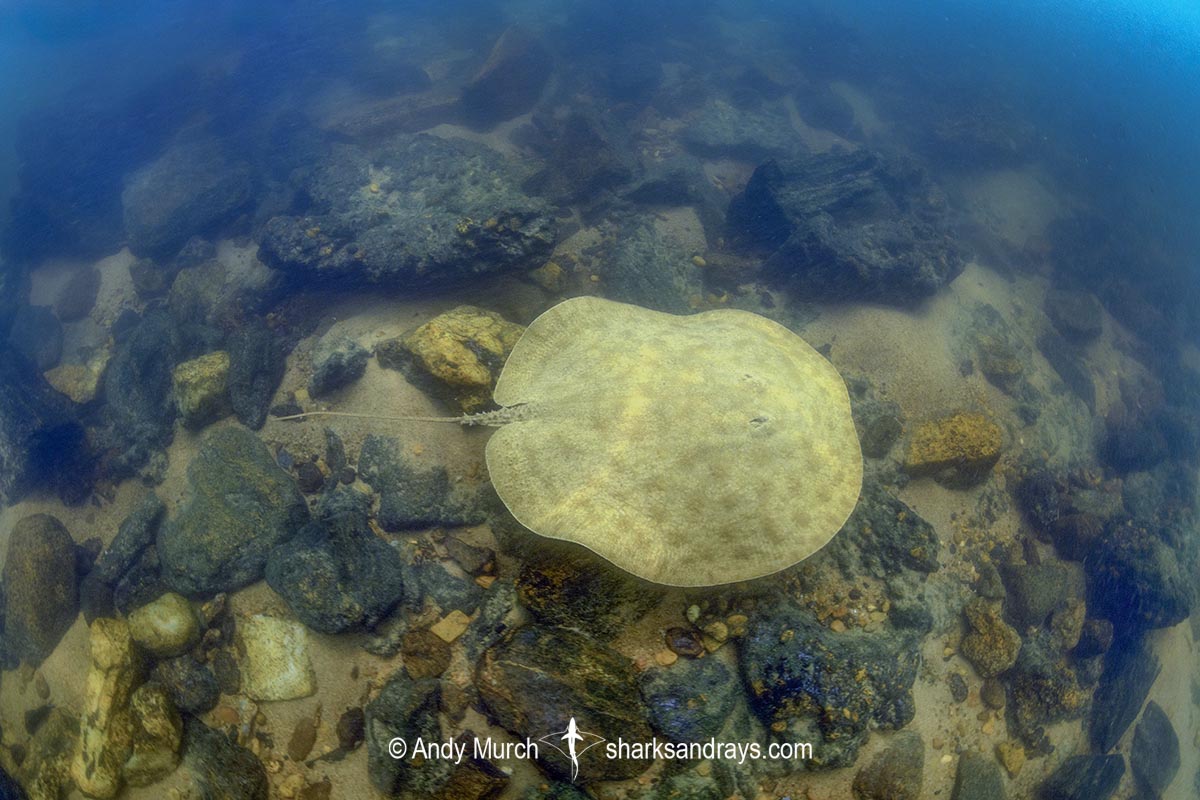
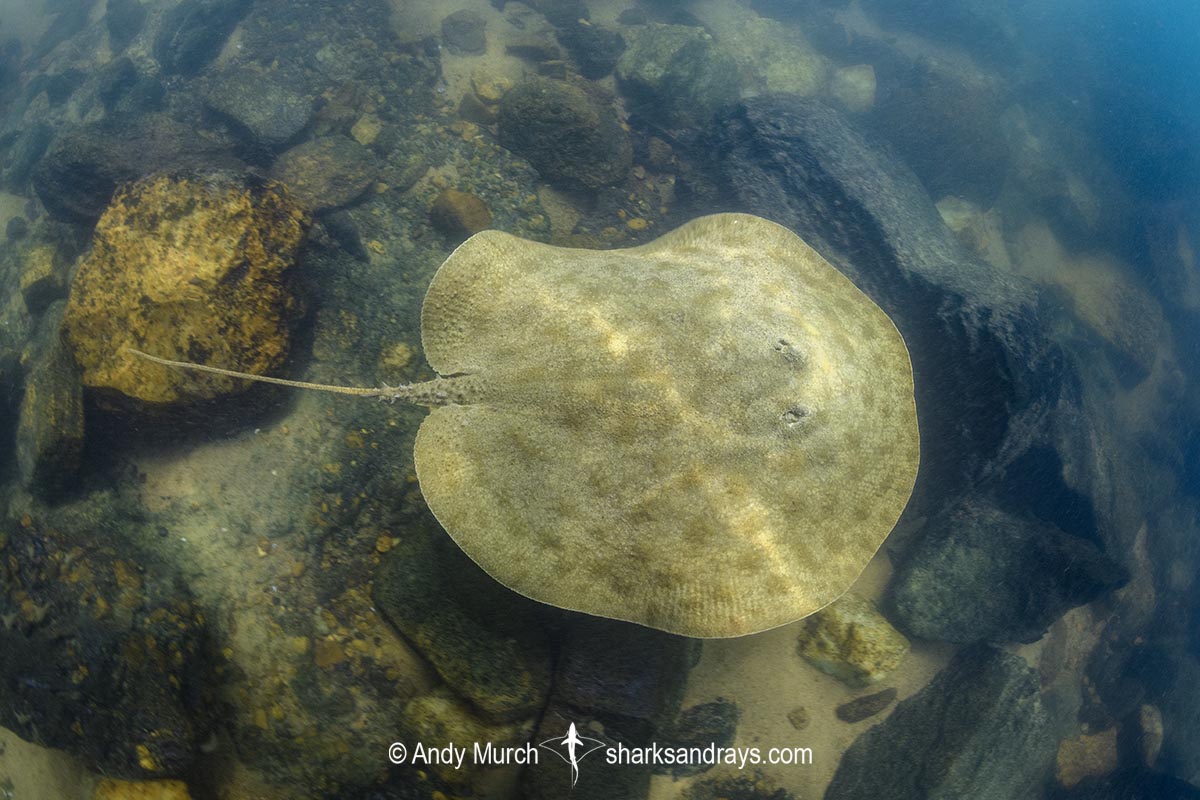
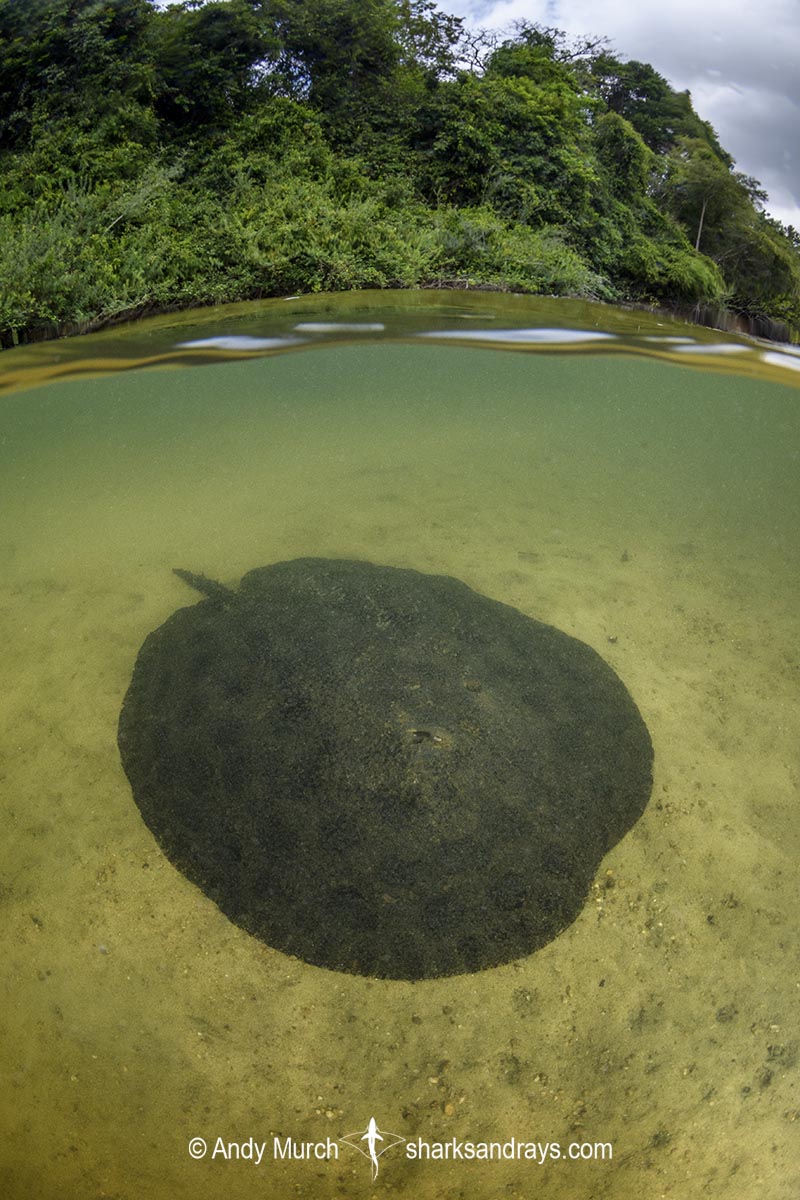
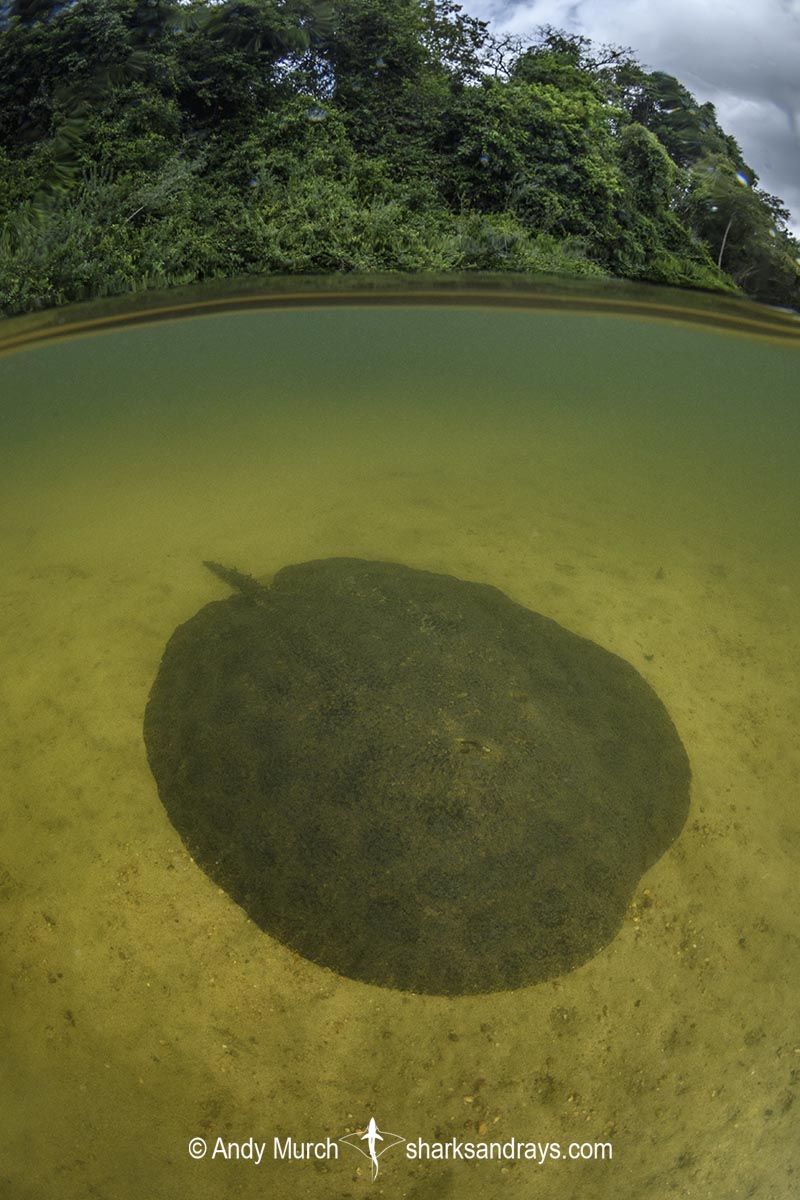
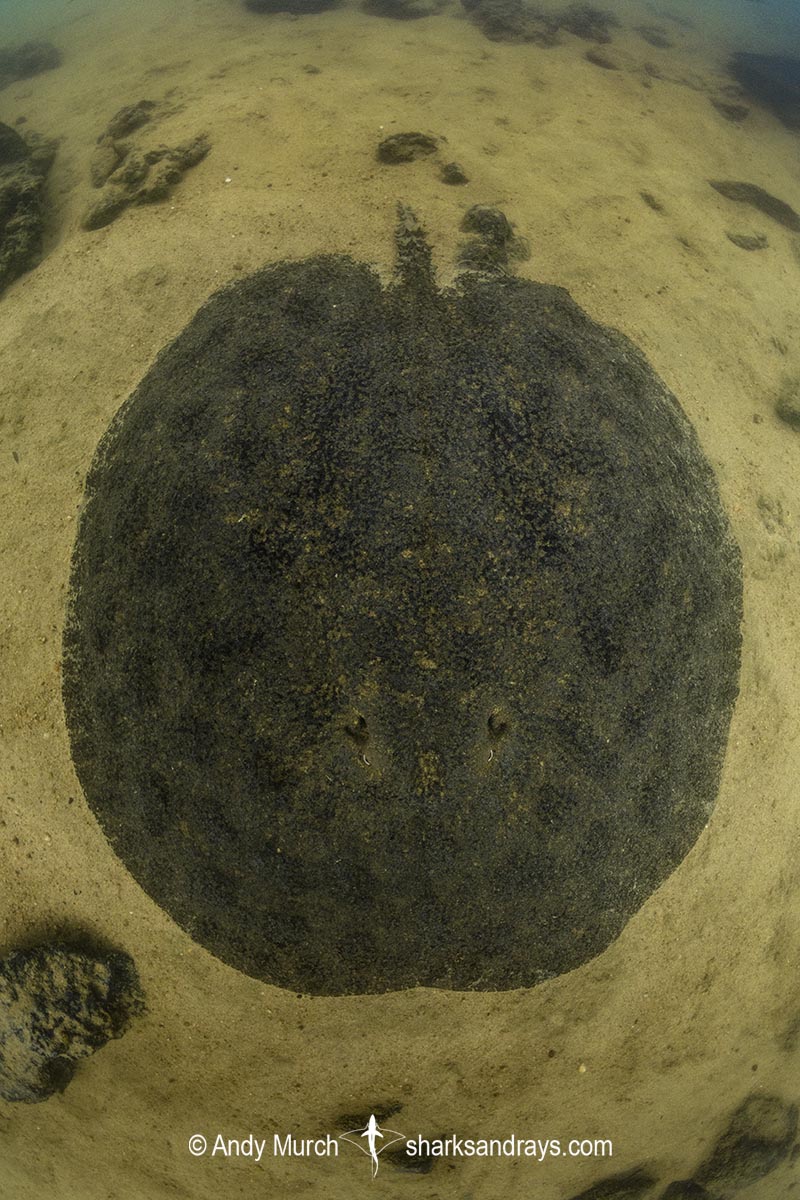
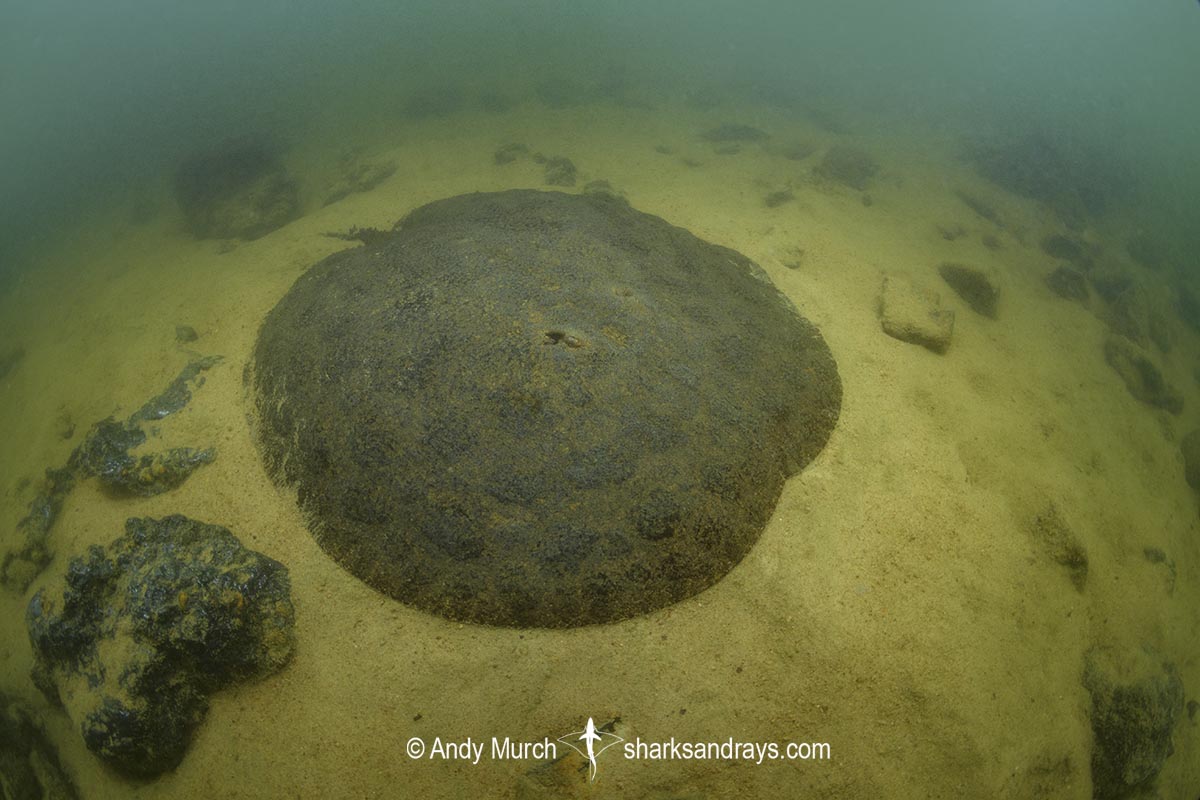
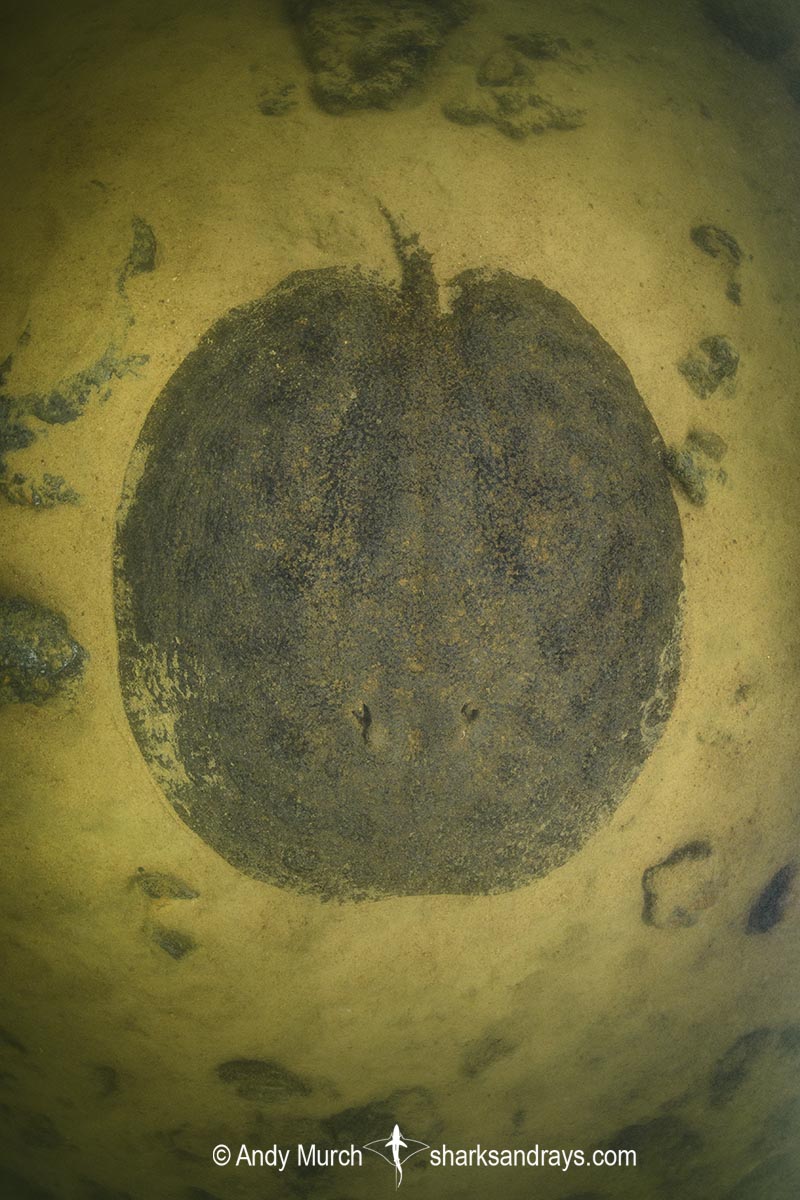
A very large freshwater stingray with a water lily shaped disc that is slightly longer than wide; length 1.06 x width. Snout broadly rounded with a shallow central anterior concavity that is unique to paratrygonids. Eyes small. Spiracles orbit-sized or slightly larger with one large globular, denticle-covered posterior lobe. Nostrils rounded. Nasal curtain slightly skirt-shaped, reaching mouth.
Dorsum densely covered in small denticles. Denticles larger towards central disc. Adult and sub-adults have numerous pointed tubercles on posterior margin of disc. Pelvic fins completely hidden under disc. Pelvic fin posterior margins barely extend beyond pelvic insert. Tail length in juveniles approximately equal to post spiracular disc length; robust basally, tapering quickly to caudal sting then filamentous to tip. Filament usually absent in adults. Anterior tail covered in extremely large thorn-like spines. Filamentous section with smaller and fewer denticles. When present, caudal stings, wide and short.
Colour
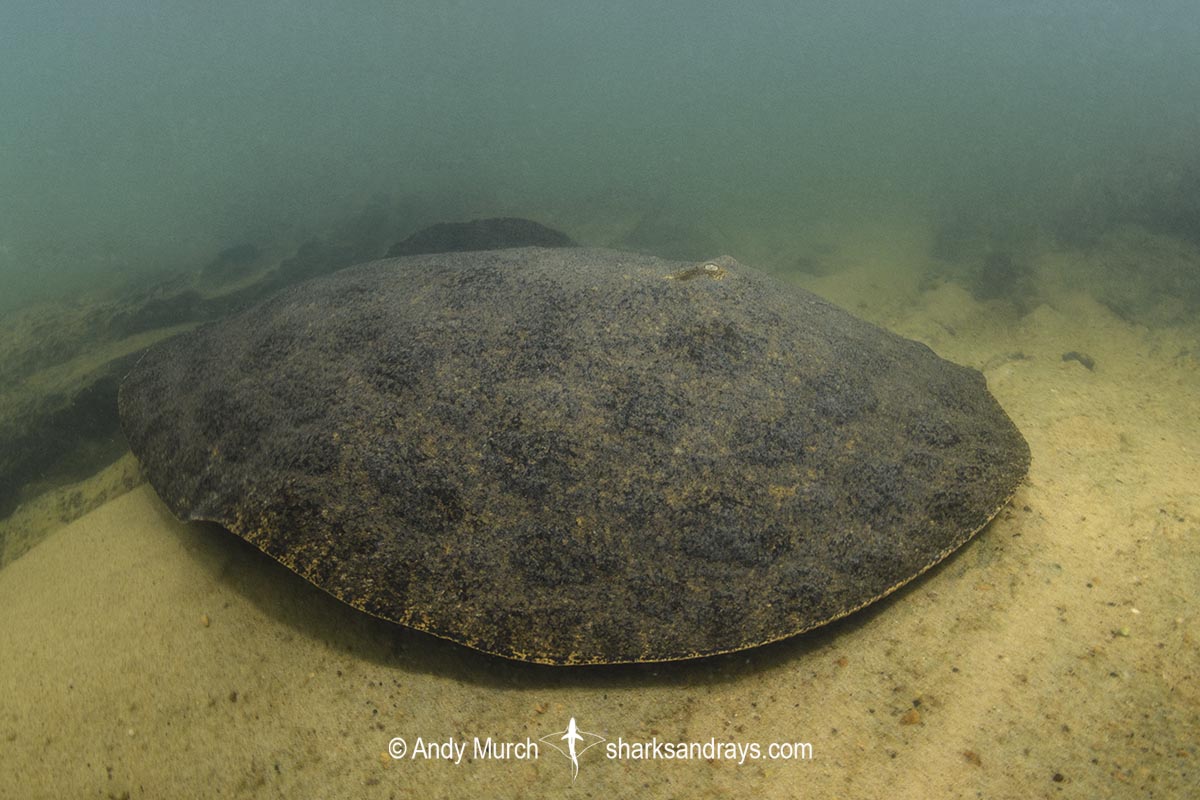
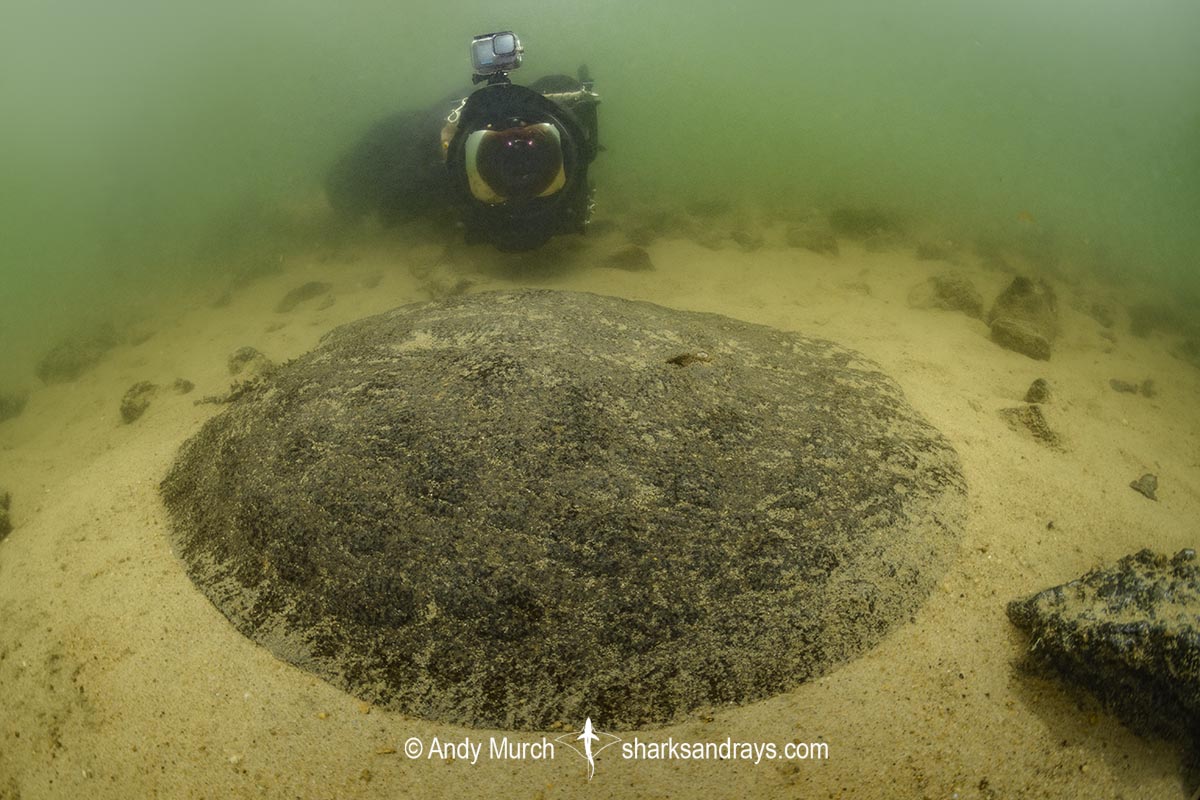
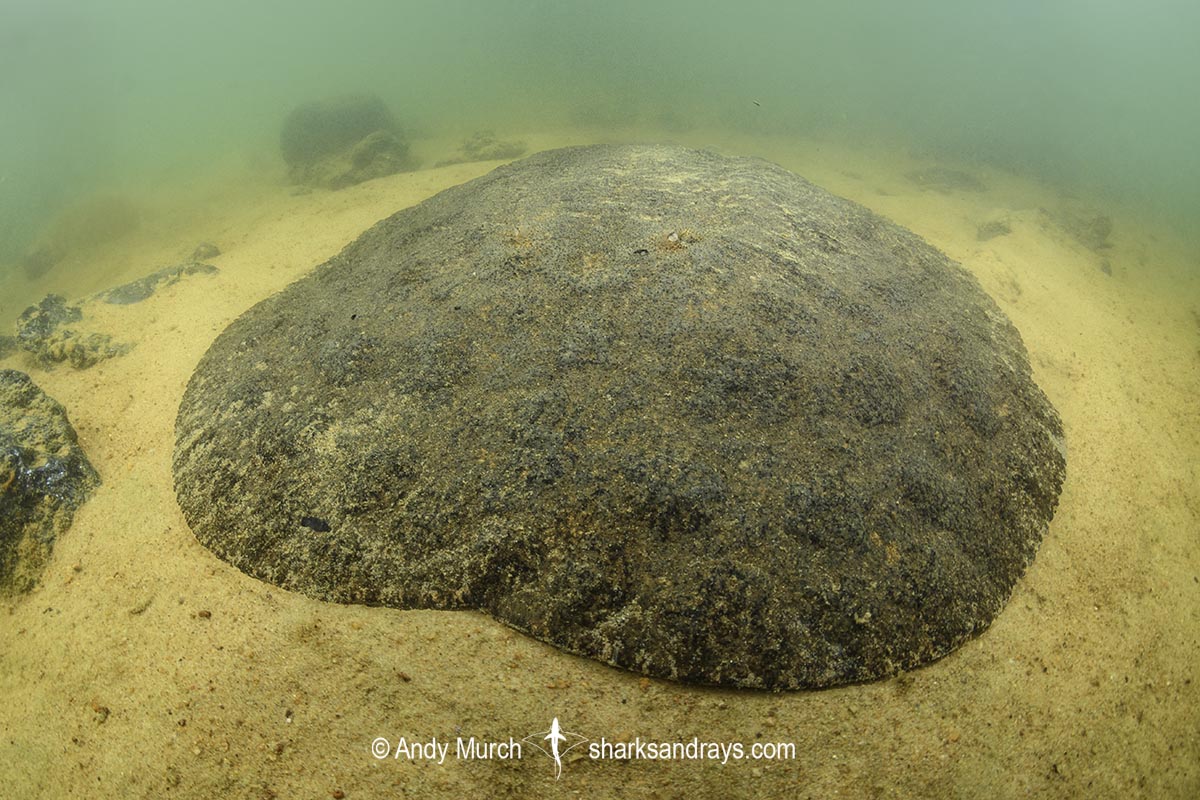
Dorsal coloration varied. light to dark brown, usually with large sub-circular dark or blackish spots or blorches that may appear slightly raised. Black spots composed of much smaller irregular spots and vermiculations. Sometimes, small light spots may also be present.
Ventrum off-white with dusky to dark brown (sometimes reticulated) lateral and posterior margins.
Size
Maximum recorded disc length at least 93cm. Maximum disc width 87cm. Average disc width/length 63cm/81cm. Disc width at birth unknown.
Conservation Status
NOT ASSESSED / CRITICALLY ENDANGERED
The Xingu Discus Ray (Paratrygon raonii) has not yet been assessed by the IUCN, bu the closely related Discus Ray (Paratrygon aiereba) from which P. raonii was recently split is listed as Critically Endangered.
Discus rays are heaviliy targeted by for local consumption in unregulated fisheries. It is estimated that they have declined by 80% in the last 30 years.
Habitat
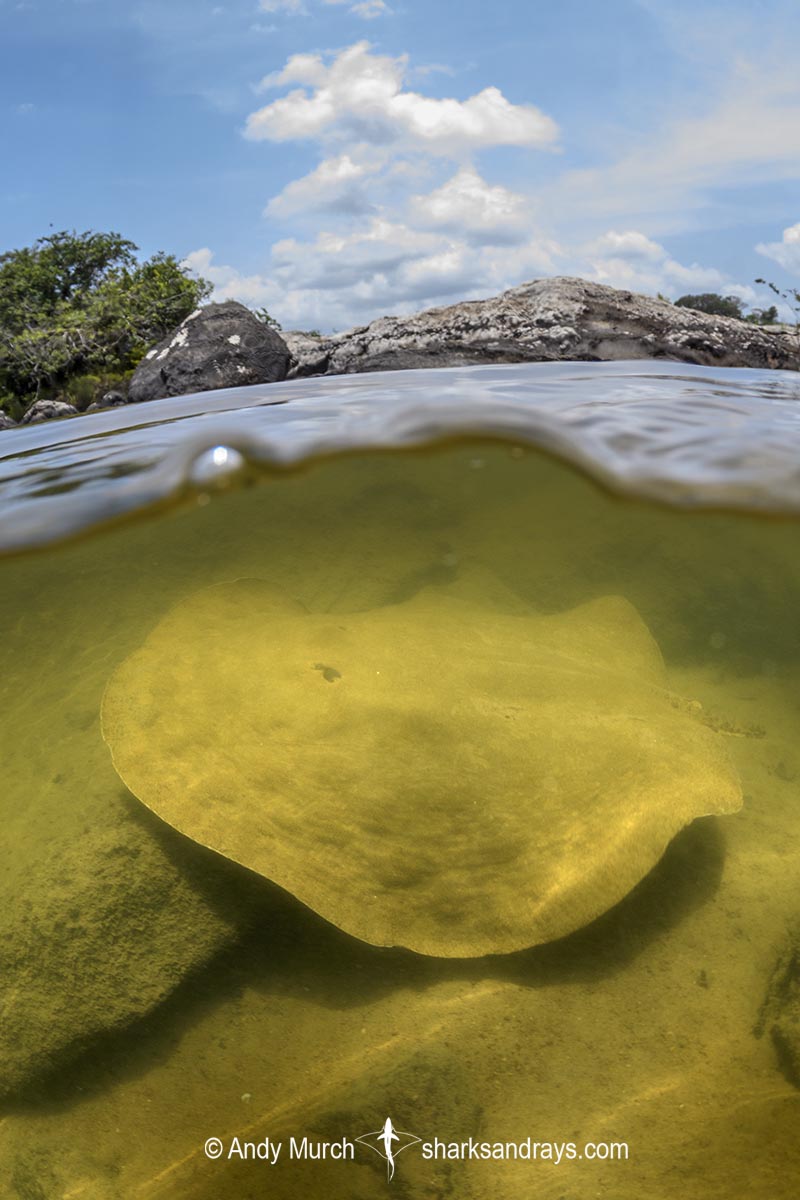
Tropical freshwater river channels and their tributaries. May be found along the edges and in the central troughs on sandy, silty, or rocky substrates. Generally avoids areas with high current flow.
Distribution
South America. The Xingu Discus Ray is confined to the middle section of the Xingu River from São Felix do Xingu to Senador José Porfírio.
Reproduction
Viviparous. Litter size of the closely related P. aiereba two per cycle.
Diet
Diet unknown, but probably consists of invertebrates and small fishes.
Behavior
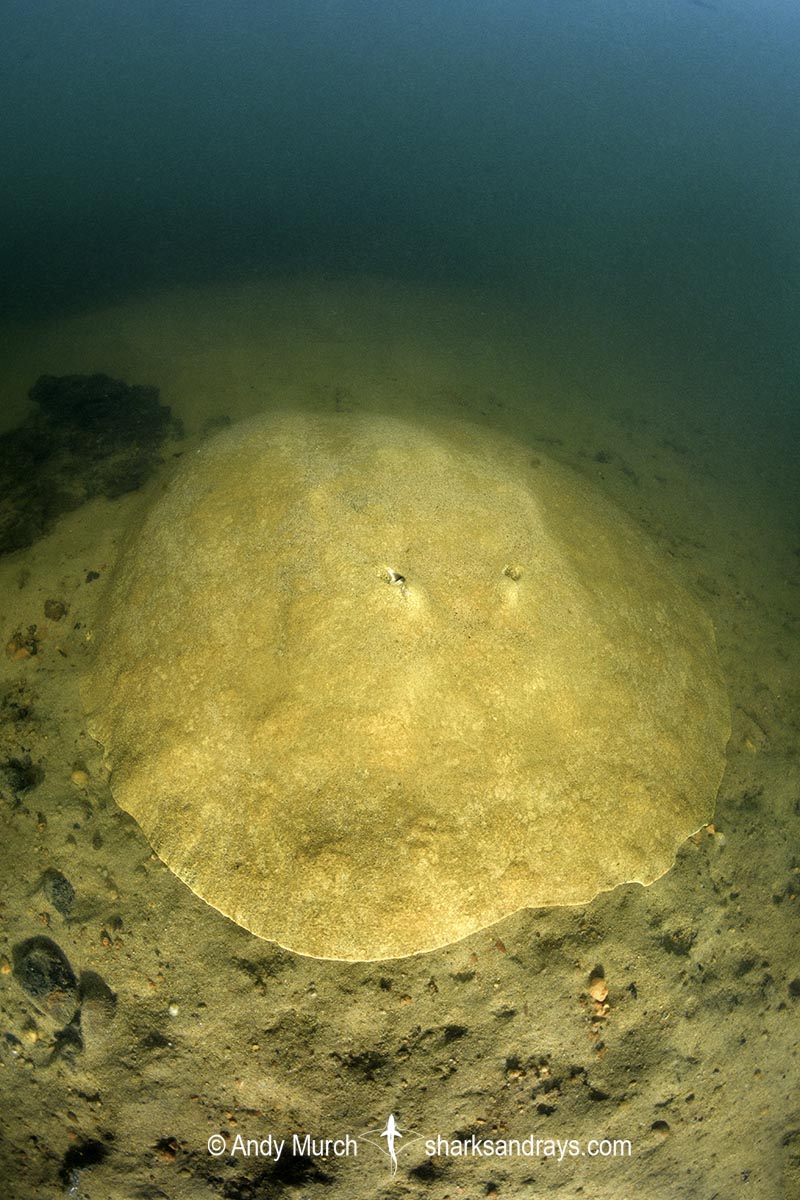
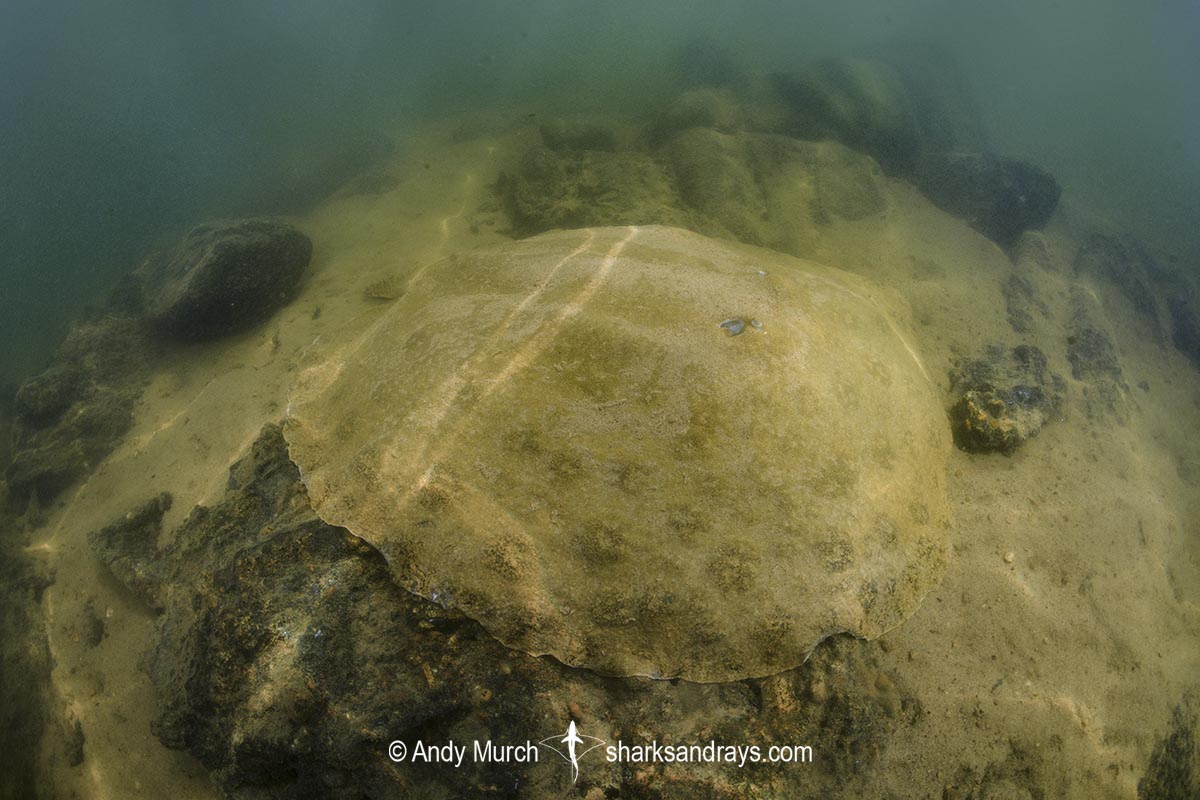
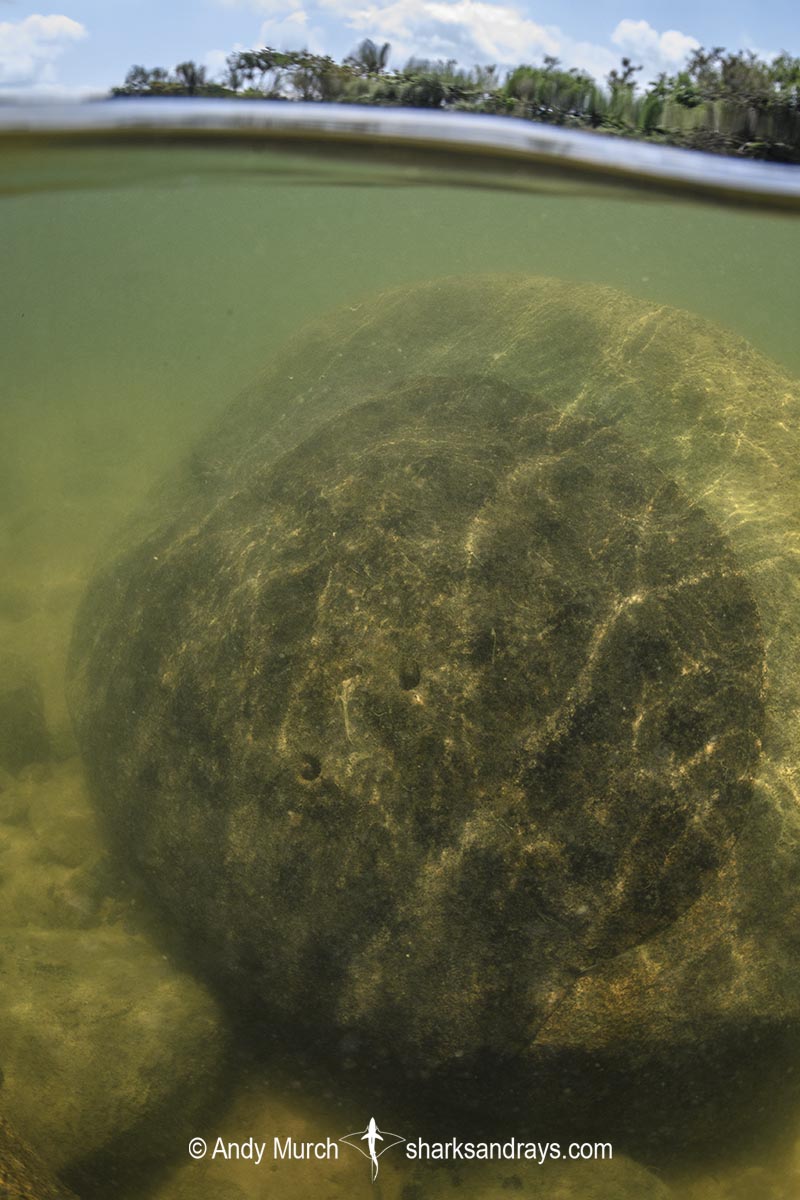
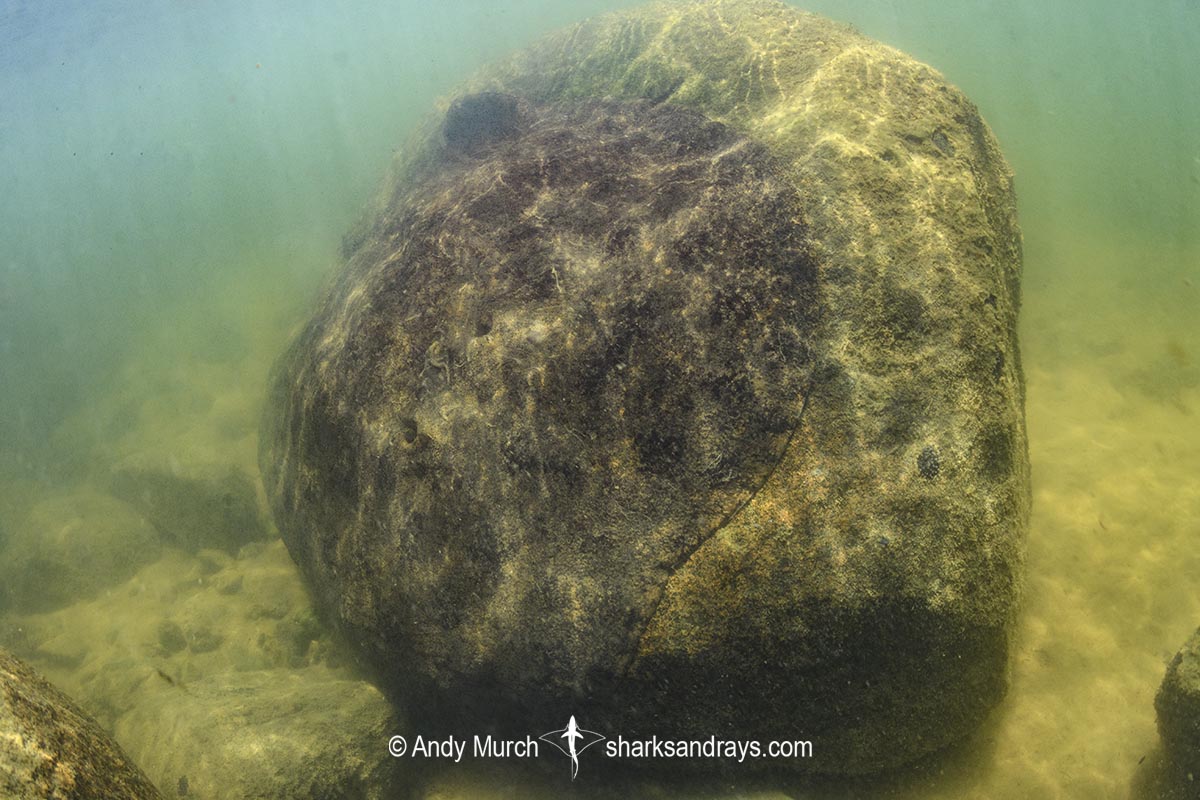
Rests on the substrate during the day, often partially covered in sand and mud. Sometimes cups it’s body to hold onto the side of boulders (personal observation) see Xingu Discus Ray image #021 and #024.
Reaction to divers
Extremely easy to approach. Rarely moves at all, even when approached very closely or fanned to remove sand from it’s disc.
Diving logistics
The Xingu Discus Ray can only be encountered in the middle reaches of the Rio Xingu. Much of the it’s range is private property, belonging to local indigenous tribes or mining operations.
It may be possible to find this species by snorkeling along the edges of the Rio Xingu near Altamira, but care should be taken to stay away from the Belo Monte Hydroelectric Dam.
What’s new
View our full list of updates
Similar species
Paratrygon species Although all of the newly described paratrygon species look very similar, none are as dark as P. raonii and all species are geographically distinct.
