
Common names
Zanzibar Guitarfish.
Binomial
Acroteriobatus zanzibarensis.
Synonyms
Rhinobatos zanzibarensis, Rhinobatus zanzibarensis.
Identification
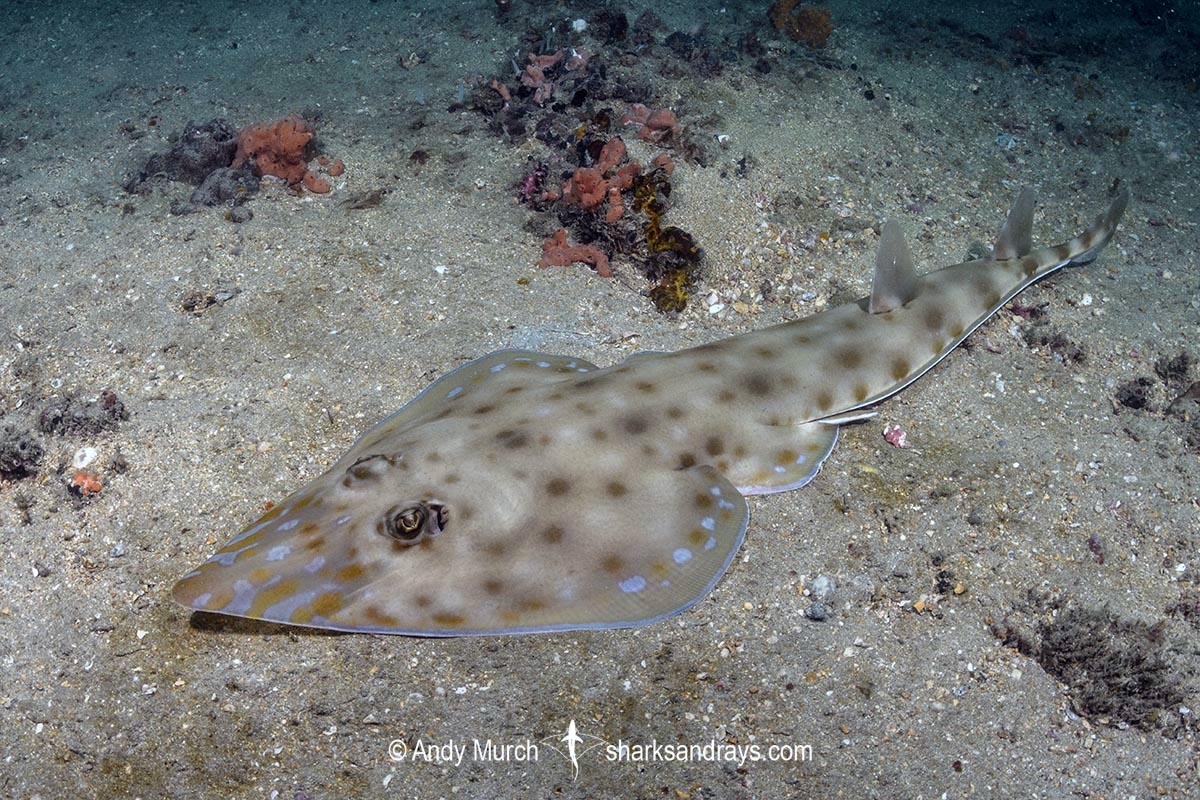
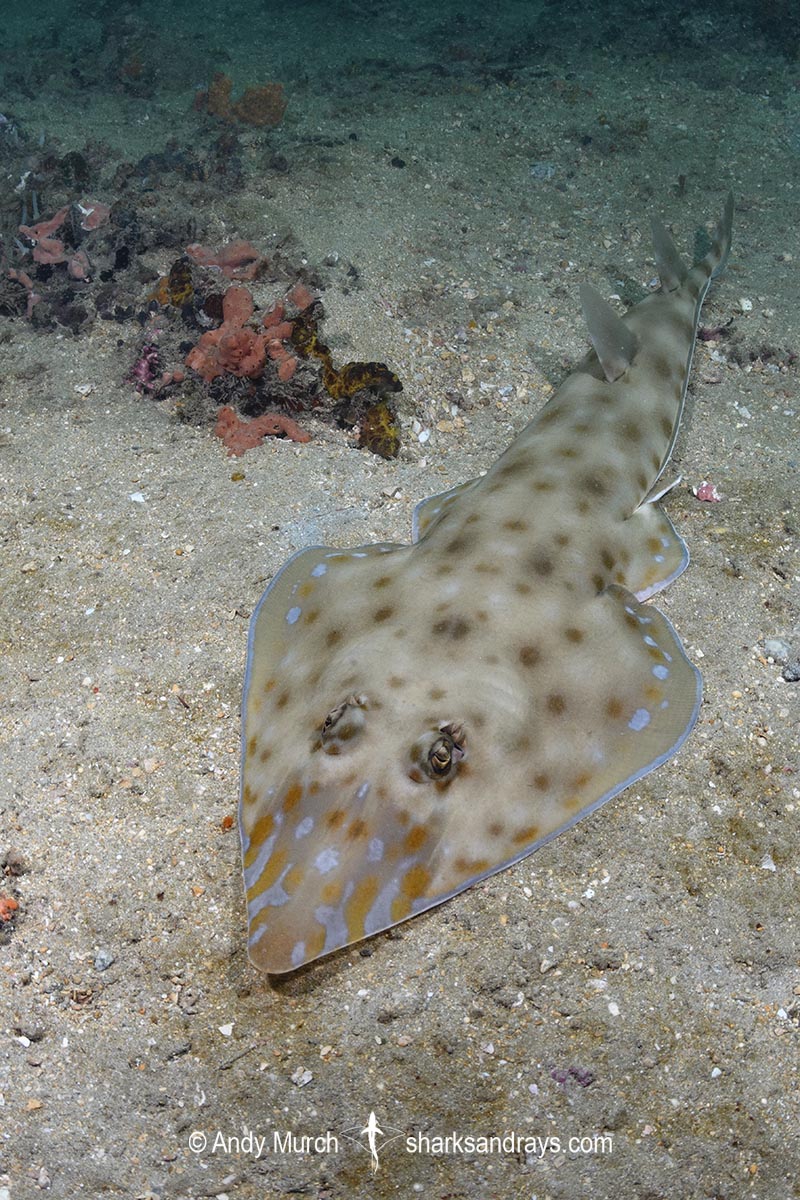
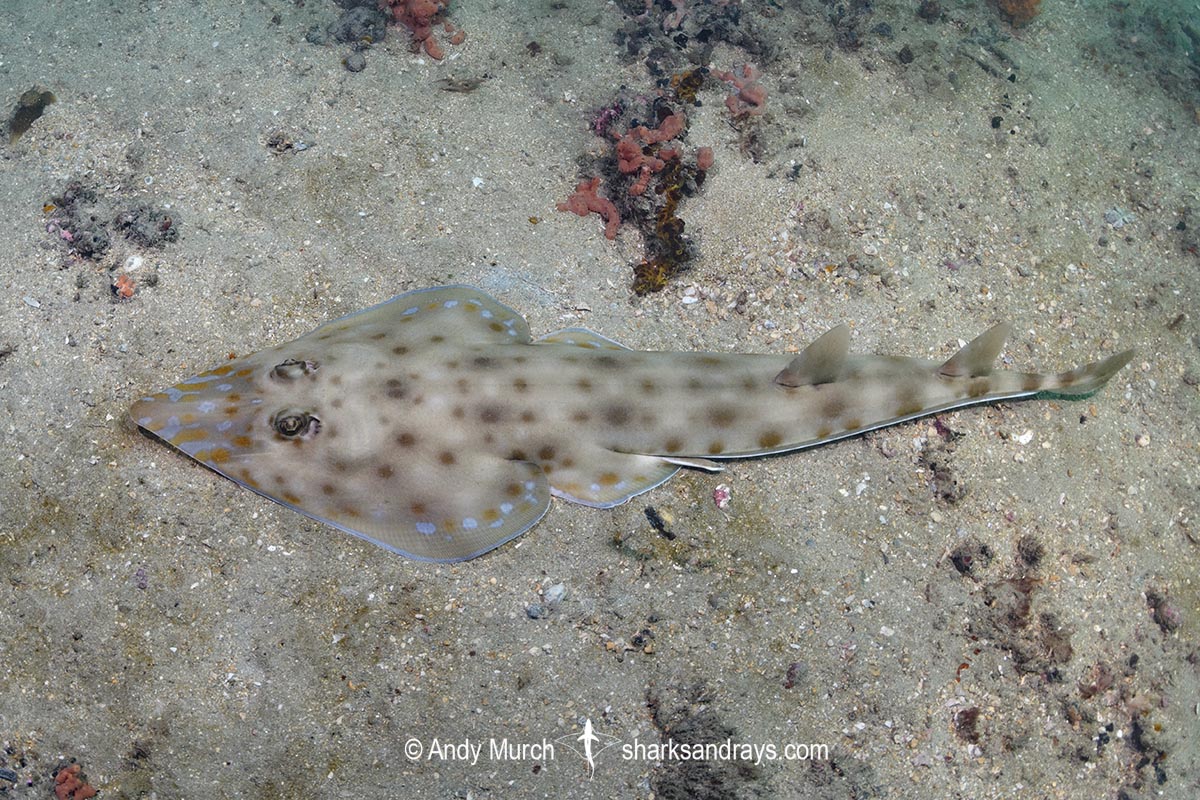
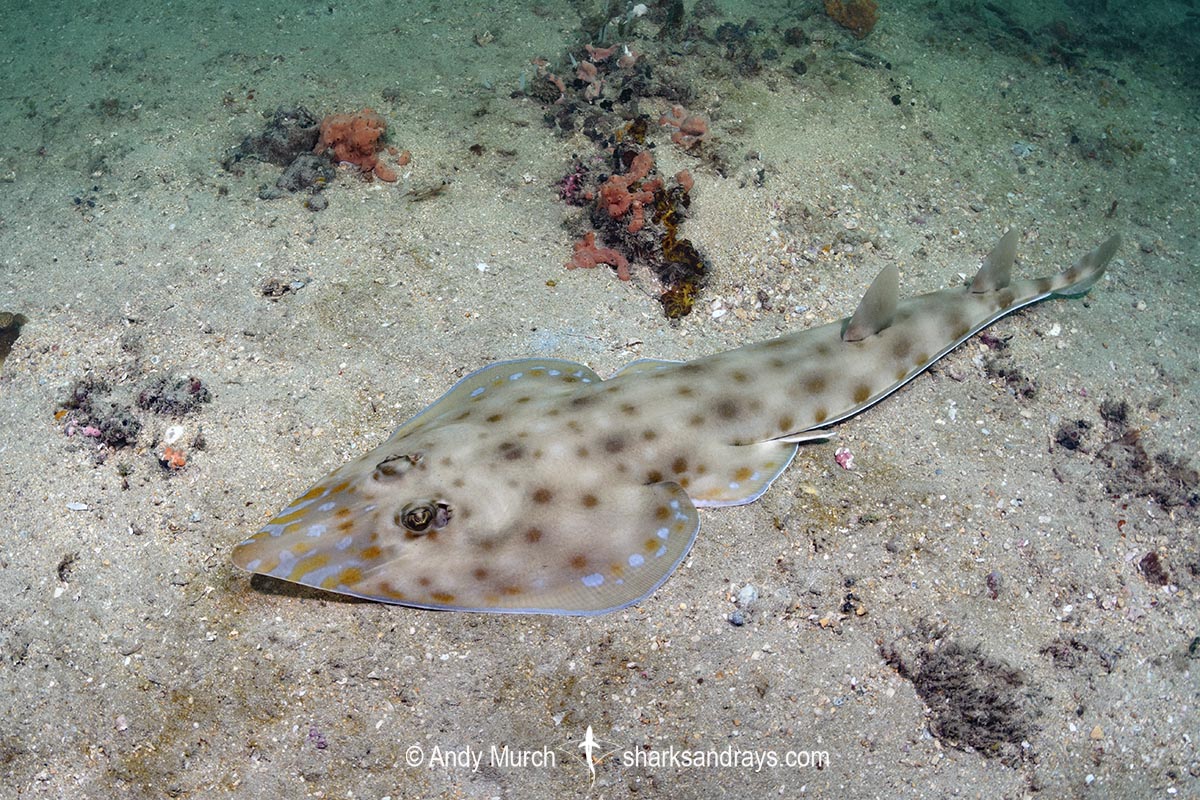
A small guitarfish with a wedge-shaped, acutely pointed disc and snout. Rostral ridges parallel and well separated. Eyes large; larger than spiracles. Preorbital length 4.5 x orbit diameter. Spiracles with 2 posterior skin folds; inner fold much smaller than outer. Nostrils positioned obliquely.
Anterior margins of disc straight. Pectoral apices broadly rounded. Skin devoid of thorns, but completely covered in small denticles. Denticles more pronounced around eyes and along midline.
Tail robust; 1.4-1.5 x disc length. Dorsal fins small and well separated, with narrowly rounded apices. Caudal fin triangular, upper lobe acutely pointed, posterior margin slighting convex, lower caudal lobe indistinct; low and rounded.
Colour
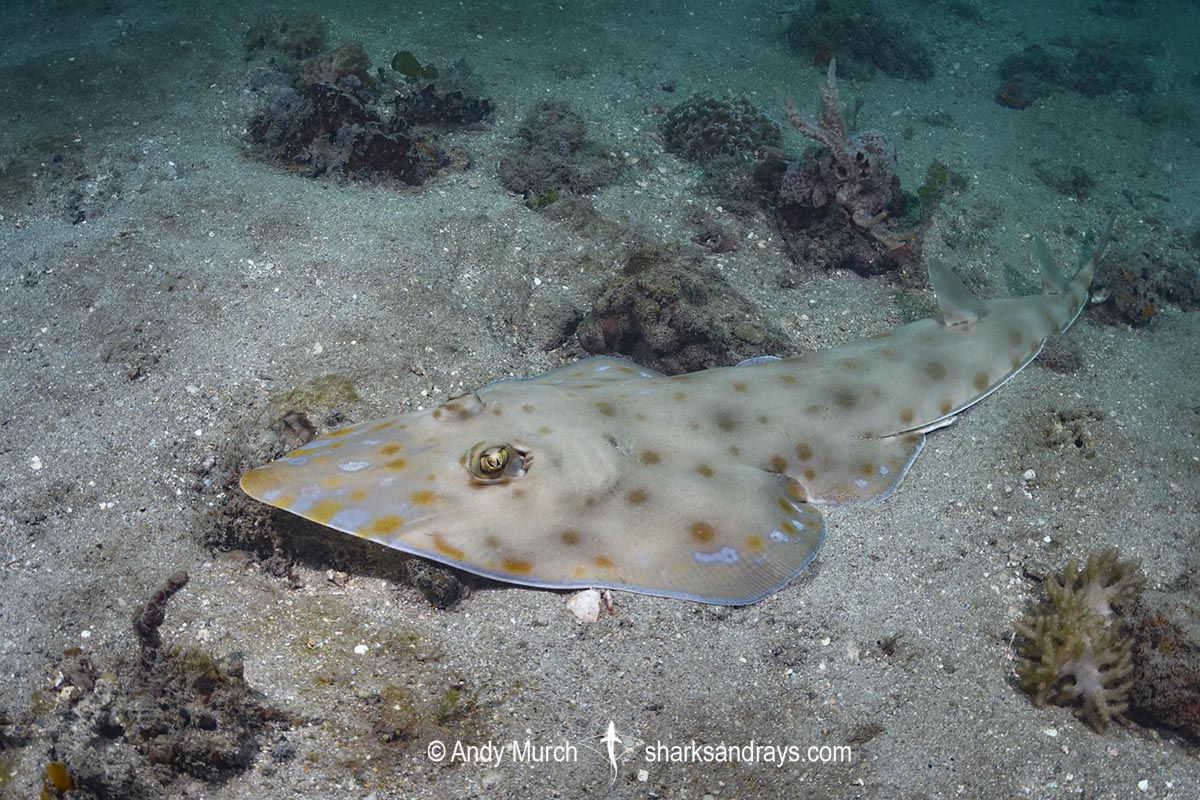
Dorsum pale yellowish-brown with large indistinct dusky blotches and yellowish brown to dark brown, approximately orbit-sized spots. Thin, pale bluish margin around disc and laterally on tail. Irregular light bluish spots on snout and along posterior pectoral and pelvic margin. Ventrum white.
Size
Maximum length at least 75cm. Reports of a 205cm individual are likely a misidentification. Size at birth unknown.
Conservation Status
NEAR THREATENED
The Zanzibar Guitarfish (Rhinobatos rhinobatos) has an extremely limited range and has little refuge from intense artisanal fisheries that employ a wide variety of gear including drag nets, spear fishing, handline, seine nets and fish traps.
It is afforded some protection around Wasini Island in southern Kenya, where local ‘reef rangers’ patrol the inner channel for poachers and remove illegal gill nets.
Habitat
Tropical seas. Benthic on shallow sandy substrates, often adjacent to coral reefs. From 2m to at least 20m.
Distribution
Western Indian Ocean. Listed as occurring solely around Zanzibar Island, but also seen (and perhaps more common) around Wasini Island in southern Kenya.
Reproduction
Aplacental viviparous. Litter size unknown.
Diet
Unknown.
Behavior
In Kenya, the Zanzibar guitarfish rests diurnally in shallow water (5-15m).
Reaction to divers
Fairly easy to approach during the day when found resting on the sand, but will swim away if approached too aggressively.
Diving logistics
The Zanzibar guitarfish is easy to find in 10-15m on the western side of Wasini Island in Southern Kenya. It is seen more commonly by divers in July.
According to dive shops in Zanzibar, it is rarely seen around the island itself.
What’s new
View our full list of updates
Similar species
Greyspot Guitarfish – Acroteriobatus leucospilus Displays very similar markings, but distinguished by more convex anterior disc margins and shorter snout.
