
Common names
Blackspotted Torpedo Ray.
Bionomial
Torpedo fuscomaculata.
Synonyms
Fimbriotorpedo fuscomaculata, Fimbriotorpedo smithii, Narcacion fuscomaculatus, Narcacion polleni, Narcobatus smithi, Torpedo polleni, Torpedo smithii, Torpedo smithii.
Identification
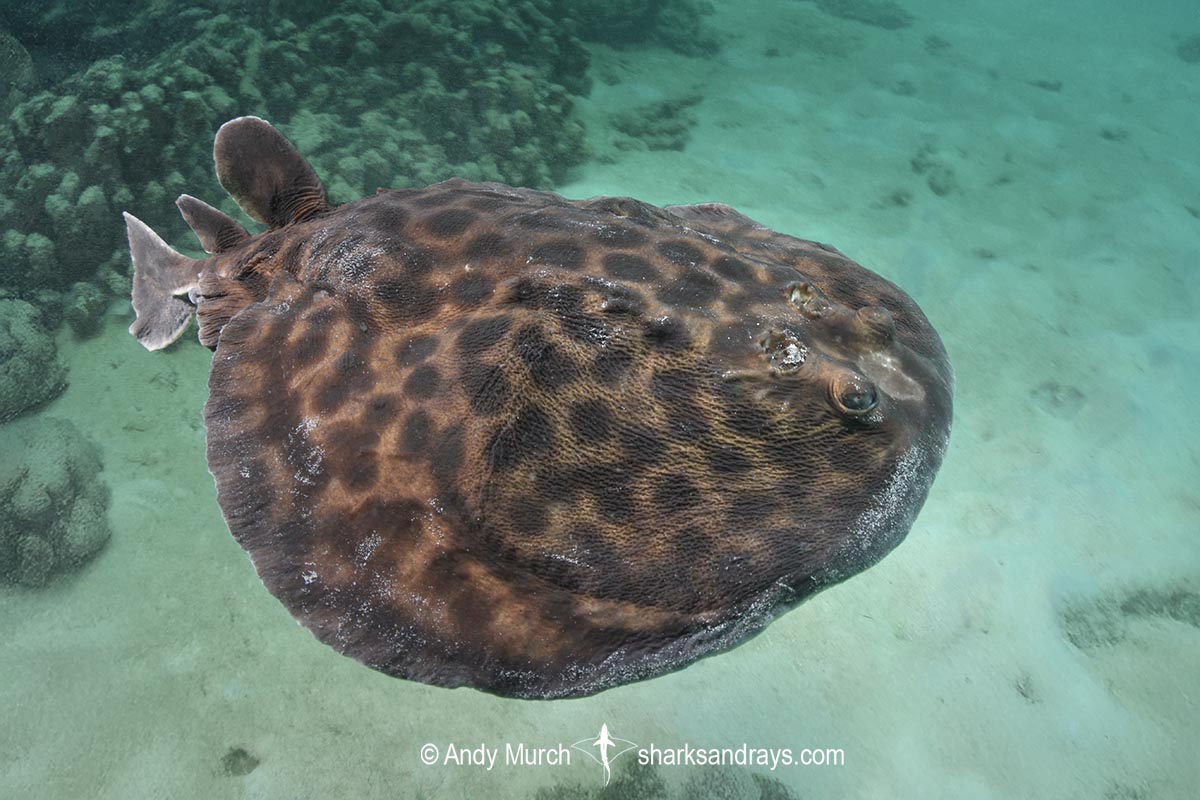
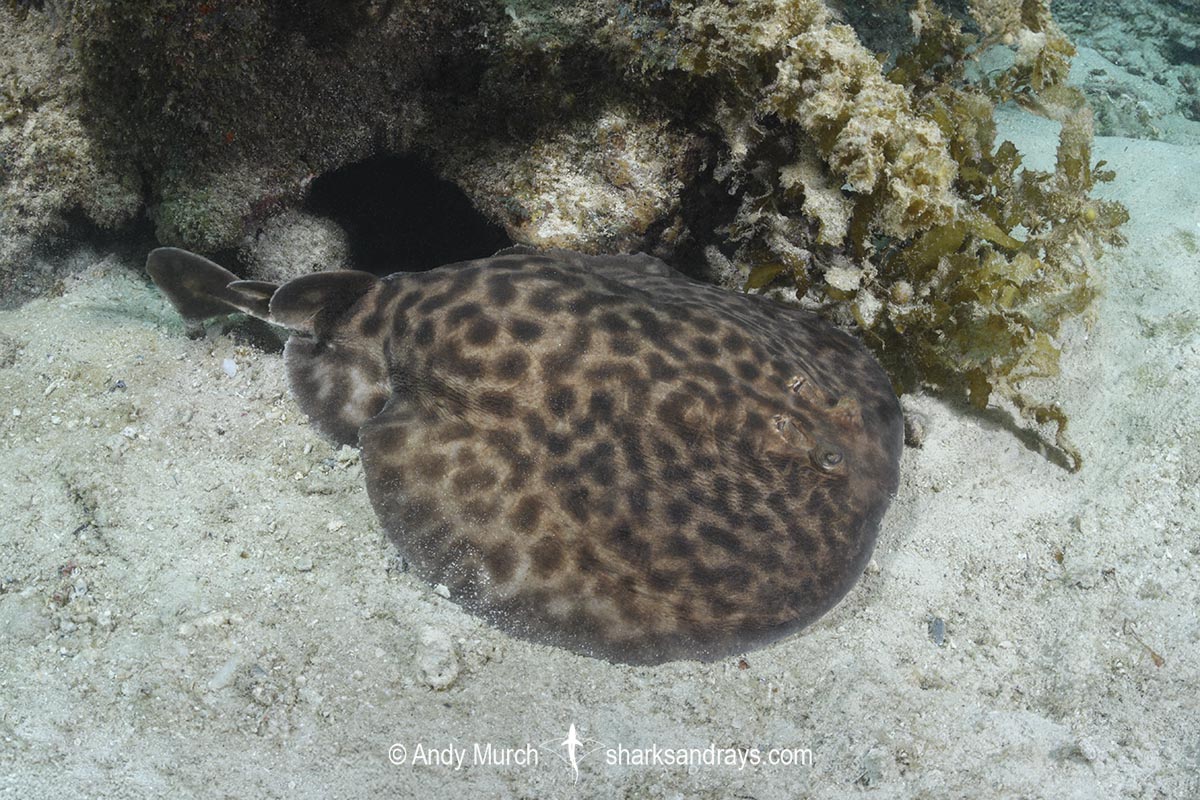
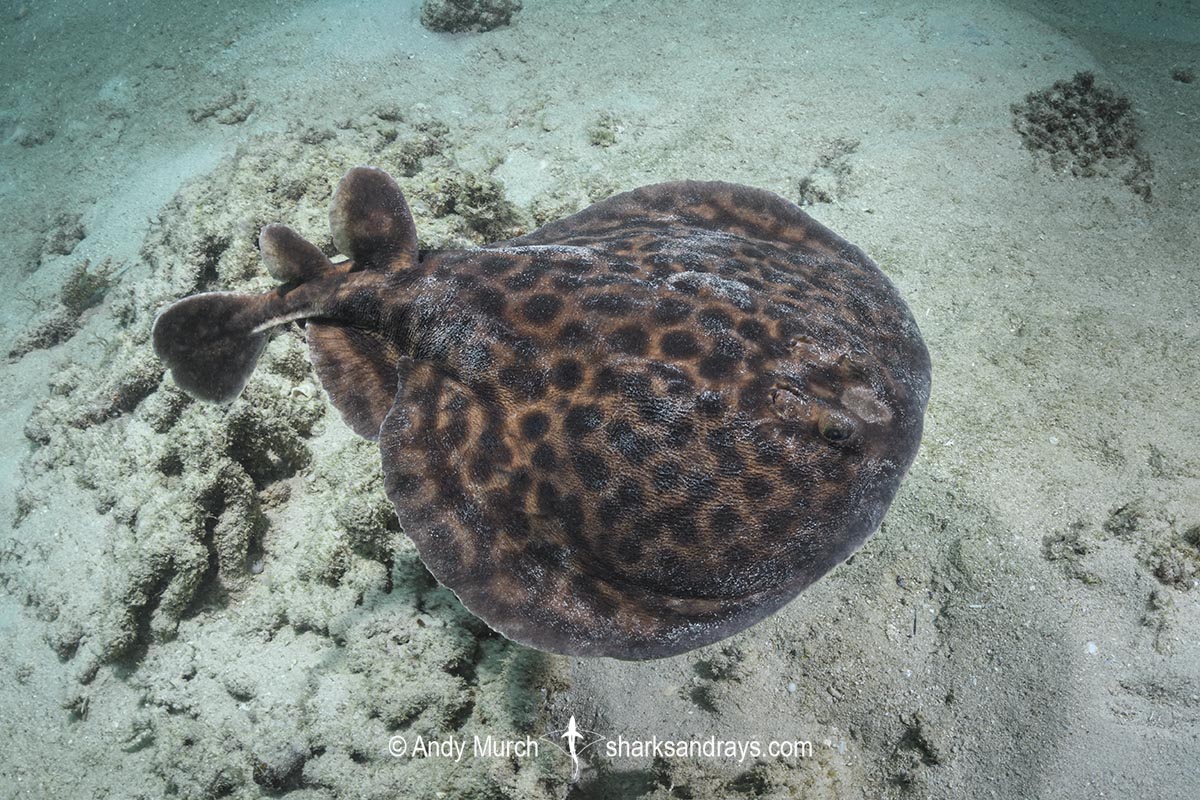
A medium-large torpedo ray with a broad, fleshy, sub-circular disc that is slightly wider than long. Snout very short with a straight anterior margin that is slightly convex centrally. Pectoral fin apices evenly rounded. Eyes small and slightly bulging. Spiracles oval with seven small papillae. Spiracles and orbits of roughly equal size, separated by slightly less than orbit width. Posterior papillae longer than lateral papillae. Mouth arched. Nostrils with large nasal flaps. Pelvic fins long and broadly rounded. Tail short and broad based. First dorsal fin tall with broadly rounded apice and posterior margin. First dorsal posterior margin over pelvic fin. Second dorsal fin tall, but noticeably smaller than first. Caudal fin large and sub-triangular, with narrowly rounded apices, posterior margin mildly convex.
Colour
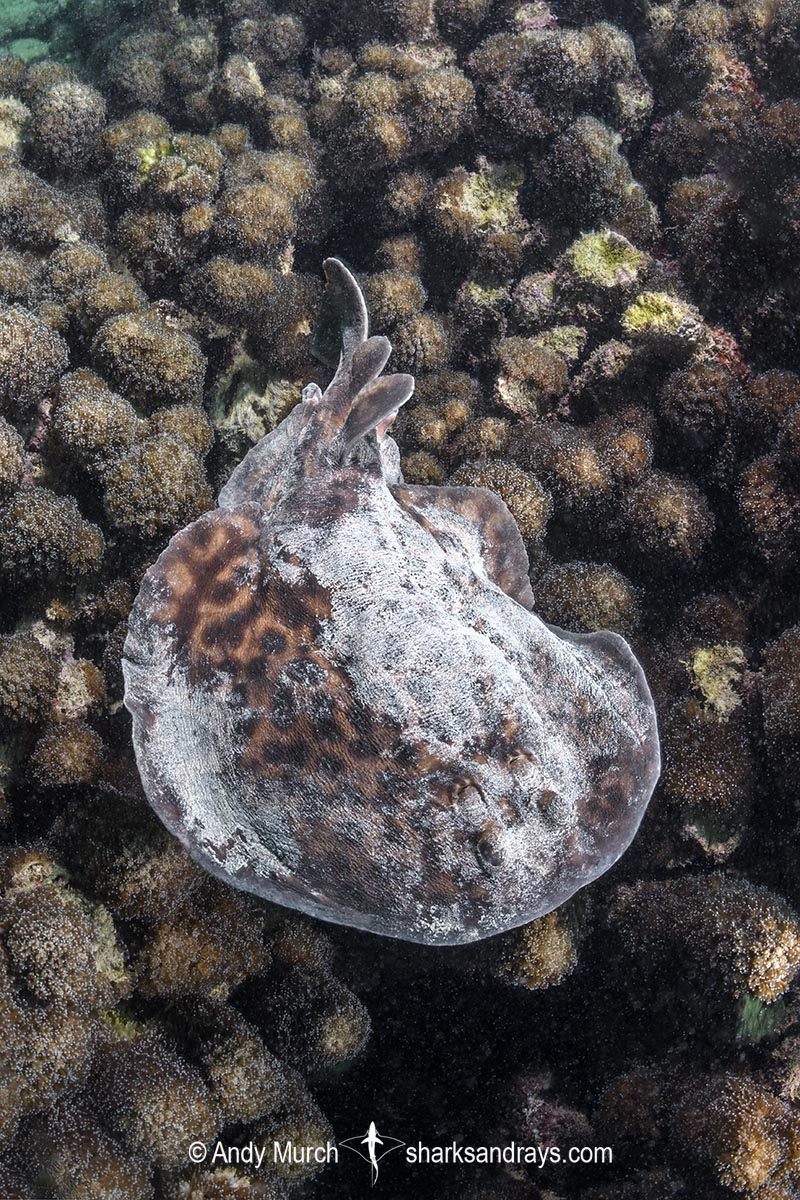
Greyish to reddish brown dorsum with variably sized black blotches that sometimes form a reticulated pattern. Ventrum white with a darkly mottled lateral and posterior margin.
Size
Total length 65cm.
Conservation Status
DATA DEFICIENT
Although the Blackspotted Torpedo Ray (Torpedo fuscomaculata) is listed as occurring in the Southeast Atlantic and Western Indian Ocean, records from Madagascar, Mauritius, and the Seychelles may represent undescribed species, so it may have a more restricted range than is presently listed.
Blackspotted torpedo rays are commonly caught due to intense, unregulated bottom fishing across their entire range. Although it is usually discarded; the level of post-release survivorship is unknown.
Habitat
Tropical to temperate inshore environments, including estuaries, and sandy areas adjacent to shallow coral reefs and deeper rocky reefs. From the intertidal zone to at least 440m. Recent records from 2km upriver in South Africa indicate this species can also survive in brackish water.
Distribution
Southeastern Atlantic and western Indian Ocean. The blackspotted torpedo ray is listed as occurring from the Western Cape in South Africa to Tanzania, and off Madagascar, Mauritius, and Seychelles. However, it is also common in Kenya, especially on the eastern side of Wasini Island (personal observation).
Blackspotted torpedo ray sightings from Madagascar, Mauritius, and the Seychelles may represent undescribed species.
Reproduction
Aplacental viviparous. Litter size unknown.
Diet
Diet consists mostly of small fishes and cuttlefishes.
Behavior
Nocturnal. Remains motionless during the day. May bury in soft sand, but often found resting out in the open.
Reaction to divers
The blackspotted torpedo ray generally remains motionless unless approached too closely. When disturbed it will usually bolt for a short distance before attempting to bury under the sand or seeking refuge within the reef.
Diving logistics
The best place to find blackspotted torpedo rays is probably Kenya, even though they are not listed as occurring there. They are easy to find resting next to shallow reefs off the eastern side of Wasini Island, near the Tanzanian border.
Further south, blackspotted torpedo rays are occasionally encountered at dive sites in False Bay and sometimes elsewhere is South Africa.
What’s new
View our full list of updates
Similar species
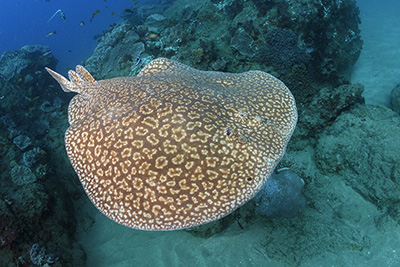
Gulf Torpedo Ray Distinguishable by dorsal pattern consisting of small light spots that form variegations or leopard-like clusters.
Panther Torpedo Ray Distinguishable by dorsal pattern consisting of small light irregular spots that do not form clusters.
