
Common names
Xingu River Stingray, Xingu Freshwater Stingray, Polkadot Stingray, White-blotched River Stingray, Black Diamond Ray.
Binomial
Potamotrygon leopoldi.
Synonyms
None.
Identification
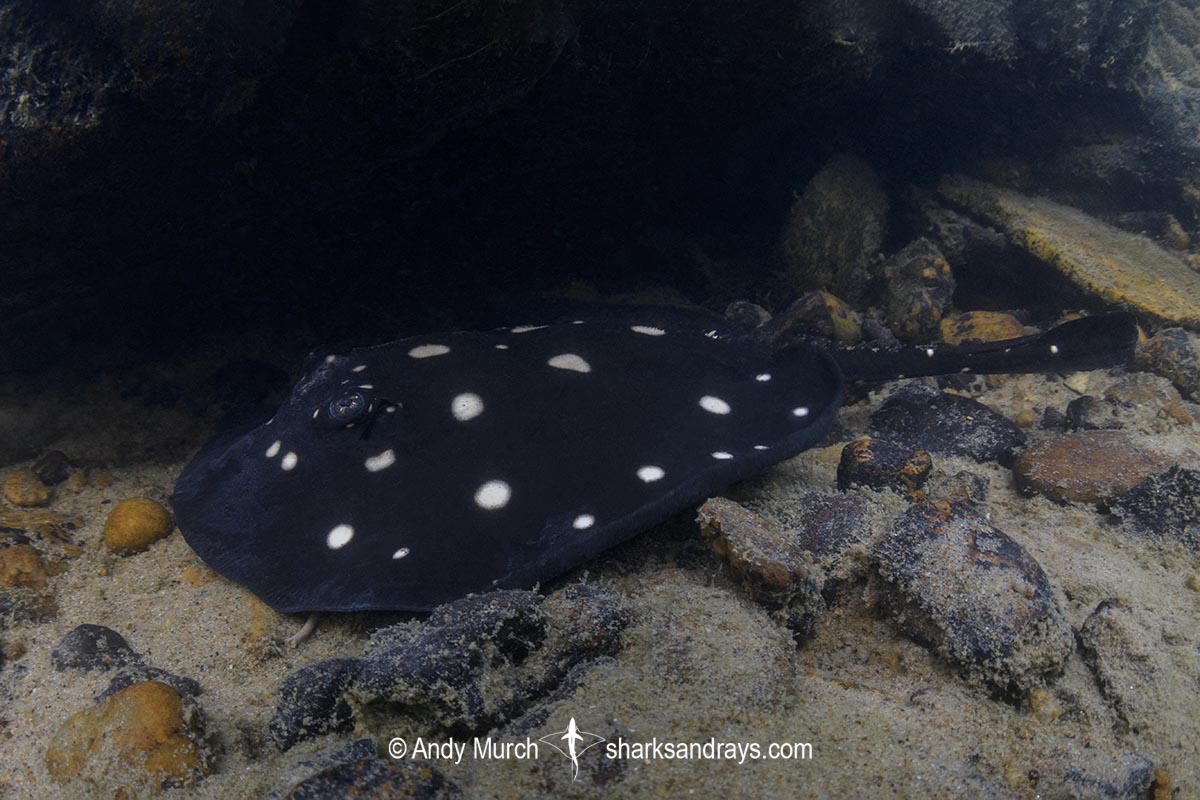
A large freshwater stingray with a thick, sub-circular disc that is very slightly longer than wide. Small lobe visible on tip of snout. Eyes large and bulging. Spiracles large; length approximately 3x eye length. Nostrils thin. Nasal curtain skirt-shaped with a fringed posterior margin. Mouth with 5 oral papillae.
Disc covered in denticles; more densely grouped towards centre. Pelvic fin posterior margins level with, or shorter than disc margin. Tail broad based, shorter than disc width, with well developed dorsal and ventral finfolds. 3 or more irregular rows of small thorns dorsally on tail. Origin of first caudal sting anterior to mid tail.
Colour
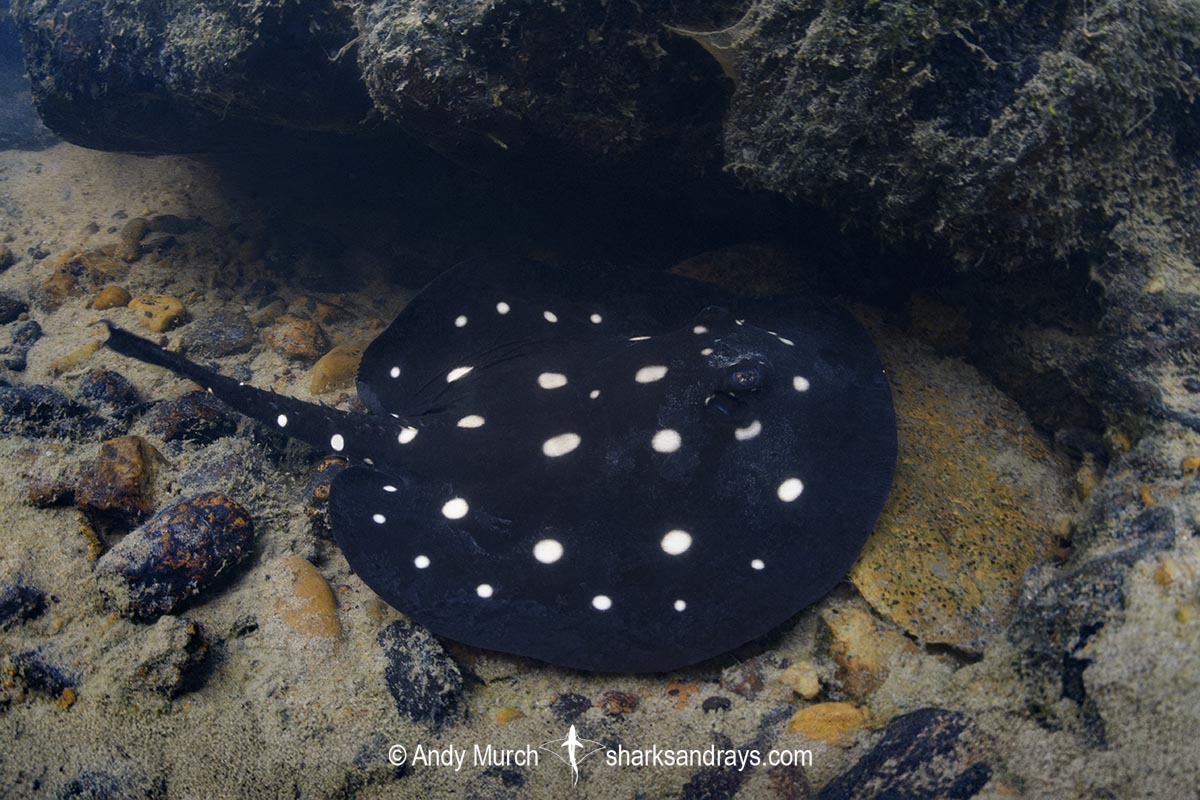
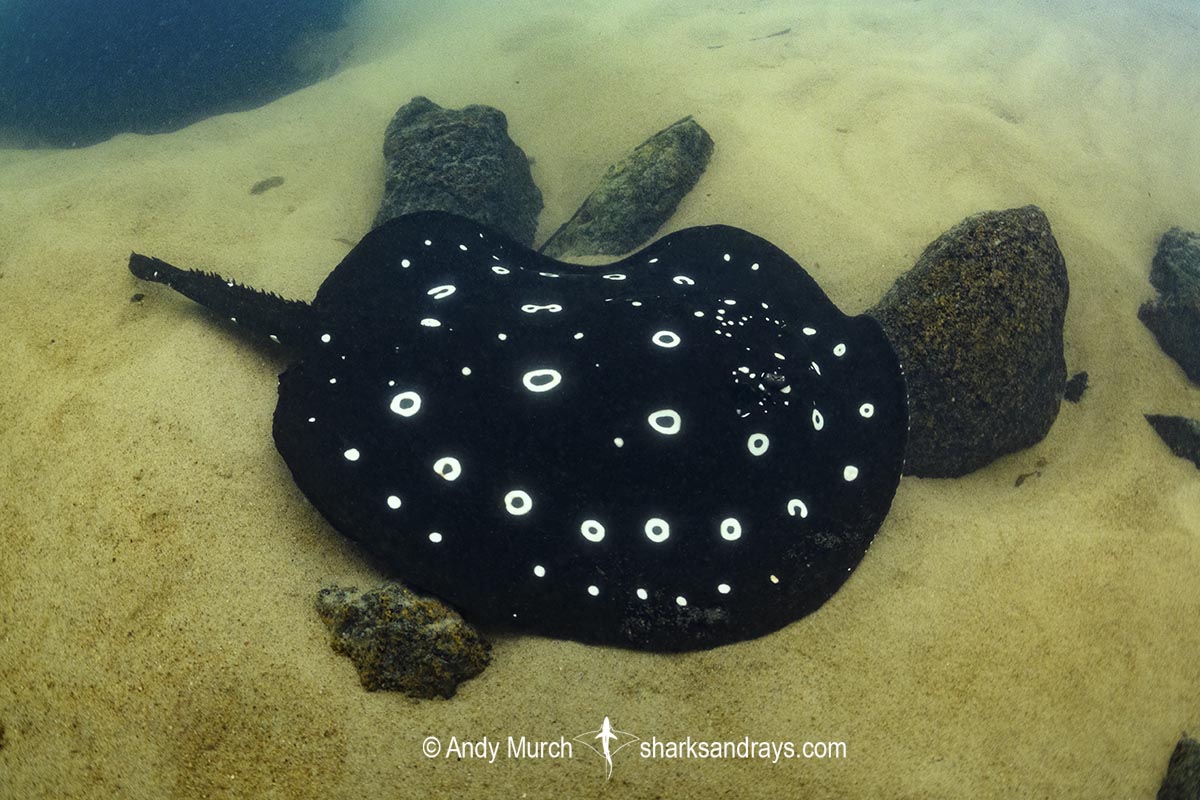
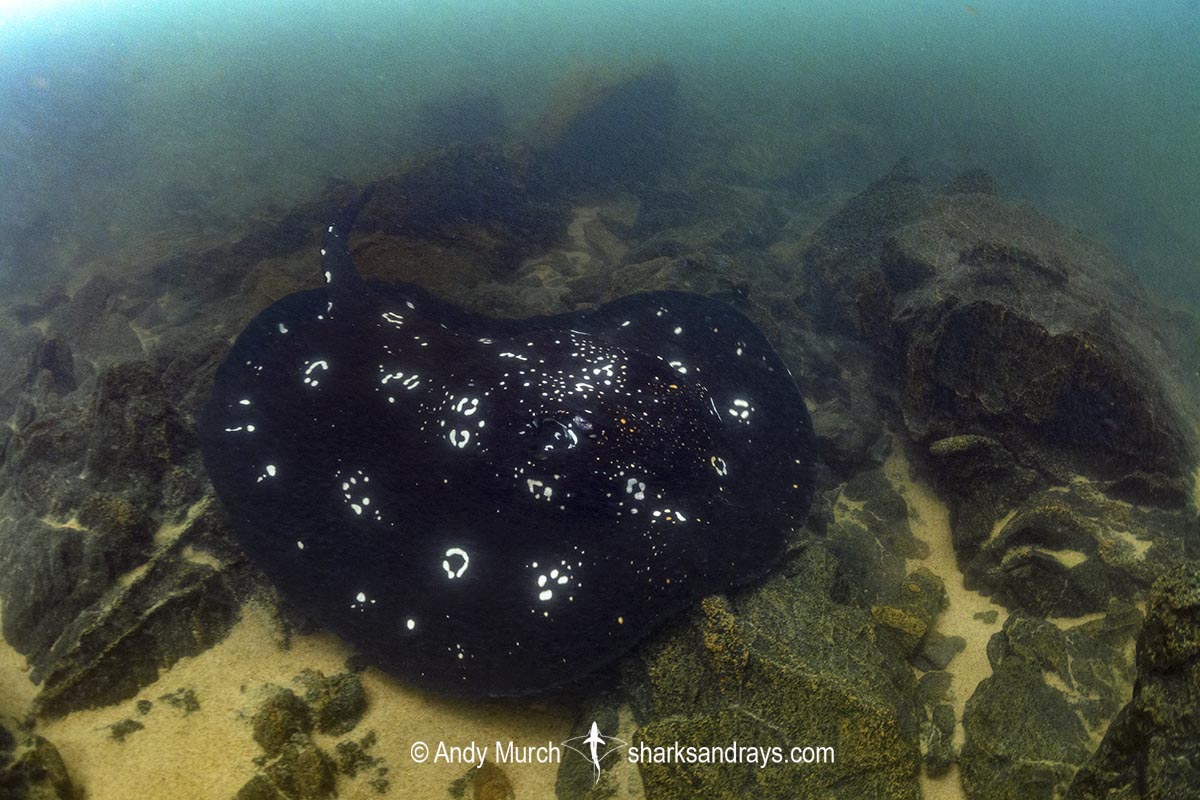
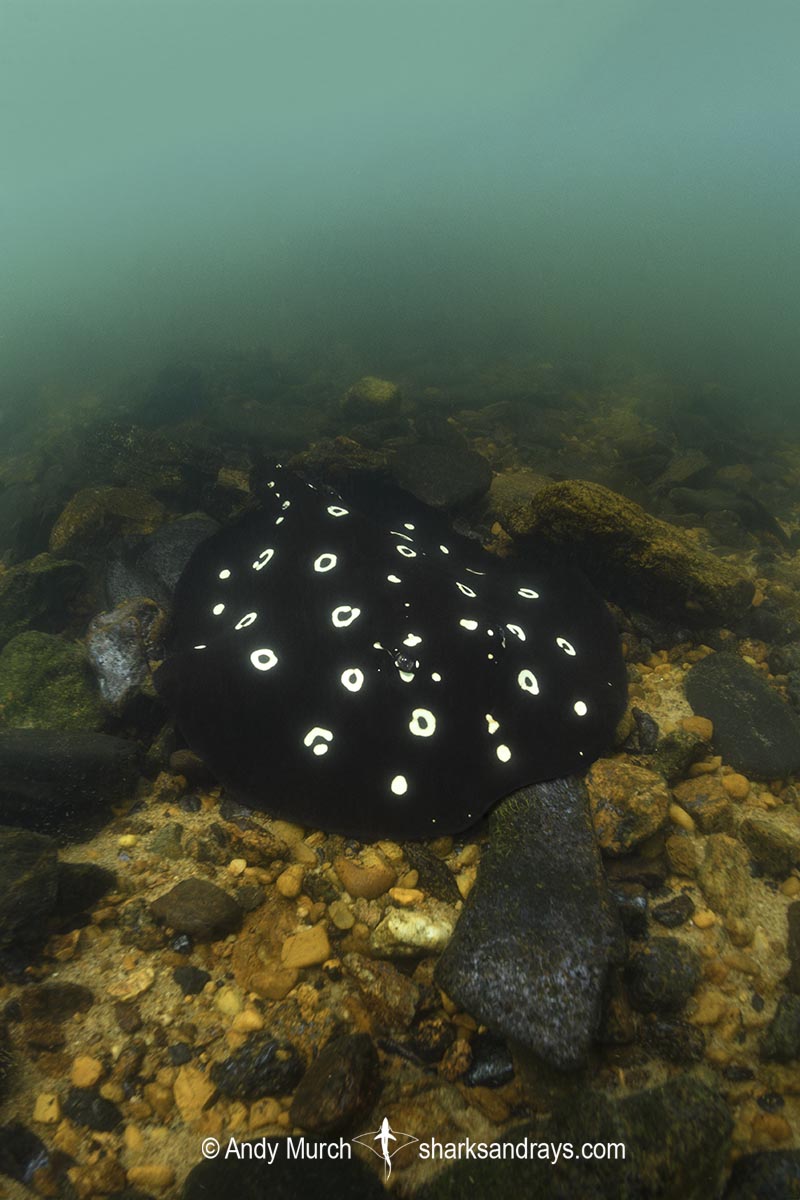
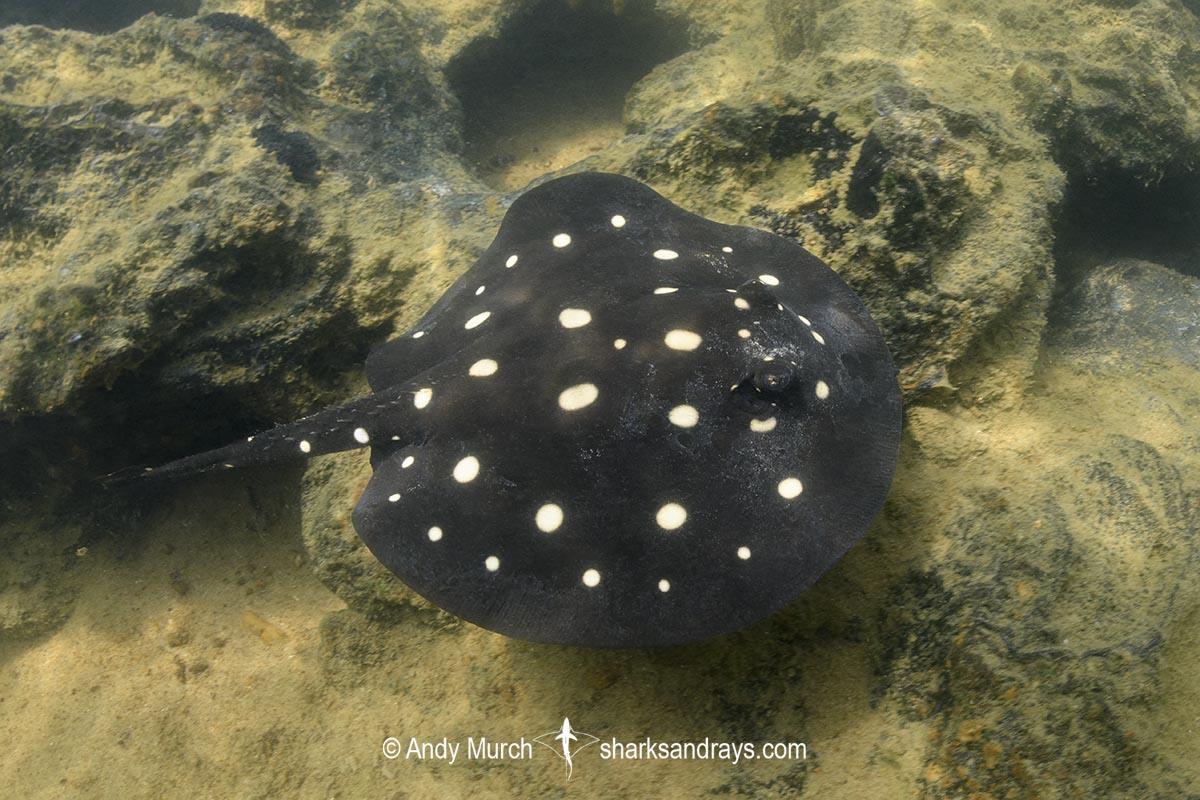
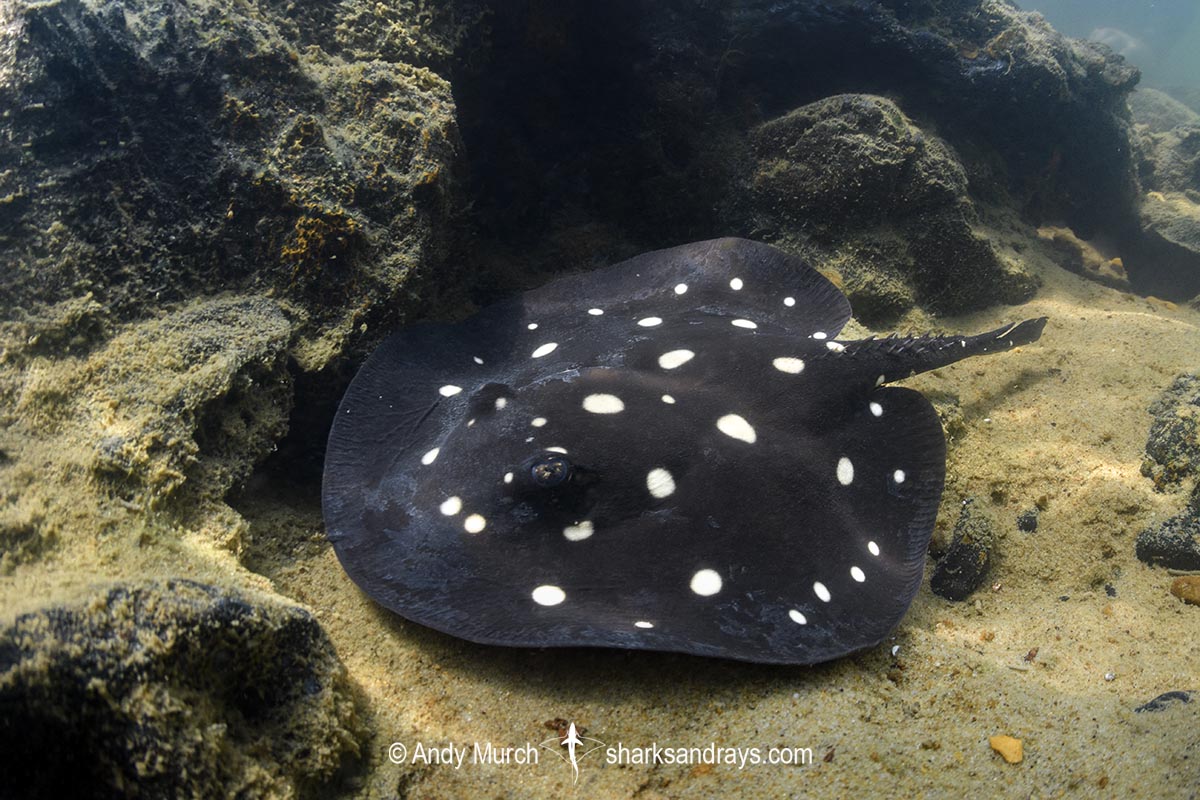
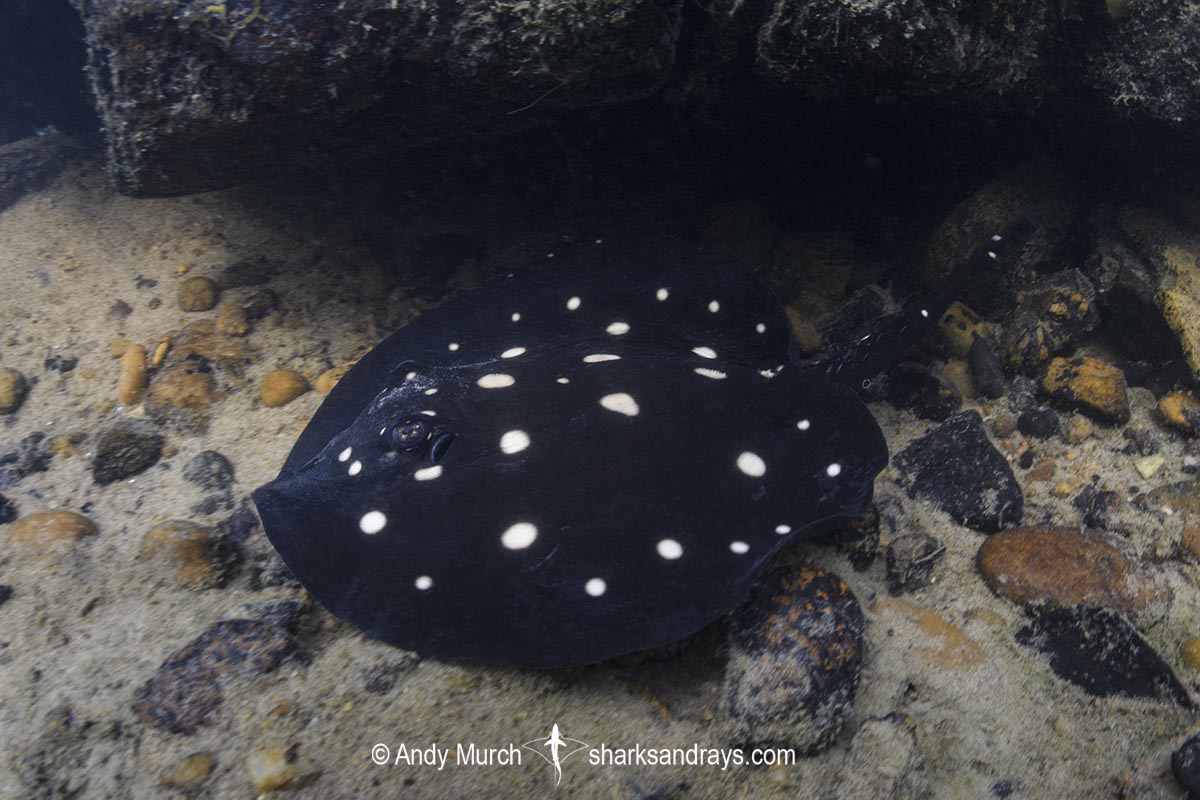
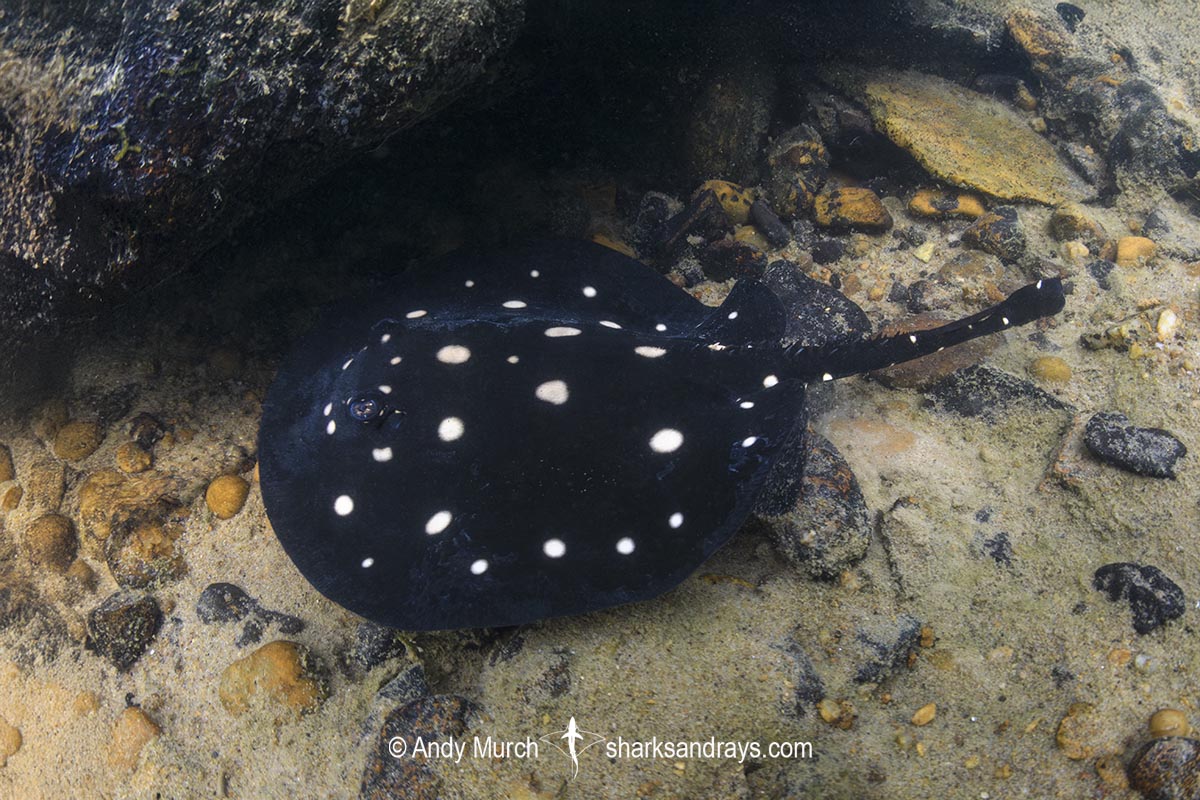
Dorsum blackish-brown or charcoal with many widely spaced large white or yellowish spots sometimes with thin darker yellow, beige, or light grey outer rings. Spots usually smaller towards disc margin. As Xingu River Stingrays grow, their solid spots turn into circles and eventually break up into clusters of irregular white flecks; sometimes with a few splashes or yellow/orange on the forehead. Ventrum mostly dark except around mouth and underside of snout. Small white spots usually present around disc margin.
Size
Maximum disc width 72cm. Disc width at birth unknown.
Conservation Status
VULNERABLE
The Xingu River Stingray is declining due to pressure on multiple fronts. Adults are caught by hook and line and retained for consumption, while juveniles a collected for the aquarium trade.
The Xingu River basin has also been heavily impacted by habitat degradation from mining, farming, deforestation, and the construction of a dam in the mid-Xingu region. More impoundments are planned to be built upstream in the future.
Habitat
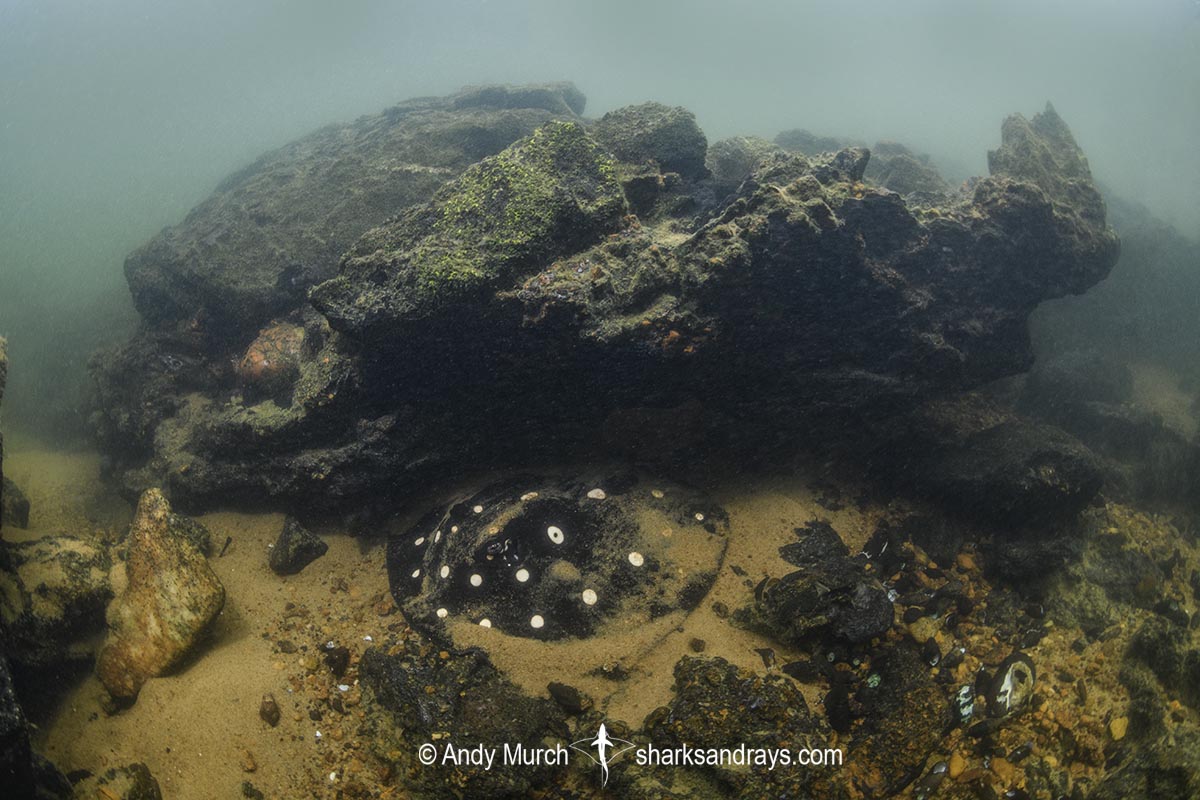
Tropical freshwater rivers. Prefers rocky river bottoms.
Distribution
South America. Confined to the Xingu River in Pará and Mato Grosso states. Also recorded from the Curuá and Iriri Rivers; both of which are tributaries of the Xingu.
Reproduction
Viviparous with trophodermic nutrition. Relatively fecund. 4-12 pups per litter.
Diet
The polkadot stingray feeds mostly on freshwater snails and crabs.
Behavior
Poorly known.
Reaction to divers
Difficult to approach. Will bolt when discovered.
Diving logistics
There is no infrastructure for diving in the Upper Xingu River but it is possible to hire local aquarium fish collectors to search for rays. The season with the best visibility is September-October.
The Volta Grande rapids near the town of Altamira marks the lower limit of the Xingu freshwater stingray’s range, so flying into Altamira and hiring a boat driver to take you snorkeling upstream is probably your best shot of finding this species.
Bear in mind that this ray prefers rocky areas often where there are constrictions and fast water, so snorkeling in their favorite environment is challenging. Also the enormous new dam downriver from the city has changed the depth, speed, and width of the Xingu River. This will inevitably affect all of the species that live in the river. And finally, mining in the area is slowly poisoning the entire ecosystem so it may be wise to find out more about the river’s toxicity before you stick your head in.
What’s new
View our full list of updates
Similar species
Henle’s Freshwater Stingray Similarly patterned but distinguishable by browner dorsum with yellow/beige spots, and less rows of thorns on the tail. Confined to the lower Tocantins River.
